
/images/ppid_59c68470-image-177061753355263188.webp)
/images/ppid_59c68470-image-177061753317675494.webp)

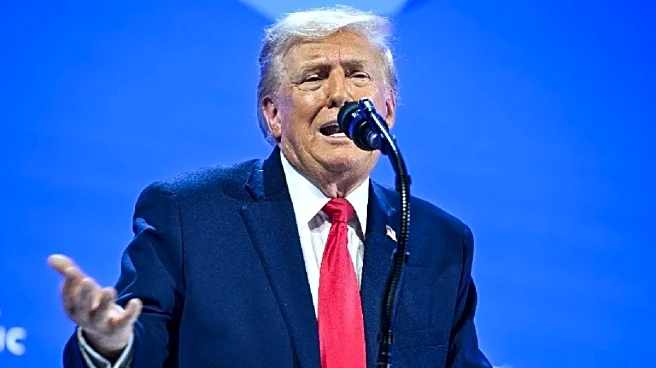
The US Supreme Court is set to deliver its decision today in a closely watched case challenging the legality of tariffs imposed by President Donald Trump under emergency economic powers. The ruling could have far-reaching consequences for presidential authority over trade policy, executive use of national emergency laws, and Congress’s role in regulating tariffs.
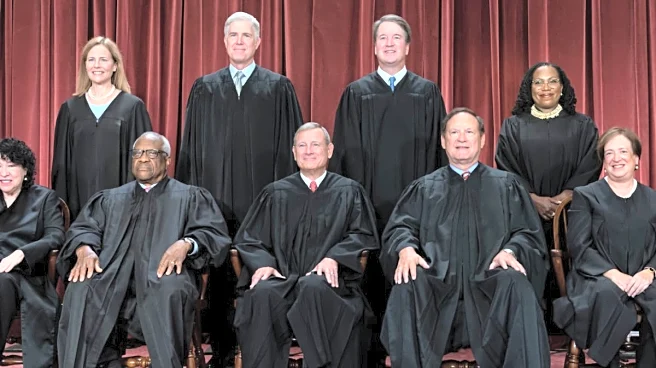
At the heart of the case is whether a president can unilaterally impose broad trade tariffs citing national security or emergency powers, or whether such actions exceed statutory and constitutional limits. The decision will be delivered by the Court’s full nine-member bench. Here is a closer look at each justice and where they broadly stand ideologically.
Chief Justice John G Roberts Jr
Appointed in 2005 by then President
George W Bush, Chief Justice John Roberts is a conservative who places heavy emphasis on institutional stability. He often avoids rulings that could damage the Court’s legitimacy. A key example is NFIB v. Sebelius (2012), where Roberts upheld the Affordable Care Act by recharacterising the individual mandate as a tax, despite conservative opposition. While he supports executive authority in many cases, Roberts has also limited presidential power when he believes it threatens constitutional balance, as seen in Department of Commerce v. New York (2019), where he blocked the Trump administration’s census citizenship question.
In a hearing on the case, Justice Roberts had probed the argument that tariffs are inherently a tax or duty that only Congress is supposed to levy, noting that “the imposition of taxes on Americans, has always been the core power of Congress.” His questions implied serious doubt about the administration’s legal theory.
Justice Clarence Thomas
Justice Clarence Thomas, appointed in 1991 by former President George HW Bush, is said to be the Court’s most committed originalist. He regularly calls for overturning precedents he believes lack constitutional grounding. In Dobbs v. Jackson Women’s Health Organization (2022), Thomas supported overturning Roe v. Wade and argued that other long-standing rights precedents should be reconsidered. In administrative law, he has questioned the legitimacy of broad agency power, notably criticising the Chevron deference doctrine, which limits judicial review of executive agencies — a position that directly affects cases involving expansive presidential authority.
Justice Samuel Alito
Appointed in 2006, Justice Samuel Alito is said to be a key architect of the Court’s conservative shift. He often supports strong executive discretion and is skeptical of judicial interference in national security or moral regulation. Alito authored the majority opinion in Dobbs v. Jackson Women’s Health Organization, emphasising historical interpretation and rejecting evolving standards. He has also sided with the executive in security-related cases such as Trump v. Hawaii (2018), which upheld the travel ban, demonstrating deference to presidential judgments in areas framed as national security.
Justice Sonia Sotomayor
Justice Sonia Sotomayor, appointed in 2009 by former President Barack Obama, is one of the Court’s most vocal liberals. She frequently warns against unchecked executive power. In Trump v. Hawaii, she issued a sharp dissent comparing the travel ban to historical discrimination, arguing that courts should not blindly defer to executive claims of national security. Sotomayor has also dissented in criminal justice cases, such as Utah v. Strieff (2016), where she criticised rulings that, in her view, weakened constitutional protections against government overreach.
Justice Elena Kagan
Appointed in 2010, Justice Elena Kagan is a pragmatic liberal with deep institutional experience as a former Solicitor General. She often focuses on statutory limits rather than ideology. In West Virginia v. EPA (2022), Kagan dissented forcefully against the majority’s use of the “major questions doctrine,” arguing that Congress had authorised the Environmental Protection Agency to act. Her opinion reflected her belief that courts should not restrict executive or regulatory power unless Congress clearly intended to do so, while still insisting on textual grounding.
Justice Neil Gorsuch
Justice Neil Gorsuch, appointed in 2017, is a conservative textualist with libertarian instincts. He has shown skepticism towards broad executive and administrative authority. In Gundy v. United States (2019), Gorsuch argued that Congress cannot delegate sweeping lawmaking power to the executive branch, laying groundwork for limiting emergency-based authority. He has also sided with liberals in cases like Bostock v. Clayton County (2020), where he authored the opinion extending workplace protections to LGBTQ employees based strictly on statutory text.
Justice Brett Kavanaugh
Appointed in 2018, Justice Brett Kavanaugh generally favours strong presidential authority, especially in foreign policy. In Trump v. Mazars (2020), however, Kavanaugh articulated a nuanced view, acknowledging that while presidents deserve deference, they are not immune from congressional oversight. His prior writings as a judge emphasised the need for executive flexibility, particularly in economic and security matters, suggesting sympathy for presidential discretion when statutes provide even limited authorisation.
On the tariffs, Kavanaugh had asked pointed statutory questions about the government’s IEEPA argument, including why tariffs should count as regulation of imports under a law that doesn’t explicitly mention tariffs.
Justice Amy Coney Barrett
Justice Amy Coney Barrett, appointed in 2020, is a conservative originalist but less ideologically rigid. In NFIB v. OSHA (2022), Barrett joined the majority blocking the Biden administration’s vaccine mandate, arguing that the agency exceeded its statutory authority. The decision reflected her insistence that major policy decisions require clear congressional authorisation, a principle likely relevant in evaluating tariff powers exercised under emergency statutes.
Barrett had earlier expressed legal skepticism about the statute’s language in the tariffs case. She asked whether there’s any historical or statutory example where “regulate importation” — the phrase in IEEPA — was understood to allow tariff imposition, pressing the government’s lawyer on whether this interpretation really fits with how the statute has been used.
Justice Ketanji Brown Jackson
Appointed in 2022, Justice Ketanji Brown Jackson brings a civil-liberties-focused approach shaped by her experience as a public defender. In Biden v. Nebraska (2023), she dissented from the decision striking down student loan forgiveness, arguing that the majority improperly constrained executive authority granted by Congress. At the same time, Jackson has expressed concern over executive actions that lack democratic accountability, making her skeptical of emergency powers used to bypass legislative scrutiny.
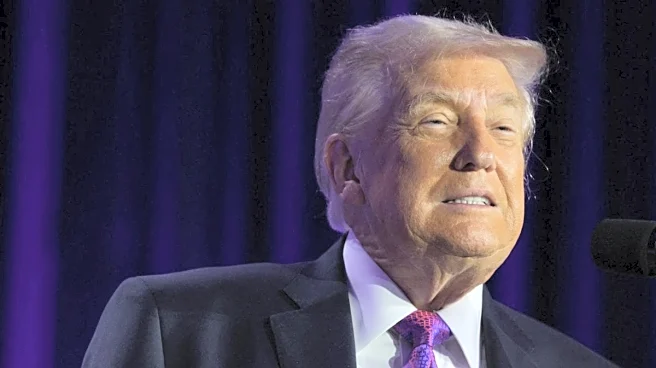
Today’s ruling will not only decide the fate of Trump’s tariffs but also clarify how future presidents — Republican or Democrat — can invoke emergency powers to reshape economic policy. The justices’ past decisions suggest the case may hinge on how strictly the Court interprets congressional authorisation versus presidential discretion.


/images/ppid_59c68470-image-177078253208686535.webp)

/images/ppid_59c68470-image-177077515851590090.webp)