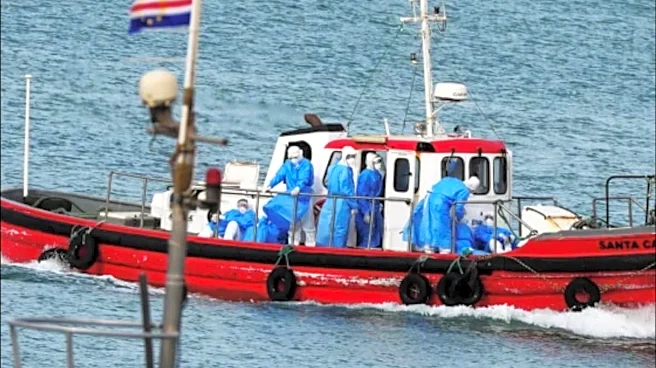

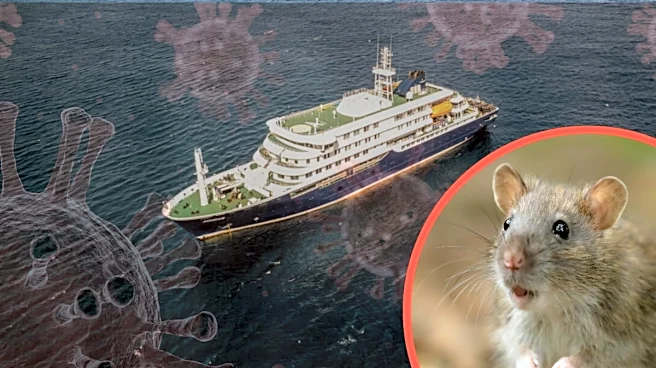

The death of three people following a hantavirus outbreak aboard a cruise ship in the Atlantic has sparked international concern.
The luxury expedition ship MV Hondius, carrying nearly 150 passengers and crew, departed from Ushuaia in southern Argentina on 1 April. It visited remote locations including parts of Antarctica and the Atlantic islands of Tristan da Cunha and Saint Helena before the outbreak became apparent. The cases involve the Andes strain of hantavirus — one of the few variants known to spread from person to person, albeit rarely and only through very close contact.
What Is Andes Virus?
There are many different strains of the hantavirus. Officials have confirmed that those on board the MV Hondius have been identified with the Andes
hantavirus strain.
Hantavirus is usually transmitted to humans hrough contact with infected rodents — usually by inhaling airborne particles from their urine, droppings, or saliva. It is not easily passed between people.
However, the Andes strain is an exception, capable of limited human-to-human transmission, but only in cases of very close, prolonged contact such as sharing a bed or providing intimate care. The Andes hantavirus is endemic to South America, including Argentina, where the ship departed on April 1.
According to CNN, one of the complications with the Andes virus is its long incubation period, meaning the time between a person’s exposure to the virus and when they first begin to show symptoms. The long interval makes tracking down people who may have been exposed particularly difficult.
NBC News quoted Sabra Klein, a professor in the molecular microbiology and immunology department at the Johns Hopkins Bloomberg School of Public Health, saying, “Andes virus, as a hantavirus, requires a significant degree of contact with bodily fluids. In the original reports that came out in the early 2000s, case studies show spread between married couples, people who live together, and are intimate. That is where you have the spread.”
As per the US Centers for Disease Control and Prevention (CDC), while all hantavirus strains can be severe, it is the Andes strain that is most deadly. It can cause hantavirus pulmonary syndrome, a condition that begins with flu-like symptoms such as fever and chills but can rapidly progress to lung problems and difficulty breathing.
It is also important to note that the Andes strain has no vaccine or drug to treat it.
Can The Virus Be Handled?
With regard to understanding how to handle the virus, CNN quoted Dr. Gustavo Palacios, a microbiologist at the Icahn School of Medicine at Mount Sinai in New York, saying: “There is very limited experience handling this virus.”
As per a research reported by FirstPost, the Andes virus may be uniquely resistant to the antiviral components of human saliva that seem to neutralise other strains before they can spread.


/images/ppid_a911dc6a-image-177839763343139352.webp)

/images/ppid_59c68470-image-177829006806524581.webp)


/images/ppid_59c68470-image-177822256212341788.webp)
/images/ppid_59c68470-image-177820512189361916.webp)