



Long before Steve Jobs travelled to India looking for Neem Karoli Baba, an American psychologist had already begun carrying the Indian mystic’s teachings back to the West. More than five decades later, a Hindi film has unexpectedly revived interest in that forgotten link between a Himalayan ashram, American counterculture and the world of Silicon Valley.
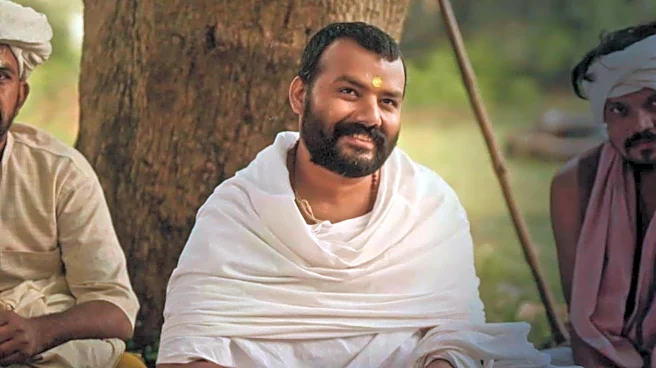
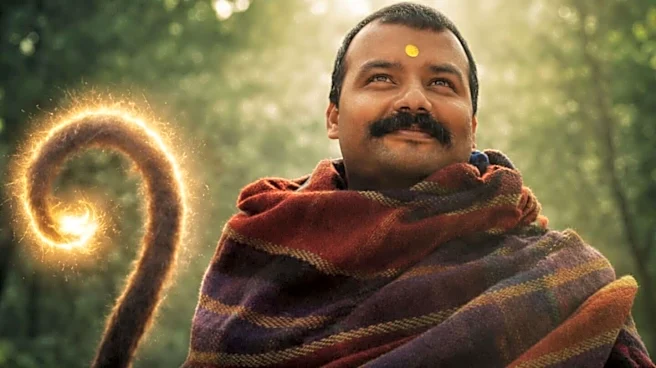
Hanuman Ansh, the 2026 devotional biographical drama based on the life of Neem Karoli Baba, has emerged as one of the year’s biggest hits. Made on a reported budget of around Rs 2 crore, the film has crossed the Rs 100-crore mark domestically and has been reported at around Rs 156 crore worldwide after 32 days. It has done so without a conventional star-driven cast, relying heavily on word of mouth
and the devotional pull of its subject.
That success has put Neem Karoli Baba, also known as Maharaj ji, back in the spotlight.
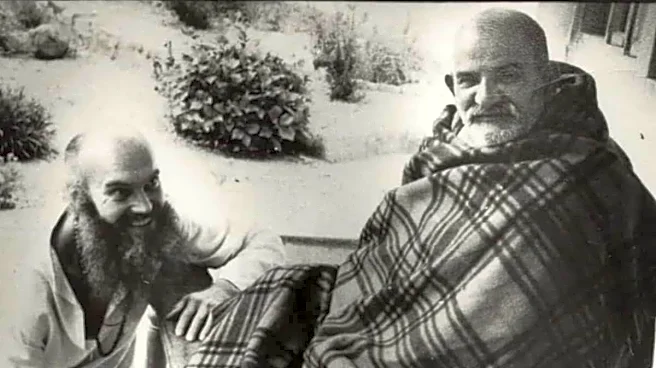
While much of the contemporary conversation around him begins with Steve Jobs, there is, however, an important story that came before Jobs. It begins with Richard Alpert, a Harvard psychologist who came to India in 1967, met Neem Karoli Baba and eventually became known to the world as Ram Dass.
In many ways, it was Ram Dass who built the bridge through which Neem Karoli Baba’s influence travelled from India to the West.
The American Psychologist In Search Of Something Else
Richard Alpert was not a wandering spiritual seeker when he first became famous. He was an academic psychologist at Harvard, working alongside Timothy Leary and participating in experiments involving psychedelic drugs. But by the mid-1960s, his relationship with psychedelics had begun to raise a deeper question as to whether altered states of consciousness could produce lasting transformation.
This search eventually took him to India. According to the Ram Dass organisation’s account of his life, Alpert travelled to India in 1967 and encountered Neem Karoli Baba, whom he came to regard as his guru. The meeting changed the trajectory of his life.
Alpert became Ram Dass – “servant of God” – and returned to America with a very different vocabulary for talking about consciousness, spirituality and the self.
Ram Dass did not simply bring back stories about an Indian guru. He translated an experience rooted in bhakti, devotion, service and remembrance of God into language that Western counterculture could understand.
Then came the book that changed everything.
How Be Here Now Carried Neem Karoli Baba Into The West
In 1971, Ram Dass published Be Here Now. The book became a landmark of Western spiritual literature, introducing a generation of readers to meditation, yoga and Indian spiritual ideas. The Ram Dass organisation describes it as a counterculture classic that brought Eastern spirituality to millions of Western readers.
The significance of the book goes beyond its sales or cultural reputation. It gave Western readers a narrative.
Here was a Harvard academic who had crossed from the world of psychology and psychedelics into Indian spirituality. At the centre of that journey was an Indian guru whose teachings were remarkably simple.
Ram Dass recalled asking Maharaj-ji how to become enlightened. The answer, in his recollection, was not a complicated philosophical system. It revolved around loving everyone, serving everyone and remembering God.
This simplicity became central to Ram Dass’ understanding of his guru. And it is here that the modern Neem Karoli Baba story becomes more complicated than the familiar Steve Jobs narrative.
How Neem Karoli Baba Became A Silicon Valley Guru
Neem Karoli Baba was born Lakshman Narayan Sharma in what is now Uttar Pradesh and became known among devotees as Maharaj-ji. He was a devotee of Hanuman and spent much of his later life associated with the ashram at Kainchi in Uttarakhand.
Kainchi Dham, established in the 1960s, eventually became the best-known physical centre associated with his legacy. Baba died in 1973.
There was no Silicon Valley strategy behind this. There was no business philosophy. There was no entrepreneurial programme.
Yet, decades later, his name became associated with some of the most influential figures in technology.
That happened partly because of the path opened by Ram Dass. Through ‘Be Here Now’ and his subsequent teachings, Ram Dass helped create a Western audience familiar with the world of Maharaj-ji. His own account makes clear that he considered the teachings he received from Neem Karoli Baba central to his life and work.
The guru’s influence therefore travelled far beyond Kainchi through stories, books and disciples.
Then Came Steve Jobs
Steve Jobs arrived in India in 1974, several years after Be Here Now had been published. Jobs was 19 and had dropped out of Reed College. He travelled to India with his friend Daniel Kottke, searching for spiritual direction and hoping to meet Neem Karoli Baba.
But there was a twist that has since become one of the most enduring parts of the story.
Jobs never met him. Neem Karoli Baba had died in September 1973, months before Jobs reached India.
The young Jobs nevertheless visited Kainchi and continued travelling through India. Accounts of the journey describe an experience far removed from the romantic image of India that many Western spiritual seekers carried at the time. Jobs encountered poverty, illness, rural life and a radically different way of living.
The popular shorthand is often “Neem Karoli Baba inspired Steve Jobs”. The historical reality is more nuanced: Jobs sought the guru, reached his ashram after his death and nevertheless regarded his Indian experience as deeply important.
In other words, the connection was real, but it was not a conventional guru-disciple relationship.
That makes Ram Dass’ role even more important. Ram Dass had actually met Maharaj-ji. Jobs did not.
The Man Who Connected The Dots
This is the missing middle chapter in many retellings of the Neem Karoli Baba story. By the time Jobs travelled to India, Neem Karoli Baba’s teachings had already crossed continents.
Ram Dass had helped create the cultural pathway. Be Here Now had already introduced millions of Western readers to meditation and Indian spirituality. The story of an American academic finding a radically different conception of self and consciousness in India had become part of Western counterculture.
Jobs entered that broader cultural environment. His own India experience then became another layer in the mythology.
Years later, Mark Zuckerberg would also become associated with Kainchi Dham. The story became particularly prominent after Zuckerberg said Jobs had suggested he visit the ashram during a difficult period in Facebook’s history.
Before Be Here Now became a counterculture classic, Neem Karoli Baba was a relatively obscure Indian spiritual teacher whose influence was concentrated among his devotees. And before Silicon Valley adopted the story, there was a much simpler message at its centre, that of love, serve and remember.
That is why the current revival around Hanuman Ansh is more significant than another celebrity connection. The film is effectively bringing the story back to India.
After travelling from an Indian ashram to an American psychologist, from Ram Dass to Western counterculture, from there into the mythology surrounding Steve Jobs and Silicon Valley, Neem Karoli Baba’s story has now returned to the Indian mainstream through cinema.
The man who became famous in the West partly through an American disciple is now being rediscovered by a new Indian audience as Neem Karoli Baba himself.




/images/ppid_59c68470-image-178902252237882195.webp)