


You wake up. Before your eyes adjust to the morning, your thumb is already moving. Instagram. YouTube Shorts. X. Repeat. You haven’t brushed your teeth yet, but you already know what some influencer had for breakfast in Bali. This is the first 10 minutes of your day. And someone else wrote the script.
Let us be honest about what is happening here. You—the most educated, most connected, most opportunity-rich generation India has ever produced—have quietly handed over the remote control of your mind to people whose only verified skill is looking good in ring light. That is not an insult. That is a diagnosis. And the patient isn’t even aware he is sick.
Somewhere between 2015 and now, a transaction happened. You gave platforms your time, your attention,
your emotional energy and in return, they gave you a curated version of reality. A reality where everyone is either hustling at 5am or healing on a retreat. Where every college dropout became a founder, and every divorced podcaster became a relationship guru.
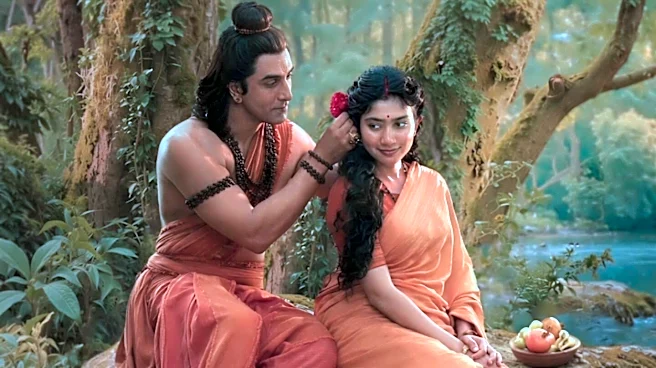
And then there is the spiritual lane. Rishabh Shah, in his book Young, Wired, and Not Woke, captures it with surgical precision: creators wearing branded clothes sit on a pedestal and give ‘pravachans’ quoting holy books, building massive followings, their talks conveniently interspersed with promotional collabs. The thing is, and Shah says this plainly, this identity that most influencers have built isn’t even real. One day they are discussing Aghori babas. Next day, caught without filters, the only thing Aghori about them is the naked truth that they are simply putting up a front. Bhakti meets branding. Your path to ‘moksha’ includes a discount code.
Here is what they will not put in a Reel: the algorithm is not your friend. It is an economy. Your anxiety is its raw material. Your insecurity is its fuel. Every time you feel slightly inadequate after watching someone’s highlight reels—the six-pack—the startup exit, the aesthetic apartment—that platform just made money. You didn’t lose a moment. You surrendered a mood. A mindset. Sometimes, a whole afternoon.
And yet you keep going back. Because the brain is predictable like that. Dopamine hits hard. Dopamine hits fast. Dopamine doesn’t care whether you grew or just felt stimulated for seven seconds.
Now, before you accuse me of being the uncle who doesn’t understand the internet, let me put this on record that I understand it perfectly. I am not asking you to log off forever and live in a forest, chanting Om between milking cows. That ship has sailed, and frankly, the cows have better things to do. What I am asking is far more uncomfortable. Who are you when the phone is face-down? Can you sit with a thought for more than 90 seconds without checking if someone responded? Can you form an opinion before someone serves you one in a 60-second video with dramatic background music? Can you feel proud of something you did—not because 3,000 people liked it—but because you know it was right? If those questions made you uncomfortable, good. Discomfort is the beginning of clarity.
Your generation has been told constantly that you are the future. Every politician quotes you. Every brand chases you. Every influencer claims to speak for you.
But when did you last speak for yourself?
The irony of Gen Z is this—you are the most vocal generation in history, and simultaneously, the most managed. You have platforms with global reach, and you use them to perform. Perform grief. Perform joy. Perform awakening. Every experience becomes content. Every conviction becomes an aesthetic. Every crisis becomes a carousel post with a pastel background and a sans-serif font.
Meanwhile, the real questions go unanswered. What do you actually believe—not what you reposted, actually believe? What are you building, not for the feed, but for the decades ahead? What kind of citizen, what kind of human, what kind of Bharatiya are you becoming—quietly, privately, without an audience?
You are the Bharat Bhagya Vidhata of the twenty-first century. That is not flattery. That is weight. Carry it. Every generation gets a defining question. Your grandparents asked: can we survive as a free nation? Your parents asked: can we compete with the world? Your question is sharper and harder than both—Can we lead it?
Amrit Kaal is not a government slogan. It is a civilisational window. It opens once. Suvarn Kaal—the golden chapter of a nation reborn—will not arrive by itself. It will be built by young Indians who decided their purpose was larger than their personal brand. Who chose contribution over clout. Who understood that a nation’s destiny is not crowd-sourced in comment sections—it is forged in classrooms, laboratories, courtrooms, fields, and yes, even in content—but content with a spine. 2047 is not a distant date on a history syllabus. It is your thirties. Your forties. Your prime. The centenary of a free Bharat will be written in the choices you make this decade. In the habits you build this year.
Bharat did not wait a thousand years for its renaissance so that its brightest generation could spend its best hours chasing algorithmic approval. Put the phone down. Pick the purpose up. The Suvarn Kaal does not build itself. You do.
Yuvraj Pokharna is a Surat-based educator, columnist, and social activist. The views expressed in this article are those of the author and do not represent the stand of this publication.