
/images/ppid_59c68470-image-178975002445332963.webp)

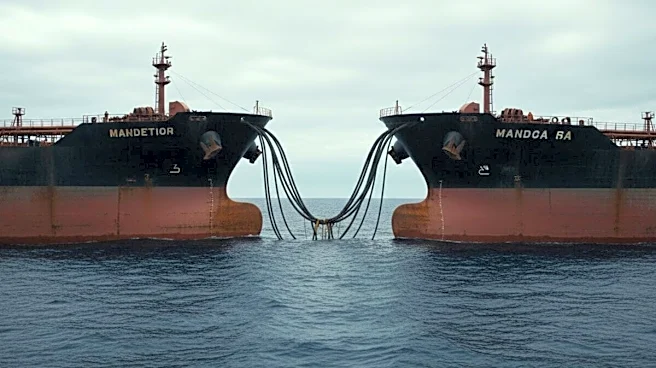
Ship-to-ship (STS) oil transfers have emerged as a critical maritime safety valve to bypass the blockaded Strait of Hormuz. The strategy has gained massive urgency following drone attacks that damaged Saudi Arabia’s alternative East-West pipeline.
All you need to know.
TWO MARITIME HUBS
To keep regional energy exports flowing to global markets, countries like Saudi Arabia, Kuwait, and Qatar are utilizing secretive offshore transfer stations in safer open waters outside the bottleneck, Al Jazeera reported. Two major deepwater maritime hubs located just outside the Persian Gulf have become central to these operations: Sohar Port (Oman): A strategic deepwater hub positioned right outside the strait, where state oil giants like Saudi Aramco are offering flagship crude
grades (Arab Light, Medium, and Heavy) to international buyers. Port of Fujairah (UAE): Situated on the eastern coast of the United Arab Emirates, this port acts as an open-ocean staging area and one of the world’s largest bunkering and crude storage centers.
THE PROCEDURE
According to maritime tracking insights from Al Jazeera and data firms like TankerTrackers, the operational process relies on a delicate step-by-step procedure to mitigate risk:
The Shuttle Phase: Regional exporters bear the primary risk by using localized shuttle tankers to ferry crude from their domestic terminals through the dangerous strait.
Going Dark: To evade tracking and potential missile or drone attacks from conflicting factions, these shuttle vessels typically turn off their automatic tracking systems (AIS) to maintain total secrecy.
Maneuvering and Mooring: Once in the open, safer waters of the Gulf of Oman, one vessel (usually the larger international supertanker) anchors or maintains a steady course. The maneuvering shuttle tanker approaches slowly until their hulls are parallel.
Fendering: Large pneumatic rubber fenders are deployed along the ships’ sides to act as shock absorbers and prevent catastrophic hull-to-hull collisions.
The Transfer: After stringent safety checks, heavy-duty hoses are connected between the vessels. The discharging ship’s pumps transfer millions of barrels of crude oil or LNG while crew members strictly monitor pressure and weather conditions.
Final Delivery: The commercial carriers, which are operated by companies unwilling to enter the volatile warzone of the strait itself, then safely transport the oil to key markets across China, India, South Korea, and Japan.
THE DANGERS
While this massive logistical workaround successfully handles up to 25 million barrels of oil at any given time, it comes with extreme dangers:
- Environmental Fallout: Executing oil transfers on the open ocean leaves very little margin for error. Meticulous coordination is required to prevent spills. The region remains highly sensitive to ecological damage, underscored by recent major oil spills off the Omani coast.
- Geopolitical Target: These ports sit right on the edge of boundaries drawn by the new Persian Gulf Strait Authority. Iranian authorities have previously targeted and attacked vessels accused of utilizing unauthorized southern routes closer to Omani waters.
- Military Reliance: The secrecy of these operations is highly complex. The U.S. military has deployed water drones, aerial surveillance, and helicopters to actively guide and shield the tankers during these transfers.
/images/ppid_59c68470-image-178982753019621664.webp)



/images/ppid_59c68470-image-178988502731818620.webp)