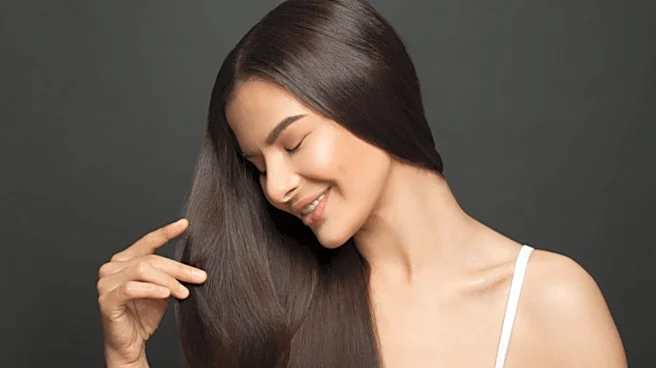






For years, haircare has obsessed over strands — split ends, frizz, shine. But the real story starts at the root, quite literally, with the scalp’s microbiome: the ecosystem of bacteria and fungi living on your skin’s surface.
Much like gut health, scalp health depends on balance, not sterility. A healthy scalp hosts a diverse community of microorganisms that keep inflammation in check, regulate sebum, and protect against pathogenic overgrowth. Disrupt that balance — through harsh cleansing, over-exfoliation, or product buildup — and you get the downstream effects most people blame on “bad hair days”: flaking, itchiness, excess oil, even accelerated shedding.
This is where microbiome-friendly haircare comes in, and it’s less a trend than a correction.
The industry spent decades formulating for strip-and-shine results, often at the cost of the scalp’s protective barrier. We speak to beauty and skincare educator Nipun Kapur Sohal, who shares some easy tips that can be included in your haircare routine.
What to look for in hair care products?
When planning your haircare routine, do not chase brands and expensive products. Instead, focus on what your hair needs by first analysing the issues you deal with and then doing research or speaking to a dermatologist. Think in ingredient categories that can be divided into the following:
• Prebiotics: Compounds like inulin or oat-derived sugars that feed beneficial microbes rather than killing them indiscriminately.
• Postbiotics: Fermented actives — byproducts of probiotic fermentation — that deliver skin-barrier benefits without introducing live cultures that may not survive shelf life.
• Mild, pH-balanced surfactants: Formulas closer to the scalp’s natural pH (around 4.5–5.5) preserve the acid mantle instead of stripping it, which is often the real trigger behind post-wash dryness or oiliness.
• Fermented plant extracts: Ingredients like fermented rice water or fermented botanicals carry smaller, more bioavailable molecules that support the skin barrier without overwhelming it.
• Minimal, targeted preservative systems: Overloaded formulas with aggressive preservatives or sulfates can be as disruptive to the scalp as they are to the strand.
Changing the way we treat our hair
What’s genuinely interesting here is the reframe: hair health is downstream of scalp health, and scalp health is downstream of microbial balance. That means fewer “more is more” routines and more restraint — cleansing effectively without over-cleansing, treating the scalp like the living skin it is, not just real estate for hair follicles.
For an environment like India, where climate, humidity swings, and heavy styling habits already stress the scalp barrier, this shift matters more than most trend cycles. Microbiome-friendly haircare isn’t about a new ingredient buzzword — it’s about finally treating the scalp with the same scientific rigor we’ve long applied to facial skin.





/images/ppid_a911dc6a-image-178343106688578477.webp)





/images/ppid_a911dc6a-image-17834275291294378.webp)