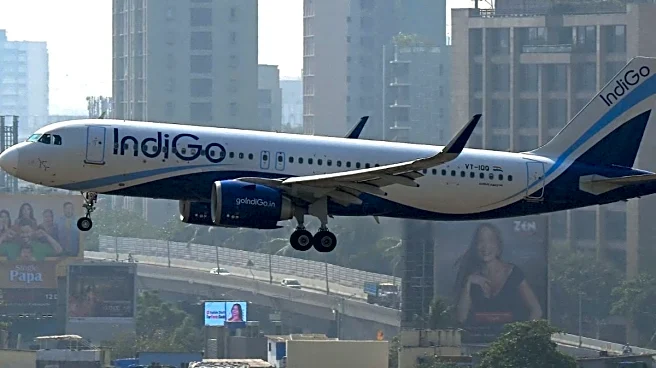

IndiGo Airlines has been hit by massive cancellations of domestic flights over the past week. While passengers bore the brunt of the mess, those flying international on the same airline don’t seem to have
been affected. Among these international flyers were the Luthra brothers, the owners of the Goa nightclub that caught fire and left many dead. The brothers managed to fly to Thailand on an IndiGo flight hours after the blaze.
Saurabh and Gaurav Luthra’s escape on IndiGo flight 6E 1073 to Phuket at 5.30 am on December 7, has left many questioning how this particular flight flew in time amid massive cancellation of IndiGo flights.
INDIGO is well named. It assists people like the Luthra brothers (of the Goa night club fire fame) to GO out of India!
— pamela philipose (@pamelaphilipose) December 9, 2025
Most shameless airline @IndiGo6E,
How is this fair when same relaxations are not provided to competitor Airlines?Was indigo sleeping for 2 long years?
Why only their domestic operations are hampered while International flights have less than 10% Delays?@DGCAIndia@RamMNK
— SpeakingMyMindOut (@SoaringSoul46) December 5, 2025
Why Have IndiGo’s international flights been unaffected?
The biggest reason is that IndiGo’s international flights have remained largely unaffected over the past few days by the change in rostering norms. The crew-shortage and rostering disruption that triggered the mass delays primarily hit their domestic operations, not the international network.
Separate Crew Pools
According to reports, IndiGo operates with separate crew rosters for domestic and international sectors.
The disruptions came from a sudden spike in sick reports among a segment of cabin crew scheduled for domestic flights. Since most international flights depend on distinctly assigned crew, those routes continued normally.
Stricter Regulatory Requirements
International flights operate under stricter regulatory requirements, making them more complex to cancel or reschedule. Long-haul and medium-haul routes involve longer duty-time planning, pre-assigned crew rosters, mandatory rest windows, and tighter DGCA filing norms. Because of these obligations, airlines give priority to such flights to avoid regulatory penalties and prevent cascading disruptions across their global networks.
Priority To International Flights
Operational priority is always given to international routes, and when an airline faces a resource crunch, it typically safeguards flights in a clear order: international services, which bring in the highest revenue and carry bilateral commitments; metro-to-metro domestic routes; and then other domestic sectors. In this context, IndiGo prioritised protecting its international flights first.
IndiGo’s international flights had different crews, higher priority, and stricter planning structures that kept them away them from the disruption.
/images/ppid_a911dc6a-image-177085722614689699.webp)

/images/ppid_a911dc6a-image-177085722221079193.webp)