

/images/ppid_59c68470-image-177070253751678670.webp)
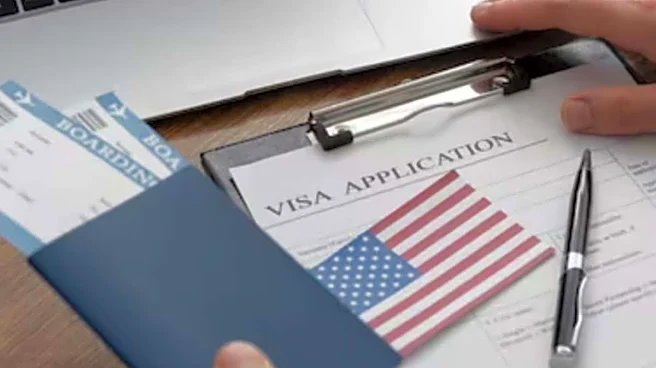
Hundreds of Indian H-1B visa holders who travelled home for routine visa stamping in December have been left stranded after their consular appointments were abruptly cancelled and pushed deep into 2026 and, in some cases, even 2027.
The disruption coincides with the introduction of expanded social-media screening and a sharp drop in the number of interviews US missions can conduct each day. What was expected to be a short holiday-season visit has turned into an open-ended wait for many, with families separated and jobs placed at risk.
December has always been one of the busiest months for H-1B renewals because of reduced work obligations in the United States and office shutdowns around Christmas and New Year. Thousands of Indian professionals
timed their travel accordingly. Instead, their appointments were cancelled with little warning, leaving them unsure of when they would be able to return.
What Caused The Sudden Cancellation Of Appointments?
From the second week of December, applicants with interview dates between 15 and 26 December began receiving rescheduling notices. The shift took place just days before the new requirement for “online presence reviews” was implemented on 15 December, with US consulates in India cancelling appointments and issuing new dates months—or years—later.
On 9 December, the US Embassy in India publicly advised applicants not to appear for their previously scheduled appointments if they had received a rescheduling email, warning that they would be denied admittance to the Embassy or Consulate on their old date. This applied even to those who had already made travel arrangements to another city for their interview.
Applicants were informed that the number of interviews per day had been reduced because of “operational constraints”. This reduction was linked to the new vetting procedures, which require more time per applicant, resulting in fewer interviews being conducted daily.
In many cases, appointments that had been secured months in advance were rescheduled to dates between March and June 2026. One applicant received a new appointment in 2027.
The State Department has said that “every visa adjudication is a national security decision”, and consulates are now prioritising thorough screening over speed.
Why Did India Feel The Impact More Sharply?
India accounts for 71 per cent of all H-1B visa holders, making it the most heavily affected nationality when processing slows. December is also the month when a large proportion of Indian workers return for stamping, intensifying the impact of the delays.
The disruption appeared India-specific because US consulates operate independently, with their own staffing, workload and system requirements. Operational issues, such as capacity limits, IT updates or staffing shortages, are post-specific and not global. Similar mass rescheduling has occurred in Canada, Mexico, Nigeria, Brazil and parts of Europe, but India’s extremely high visa volume makes the fallout more visible.
Those affected in India received rescheduling notices, but not everyone was impacted. Only applicants whose appointments fell within the affected period received cancellations.
When a post with unusually high demand, such as India, reduces its daily number of appointments because of screening changes or internal updates, large numbers of applicants are immediately affected.
Why Can’t Workers Return To The US Without Stamping?
Although H-1B status itself is approved inside the United States, re-entry requires a valid visa stamp issued at a consulate abroad. Workers must obtain this stamp when:
- renewing their visa after the initial three-year or six-year cycle,
- changing employers and needing a fresh stamp, or
- travelling for the first time after changing status inside the US.
Without this stamp, they cannot board a flight back. Exceptions such as automatic revalidation do not apply in these circumstances.
How Is The Backlog Affecting Workers And Families?
The cancellations have stranded mid-career professionals who have established lives in the United States. Many have mortgages, children in school and long-term roles that depend on their physical presence.
One engineer based in Detroit travelled to India for a family event with visa interviews set for 17 and 23 December. Both were cancelled, and his new appointment was scheduled for 2 July 2026. His visa expired while he was in India, leaving him unable to return. His employer later obtained an expedited appointment by submitting documentation showing major projects ramping up next year.
Immigration lawyers have described the situation as one of the most severe breakdowns in H-1B processing in years. One said, “This is the biggest mess we have seen,” adding, “I’m not sure there is a plan.” Another reported handling “at least 100 clients stranded in India”.
Families are struggling with decisions about whether to keep children enrolled in schools abroad or bring them back to India. Some workers are separated from spouses who remain in the United States.
Companies are also affected. Technology firms have issued warnings advising employees dependent on visas to avoid international travel because appointment backlogs could extend up to 12 months. Google’s external legal counsel advised employees earlier this year not to travel abroad if visa stamping would be required. Alphabet had issued similar instructions as early as September.
Executives are finding it difficult to plan staffing and project timelines because they cannot predict when employees will be able to return.
How Do The New Social-Media Reviews Work?
Under expanded digital vetting, consular officers now examine the applicant’s online presence as part of the security review. This involves looking at social-media activity to ensure it aligns with the information provided in the application and does not raise any concerns related to public safety or national security.
This level of scrutiny was already in place for student and exchange-visitor visas. It is now applied to H-1B and H-4 workers and their dependants. Because the review requires more time per case, consulates have reduced the number of interviews conducted each day.
In the weeks before the new rule took effect, visa applicants had also been instructed to adjust their social-media privacy settings, indicating the depth of the review expected.
Why Do H-1B Holders Need To Travel To India For Stamping?
H-1B workers generally need to travel abroad for stamping when renewing their visa, when changing employers and needing a new stamp, or when travelling internationally for the first time after changing status inside the US. Although their immigration status is valid, the visa stamp is what allows them to re-enter the United States.
Many Indian nationals travel to India because it is their home post and because consulates there routinely process high numbers of H-1B workers. For some, the trip is also combined with personal visits.
Stamping is mandatory for return travel and cannot be done from within the US.
What Options Do Stranded Workers Have Now?
- Attend the rescheduled appointment – Those who have already been issued new dates must wait for them. They cannot enter the United States without a valid visa stamp.
- Request an expedited appointment – Emergency appointments may be granted only in exceptional circumstances, such as urgent work needs, humanitarian issues or medical situations. Approval is not guaranteed and requires strong documentation.
- Work remotely from India – Many H-1B holders continue working remotely if their employers allow it. This is legally permissible, provided payroll compliance and tax obligations are properly managed.
Those affected have been told that the rescheduled dates provided to them are the dates on which they will be assisted, and that they should not appear on earlier dates.
What Lies Ahead?
The delays come alongside broader immigration-related measures introduced this year. These include the USD 100,000 fee on new H-1B applications submitted after 21 September and a rule introduced in July requiring H-1B workers and their H-4 dependants to return to their home country for renewals rather than using third-country consulates.
Separately, the US government paused green-card, citizenship and other immigration applications for individuals from 19 “countries of concern” following a security incident. India is not among them.
For now, thousands of workers remain dependent on their rescheduled appointments or the limited possibility of receiving expedited dates. With no alternate pathway for visa stamping and no indication of immediate relief, those who travelled to India for routine processing in December are facing an uncertain and extended stay.
/images/ppid_59c68470-image-177088253353351703.webp)

/images/ppid_a911dc6a-image-177089363597584380.webp)

/images/ppid_59c68470-image-177091507434334309.webp)
/images/ppid_59c68470-image-177088504763695366.webp)
/images/ppid_a911dc6a-image-177077683848562681.webp)
/images/ppid_59c68470-image-177070504854362320.webp)
