
/images/ppid_a911dc6a-image-177096647797524739.webp)
/images/ppid_a911dc6a-image-1770966255583724.webp)
While Ranveer Singh may be the face front and centre on Dhurandhar posters, the conversation around the film has increasingly gravitated towards Akshaye Khanna. In a cast stacked with formidable performers like Sanjay Dutt and Arjun Rampal, many feel it is Khanna’s chillingly restrained turn as Rehman Dakait that lingers the longest. Quiet, coiled, and unsettling, his performance has emerged as one of the film’s most talked-about elements.
What makes this even more remarkable is how close Dhurandhar came to not having Akshaye Khanna at all.
“Aditya Thought I Was Being Over-Ambitious”
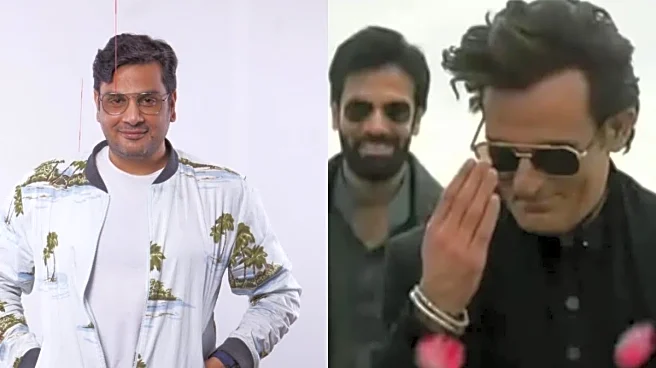
Casting director Mukesh Chhabra recently pulled back the curtain on the arduous journey of assembling Dhurandhar’s ensemble, revealing that convincing Akshaye Khanna
to come on board was a year-long battle of patience and persuasion.
By the time Chhabra joined the project, Ranveer Singh was already locked in. In Bollywood, that often means other major actors hesitate, wary of being overshadowed. Chhabra, however, chose to ignore that unspoken hierarchy.
He approached every role with equal seriousness — whether it was R. Madhavan’s part or even smaller supporting characters — a mindset that initially made director Aditya Dhar uneasy.
When Chhabra proposed Akshaye Khanna for Rehman Dakait, the reaction was skeptical. “Aditya felt I was being overly ambitious,” Chhabra recalled. “But I was convinced Akshaye paaji was right for it.”
From Being Scolded to Being Heard
Getting Akshaye Khanna on the phone was just the beginning — and not a warm one.
“I hadn’t even watched Chhaava back then,” Chhabra admitted. “I called him, and the first thing he did was scold me. He said, ‘Paagal ho gaya hai kya?’”
Khanna’s reputation for being intensely private and selective proved accurate. But Chhabra persisted, requesting just one thing — that the actor listen to the script before saying no.
Reluctantly, Khanna agreed to meet, though even that came with hesitation. Living far from Mumbai’s usual film circuit, he told Chhabra bluntly to specify where exactly the meeting would be.
Four Hours That Changed Everything
The meeting turned into an unexpectedly long session. Akshaye Khanna sat with Mukesh Chhabra and Aditya Dhar for nearly four hours, quietly listening as the script unfolded.
“He barely interrupted,” Chhabra said. “He kept smoking, kept listening.”
When the narration finally ended, Khanna broke the silence with a reaction no one anticipated.
“‘F**k, it’s very good,’” he said. “‘Bada maza aayega.’”
Even then, the uncertainty lingered. Two anxious days passed before Chhabra’s phone rang.
“He just called and said, ‘Let’s do it, bro.’ That was it.”
A Performance That Redefined the Film
With Dhurandhar now firmly behind him and his performance widely celebrated, Akshaye Khanna shows no signs of slowing down. He has already begun work on his Telugu debut, Mahakali, directed by Puja Kolluru, marking his entry into the Prashanth Varma Cinematic Universe (PVCU).
Early glimpses of his transformation into Shukracharya have sparked excitement, once again proving that Khanna’s choices — few and far between — continue to shape some of the most compelling characters in contemporary Indian cinema.
In a film driven by scale, spectacle, and star power, Dhurandhar ultimately found one of its strongest anchors in an actor who almost walked away before even hearing the story.

/images/ppid_59c68470-image-177096762263013357.webp)

/images/ppid_59c68470-image-177096759058220494.webp)
/images/ppid_59c68470-image-177096752848059885.webp)
/images/ppid_59c68470-image-177096756236953747.webp)

/images/ppid_59c68470-image-17709675345444571.webp)
/images/ppid_59c68470-image-177096753488356394.webp)