



What if an entire village decided that wasting water was no longer an option?
That’s exactly what happened in Hiware Bazar, a small village in Maharashtra that has become one of India’s most celebrated examples of sustainable living.
A few decades ago, the picture was very different. The village was facing problems of acute water scarcity; the crops would often fail and families would find it difficult to make both ends meet. The lack of employment options resulted in migration from this area by many villagers to find jobs in other places.
A turning point came for this community when it realized that the solution lay in the conservation of water resources along with environmental restoration.
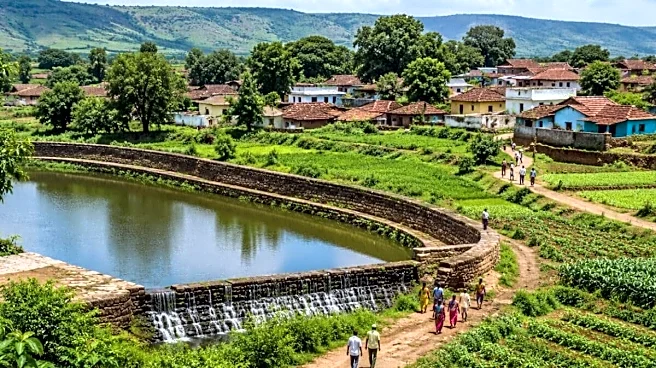
Check dams were constructed by the villagers, rainwater
harvesting pits dug and plants planted in all areas around the village.
Gradually, the effects started to manifest themselves.
Wells that had run dry started filling up again. Farms became productive. Crops improved. Families who had once left the village began returning. What seemed like an impossible challenge suddenly looked solvable.
Today, sustainability isn’t a special project in Hiware Bazar—it’s simply part of everyday life.
Water conservation has been practiced by the inhabitants in a diligent manner. The farming activities have been conducted in a planned fashion, using whatever natural resources are available. All this is done collectively by the community, as the villagers understand that their survival and well-being are directly connected to this effort.
It can be said that one of the most outstanding aspects of the Hiware Bazar tale is its simplicity. No dramatic breakthroughs or heavy investments were required to transform the life of this village.
Such an approach has turned the village into a model case study for policy makers as well as environmentalists. Visitors come often to understand how a drought-hit village has been transformed into a role model.
When walking around Hiware Bazar now, it’s difficult to visualize the struggles that this village used to face previously. Barren landscapes have now become green fields and water is much more secure.
In times where climate change and water shortages are emerging as major global issues, Hiware Bazar gives us a positive signal. Sustainable living need not necessarily mean something big or dramatic.
Sometimes, sustainable living begins with small steps such as looking after one’s water, land, and future.