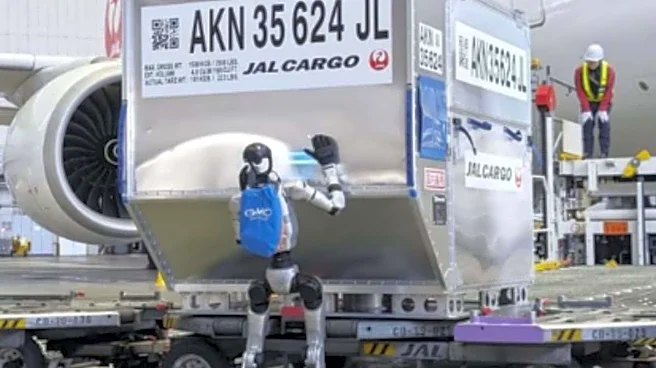




For the first time, Japan will appoint humanoid robots to relieve its overburdened baggage handlers at Tokyo’s Haneda airport.
According to a report by The Guardian, Japan Airlines (JAL) will introduce Chinese-made humanoid robots on a trial basis from the beginning of May, with a view to deploying them permanently as a solution to the country’s chronic labour shortage. The robots will be used to move travellers’ luggage and cargo on the tarmac at Haneda, which handles more than 60 million passengers a year.
The project, initiated by JAL and Japan Airlines GMO Internet Group, is aimed to reduce the burden on human employees amid a surge in inbound tourism.
JAL just announced humanoid robots at Haneda Airport!
From May 2026 they’ll test kid-sized
Unitree G1 and adult-sized UBTECH Walker E for heavy ground work like baggage and cargo. Japan’s aging population + tourism boom making this necessary.
Future is here 🤖 pic.twitter.com/zokm7OQLQt
— Alvin Foo (@alvinfoo) April 28, 2026
In a demonstration for the media this week, a 130cm-tall robot manufactured by Hangzhou-based Unitree was seen tentatively “pushing” cargo on to a conveyer belt next to a JAL passenger plane and waving to an unseen colleague, The Guardian reported.
President of JAL Ground Service, Yoshiteru Suzuki, said the robots will “inevitably reduce the burden on workers and provide significant benefits to employees”.
He, however, added that key tasks such as safety management will be performed by humans.
Since past several years, the country has been struggling to cope with surge in tourists.
According to Japan National Tourism Organisation, over 7 million people visited the country in the first two months of 2026. The Guardian cited an estimate stating that apan will need more than 6.5 million foreign workers in 2040 to reach its growth targets as the indigenous workforce continues to shrink.
The president of GMO AI and Robotics, Tomohiro Uchida, said: “While airports appear highly automated and standardised, their back-end operations still rely heavily on human labour and face serious labor shortages.”









/images/ppid_a911dc6a-image-177729655689650314.webp)