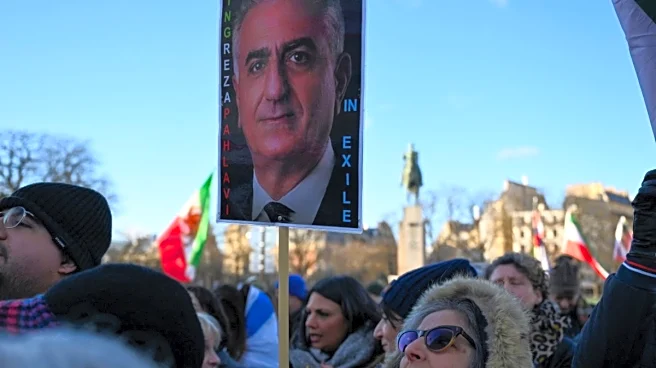

Reza Pahlavi, the exiled crown prince and son of Iran’s late Shah, issued a high-stakes appeal to US President Donald Trump on Friday, requesting immediate American intervention to protect protesters from
an impending massacre. The urgent plea, shared across social media platforms, comes as the Islamic Republic remains gripped by a nationwide internet and telecommunications blackout. Pahlavi warned that the regime in Tehran is using this “digital shroud” to conceal a brutal crackdown on a movement that has posed the most significant challenge to clerical rule in decades.
“Mr President, this is an urgent and immediate call for your attention, support, and action,” Pahlavi wrote, addressing Trump as a “man of peace and a man of your word”. The exiled leader, who resides in the Washington area, claimed that millions of “brave Iranians” had taken to the streets on Thursday night following his direct call for mass mobilisation. He argued that the current communication blackout—which has seen national connectivity flatline at approximately 1 per cent—is a strategic move by Supreme Leader Ayatollah Ali Khamenei to “murder these young heroes” away from the eyes of the international community.
The timing of Pahlavi’s appeal is critical, occurring as the reported death toll from the fortnight-long unrest has climbed to at least 62, with over 2,300 individuals detained. The protests, initially triggered in late December 2025 by a collapsing economy and a record-low rial, have evolved into a revolutionary surge with demonstrators openly chanting “Death to the Dictator” and calling for the return of the monarchy. While Pahlavi did not specify the nature of the intervention he seeks, his message alluded to Trump’s previous “locked and loaded” warnings. The President has repeatedly threatened to hit the Iranian regime “very, very hard” if it resorts to lethal force against peaceful demonstrators.
However, the White House has maintained a degree of strategic ambiguity. In recent interviews, President Trump praised the bravery of the Iranian people but expressed reluctance to meet with Pahlavi officially, stating it would be “premature” to back a specific opposition leader before the movement further matures. Meanwhile, Tehran has blamed the United States and Israel for orchestrating the “vandalism” and has warned of “decisive and maximum” punishment for those it labels as saboteurs. As the blackout continues, Pahlavi’s message serves as a desperate attempt to keep the international spotlight on a nation teetering on the edge of a violent confrontation.







/images/ppid_59c68470-image-17708925279223654.webp)

/images/ppid_59c68470-image-177089257596090286.webp)