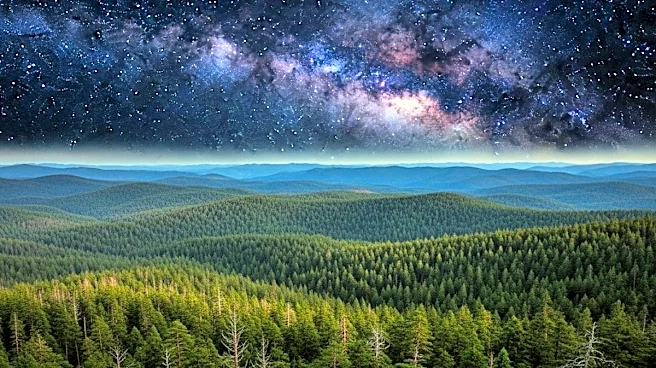



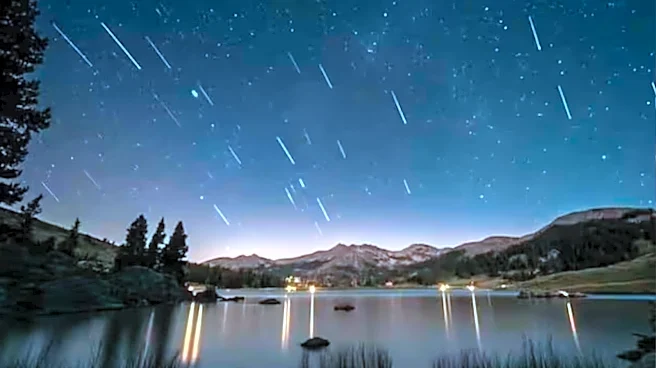
If you tried to count every tree on Earth, you’d run out of time long before you even got close — but here’s the surprising part: there might actually be more of them than stars in our galaxy. For years, scientists believed there were about 400 billion trees on Earth. But a major global study in 2015 changed that picture completely. By combining satellite images with on-ground data from different parts of the world, researchers came up with a much higher estimate — around 3 trillion trees. That’s nearly eight times more than earlier estimates. To put that in perspective, astronomers estimate that the Milky Way contains somewhere between 100 billion and 400 billion stars. Even at the higher end of that range, Earth could still have more trees than our galaxy has
stars. Of course, neither number is exact. Counting trees across the entire planet isn’t straightforward. Scientists rely on satellite data, field surveys, and statistical models to make these estimates. The same goes for stars — astronomers can’t count each one individually, so they use observations and models to arrive at a range. Even with all the ambiguity surrounding this estimate, however, the contrast cannot be overlooked. It simply proves how heavily tree-dense areas on our planet are, particularly those such as tropical forests, which make up a big portion of the total number of the existing trees. However, this isn’t the end of the story. The research conducted on trees in the world also shows that about 15 billion trees disappear each year due to deforestation. Although the growth rate of new trees compensates partially for these losses, in total, the number of existing trees keeps decreasing. Thus, even though we can say that there are more trees than stars in the Milky Way, this number keeps changing. It’s one of those facts that makes you pause for a second. We often think of space as unimaginably vast — and it is — but sometimes, when you look closely at our own planet, the numbers here can be just as surprising.


/images/ppid_a911dc6a-image-177685204598342433.webp)