
/images/ppid_a911dc6a-image-17809142914585243.webp)
/images/ppid_a911dc6a-image-178098967534437514.webp)
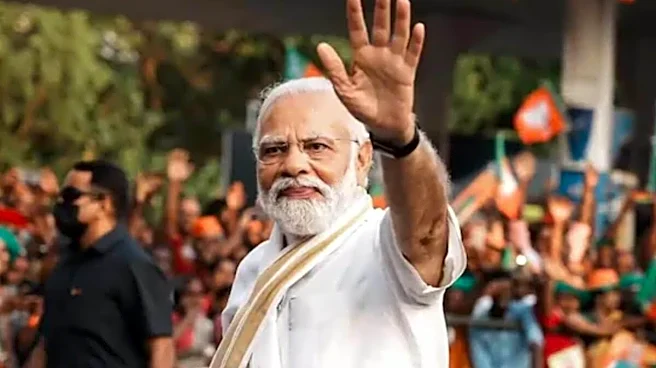
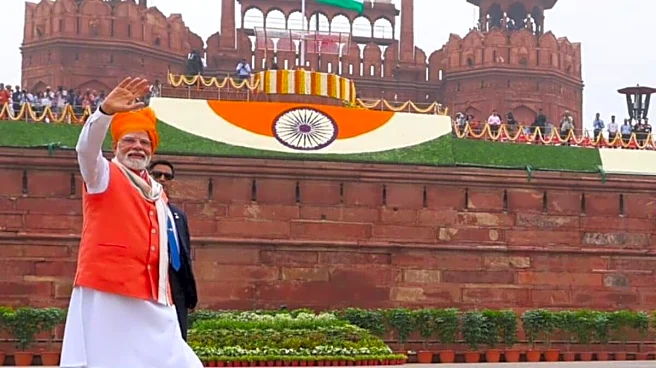
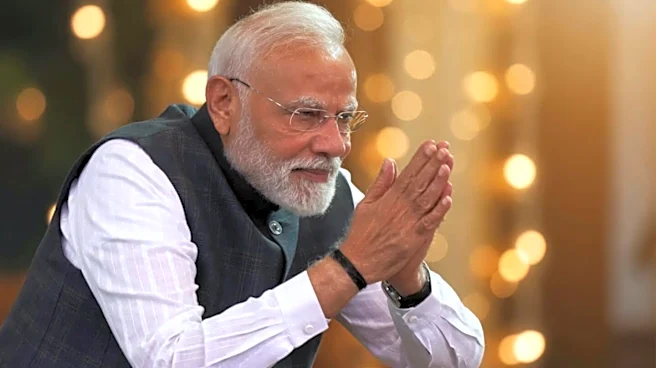
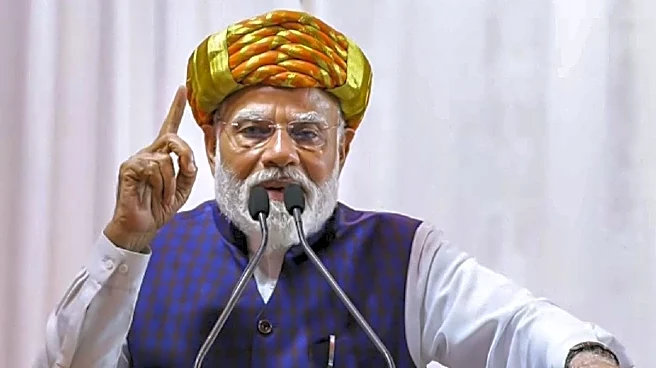
Prime Minister Narendra Modi on Wednesday surpassed Jawaharlal Nehru to become India’s longest-serving elected Prime Minister, completing 12 consecutive years in office. His tenure has been defined by an expansive welfare agenda, financial inclusion initiatives and large-scale infrastructure development.
Addressing a meeting of NDA leaders in New Delhi, PM Modi said, “‘Sabka Saath, Sabka Vikas, Sabka Vishwas’ and ‘Sabka Prayas’ have been our guiding principles.”
“The journey of the past twelve years has been marked by achievements. The years ahead will bring even newer and greater milestones,” he said.
Over the past 12 years, the Modi government has rolled out a series of flagship schemes aimed at ensuring welfare benefits reach every eligible
citizen through digital infrastructure, direct benefit transfers and targeted social programmes.
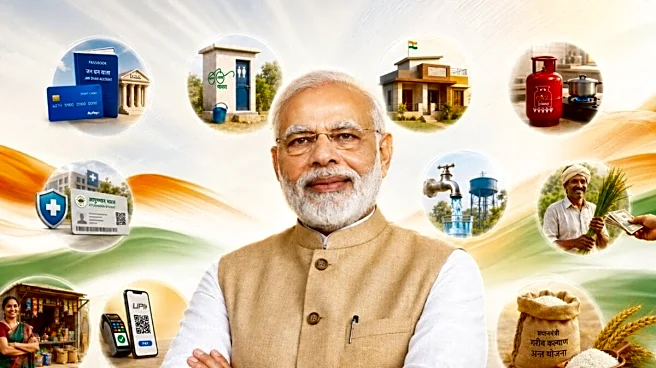
From opening bank accounts for the unbanked and building toilets in villages to providing free healthcare, housing and tap water connections, these initiatives have become the cornerstone of the government’s governance model.
Here’s a look at 12 key initiatives that have defined the Modi era.
1. Jan Dhan Yojana: The Foundation Of Direct Welfare
Launched on August 28, 2014, the Pradhan Mantri Jan Dhan Yojana (PMJDY) created the foundation for India’s digital welfare architecture by bringing the unbanked into the formal financial system.
More than 56 crore bank accounts have been opened under the scheme. Equipped with RuPay debit cards and accident insurance, these accounts became the primary channel for direct benefit transfers, ensuring government subsidies reach beneficiaries without middlemen or leakages.
2. Swachh Bharat: India’s Sanitation Revolution
Launched on October 2, 2014, Swachh Bharat Mission sought to eliminate open defecation and improve sanitation standards across the country.
Over 12 crore household toilets have been constructed under the programme. Beyond infrastructure, the campaign triggered a behavioural shift and significantly improved sanitation access, particularly for women in rural India.
3. PM Awas Yojana: Housing The Poor
The urban component of PM Awas Yojana was launched in June 2015, followed by the rural version in April 2016.
The scheme focuses on replacing temporary houses with permanent pucca homes equipped with basic amenities. More than 4 crore houses have been constructed under the scheme. A key feature is that ownership is often registered in the name of women, enhancing financial security and asset ownership among female beneficiaries.
4. Jal Jeevan Mission: Water At The Doorstep
Launched on August 15, 2019, Jal Jeevan Mission aims to provide tap water to every rural household.
Rural tap water coverage has increased from 3.2 crore households in 2019 to over 15.8 crore households today. The scheme has reduced the burden on women who traditionally spent hours fetching water from distant sources.
5. Ujjwala Yojana: Smoke-Free Kitchens
Introduced on May 1, 2016, the Pradhan Mantri Ujjwala Yojana provides free LPG connections to women from poor households.
More than 10 crore LPG connections have been distributed. By replacing firewood and traditional cooking fuels, the scheme has helped reduce indoor air pollution and improved the health of millions of women and children.
5. Ayushman Bharat: Healthcare For The Poor
Launched in September 2018, Ayushman Bharat-Pradhan Mantri Jan Arogya Yojana (PM-JAY) is the world’s largest government-funded health insurance programme.
The scheme provides cashless health coverage of up to Rs 5 lakh per family annually. More than 44 crore Ayushman cards have been generated. The programme was recently expanded to cover all citizens aged 70 and above, irrespective of income.
6. PM Garib Kalyan Anna Yojana: Food Security At Scale
Introduced during the Covid-19 pandemic in March 2020 and later extended until 2029, PM Garib Kalyan Yojana has emerged as one of the world’s largest food security programmes.
The scheme provides 5 kg of free foodgrains every month to over 81.3 crore beneficiaries, helping vulnerable households cope with inflation and economic disruptions.
7. PM-KISAN: Direct Support To Farmers
Launched in February 2019, PM-KISAN provides direct income support to farmers.
More than 9.5 crore farmer families receive Rs 6,000 annually in three instalments. So far, over Rs 4.28 lakh crore has been transferred directly into farmers’ bank accounts, helping them meet agricultural expenses without depending on informal lenders.
8. Mudra Yojana: Fueling Small Businesses
Launched on April 8, 2015, the PM Mudra Yojana provides collateral-free loans to small entrepreneurs and micro enterprises.
More than 58 crore loans worth over Rs 40 lakh crore have been sanctioned. Women account for nearly 68 per cent of beneficiaries, making the scheme a major driver of grassroots entrepreneurship and self-employment.
9. Atal Pension Yojana: Social Security For Workers
Introduced on May 9, 2015, Atal Pension Yojana was designed for workers in the unorganised sector who often lack retirement security.
Subscribers contribute small amounts during their working years and receive a guaranteed monthly pension ranging from Rs 1,000 to Rs 5,000 after the age of 60.
10. Digital India: Building The Digital Backbone
Launched on July 1, 2015, Digital India aimed to transform India into a digitally empowered society.
The initiative accelerated broadband expansion, digital governance and online service delivery. It also provided the ecosystem for the rise of UPI, which today processes billions of transactions every month and has transformed the way Indians make payments.
11. Startup India: Encouraging Innovation
Introduced in January 2016, Startup India sought to make entrepreneurship easier through tax incentives, regulatory support and simplified compliance norms.
According to government data, more than 2.23 lakh startups have been recognised under the programme, creating over 23.36 lakh direct jobs. More than 38,600 startups have also been onboarded onto the Government e-Marketplace (GeM), allowing them to directly compete for government procurement contracts.
12. Beyond Welfare: GST And Income Tax Relief
Apart from welfare programmes, the Modi government also pushed major economic reforms.
The Goods and Services Tax (GST), launched on July 1, 2017, replaced multiple indirect taxes with a unified national tax system. The reform simplified compliance, reduced tax cascading and helped create a common market across states.
More recently, the government announced that individuals earning up to Rs 12 lakh annually under the new tax regime would pay no income tax. With the standard deduction of Rs 75,000, the effective tax-free threshold rose to Rs 12.75 lakh, providing significant relief to middle-class taxpayers.
/images/ppid_a911dc6a-image-178100272461147691.webp)


/images/ppid_a911dc6a-image-178110150037720421.webp)