


/images/ppid_a911dc6a-image-177883310340796623.webp)
Petrol and diesel prices were hiked across the country on Friday by around Rs 3 per litre, as oil marketing companies (OMCs) faced rising pressure from global crude oil prices, supply concerns and a weakening rupee. The latest increase comes at a time when tensions in the Gulf region have intensified, raising fears of higher fuel inflation in India.
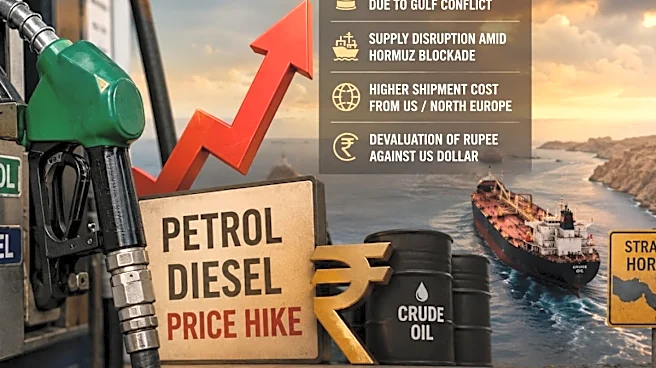
Petrol price was hiked to Rs 97.77 per litre on May 15, from Rs 94.77 in the national capital. Diesel now costs Rs 90.67 as against Rs 87.67 per litre previously. Prices have remained on freeze since April 2022 but for a one-off reduction by Rs 2 a litre each on petrol and diesel in March 2024, just before Lok Sabha elections. Here are the key reasons for the latest fuel price hike:
1) US-Iran Conflict Pushes Crude Oil Prices Higher
One of the biggest
reasons behind the fuel price hike is the sharp rise in global crude oil prices after the escalation of conflict in the Gulf region. Brent crude prices have climbed to as much as $120 per barrel in recent weeks as traders fear disruptions in oil supply from West Asia, which remains one of the world’s largest oil-producing regions.
India imports more than 85 per cent of its crude oil requirement. So, any rise in international oil prices directly impacts domestic fuel prices.
2) Hormuz Blockade Concerns Trigger Supply Disruption Fears
The Strait of Hormuz, one of the world’s most critical oil shipping routes, has emerged as a major concern for global energy markets. Reports of supply disruption risks and fears of a possible blockade have added to uncertainty.
Around 30 per cent of India’s crude oil imports pass through the Strait of Hormuz. Any disruption there increases the risk premium on crude oil, pushing prices higher globally. This has increased the burden on Indian oil marketing companies.
3) Shipment Costs Have Increased Sharply
Apart from this, shipping from the US and Northern Europe has also added to the crude oil costs for domestic companies amid rising geopolitical tensions and insurance-related risks for vessels.
Higher freight costs make imported crude oil more expensive for refiners. The additional logistics burden eventually reflects in retail fuel prices paid by consumers.
4) Weak Rupee Adds To India’s Import Bill
The depreciation of the Indian rupee against the US dollar has also played a key role in the latest fuel price hike. The rupee has become the worst-performing currency in Asia for the year, registering a loss of over 6 per cent so far this year, as elevated crude oil prices, a strong dollar and concerns over the West Asia crisis weighed on investor sentiments.
Since crude oil is traded globally in dollars, a weaker rupee increases the overall import cost for India. Even if crude prices remain stable, a falling rupee can make oil imports costlier. With the rupee under pressure, oil companies are facing higher input costs.
Govt Recently Cut Excise Duty To Reduce Burden
The latest hike comes despite the Centre recently reducing excise duty on petrol and diesel to cushion the impact on consumers. On March 27, the government had announced to reduce excise duty by Rs 10 per litre on both petrol and diesel, to cushion the impact of costlier crude amid geopolitical uncertainty.
The excise reduction was not passed on as a price cut at the pump. Instead, it directly reduces the under-recoveries being absorbed by public sector oil marketing companies (OMCs) — Indian Oil Corporation, Bharat Petroleum Corporation and Hindustan Petroleum Corporation — who have continued to supply fuel to Indian consumers at prices well below their cost of supply. At current international crude prices, under-recoveries stood at about Rs 26 per litre on petrol and Rs 81.90 per litre on diesel. The combined daily under-recovery being absorbed by OMCs was about Rs 2,400 crore. The excise reduction offset Rs 10 per litre of these losses, ensuring OMCs can continue to supply fuel without disruption while keeping retail prices unchanged.
Fuel prices have risen by 30 to 50 per cent across South and South-East Asian countries, 30 per cent in North America, and 20 per cent in Europe since the onset of the current crisis.






/images/ppid_a911dc6a-image-177883426022945646.webp)

/images/ppid_a911dc6a-image-177883422555542248.webp)
/images/ppid_a911dc6a-image-177883392849036068.webp)