


![[WATCH] MS Dhoni asks cameraman to not record, accidentally recreates old video during banter with Deepak Chahar](https://glance-mob.glance-cdn.com/public/cardpress/binge-magazine-card-generation/spaces/IN/en/crictracker-spaces/images/ppid_49c02804-image-177686006025245953.webp)
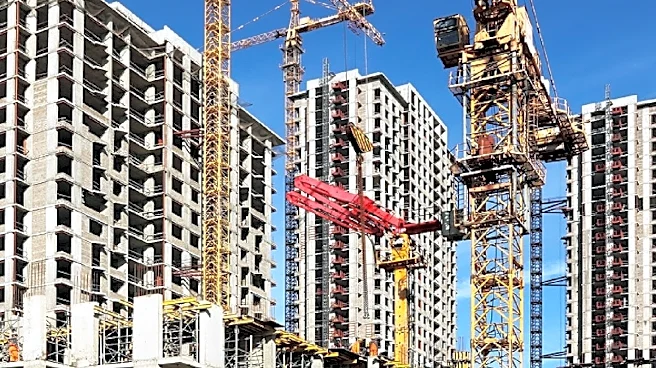
India’s residential real estate market started 2026 with a sharp rise in housing supply and continued price appreciation, even as buyer demand saw a mild quarterly slowdown. According to the latest Magicbricks PropIndex Q1 2026 report, active residential listings across 13 major cities increased 10.1 per cent year-on-year and 6.8 per cent quarter-on-quarter to 1,10,821 units during the January-March period. At the same time, the national average residential property rate climbed 14.1 per cent from a year earlier to Rs 14,633 per square foot.
Demand across the country declined 2.2 per cent sequentially in the quarter, though it remained 1.5 per cent higher compared with the same period last year. Total housing demand tracked during the quarter stood
at nearly 31.7 lakh units.
Prasun Kumar, chief marketing officer at Magicbricks, said the market is entering a more balanced phase, with short-term demand moderating due to external economic factors while long-term confidence remains intact.
“While short-term demand has moderated due to external economic factors, the continued rise in prices and strong supply pipeline reflect sustained confidence among developers and long-term end-user demand,” Kumar said.
City-wise demand mixed
Housing demand trends varied across cities in the March quarter. Noida recorded an 8.2 per cent decline in demand, followed by Chennai at 5.2 per cent and Kolkata at 4.7 per cent. Ahmedabad stood out as one of the stronger markets, posting 2.7 per cent growth in demand, while New Delhi and Pune saw only marginal declines of 0.7 per cent and 0.5 per cent, respectively.
Developers ramp up launches
On the supply side, developers continued to add inventory aggressively. Bengaluru saw the sharpest rise in active supply at 22.3 per cent, followed by Hyderabad at 19.8 per cent and Kolkata at 12.1 per cent.
The report also highlighted growing premiumisation in the housing market, with inventory in the Rs 3 crore-plus category expanding across major cities.
3BHK homes gain traction
Buyer preferences remained concentrated in mid-sized homes. Two-bedroom apartments accounted for 42 per cent of total demand, while three-bedroom homes made up 37 per cent. Together, 2BHK and 3BHK units contributed nearly 80 per cent of overall housing demand, reflecting rising preference for practical and long-term living spaces. Homes in the 750-1,250 sq ft range remained the most sought-after.
Regional divide continues
The report noted that NCR markets and southern technology-driven cities such as Bengaluru and Hyderabad are witnessing stronger demand for larger homes, while the Mumbai Metropolitan Region continues to be led by compact and relatively affordable housing due to higher pricing pressures.
Market enters mature phase
Despite the quarterly moderation in demand, analysts said steady annual growth, rising supply and firm pricing indicate that the residential market remains fundamentally healthy. The continued shift toward premium housing and lifestyle-led purchases suggests India’s property sector is increasingly moving toward an end-user-driven growth cycle, with greater focus on quality housing, larger spaces and long-term ownership demand.