
The uncertainty over the appointment of the next Director General of Police (DGP) of West Bengal is expected to be resolved by the last week of January, following directions issued by the Central Administrative
Tribunal (CAT).
The matter came before the CAT after a DG-rank IPS officer filed a petition, alleging that he was denied a fair opportunity to be considered by the Union Public Service Commission (UPSC) for empanelment for the post of DGP.
In its order, the CAT has directed that:
- The West Bengal government must submit a panel of eligible officers to the UPSC by January 23.
- The UPSC must convene its meeting by January 28.
- The UPSC must forward its recommendation for the post of DGP by January 29.
- The state government must take a decision expeditiously, though no specific deadline has been fixed.
The CAT has further clarified that if the state intends to appoint any officer whose name is included in the panel and who is due to retire on January 31, the decision must be taken on or before January 31.
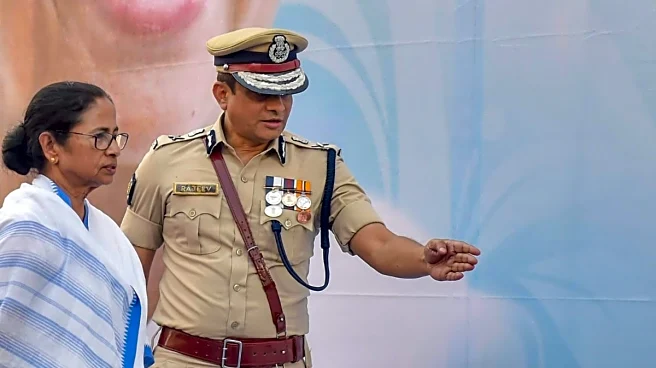
Acting DGP Rajeev Kumar, along with Ranvir Kumar and Rajesh Kumar, is scheduled to retire on January 31.
Sources told News18 that the state government has already forwarded names to the UPSC on January 21. If the senior-most IPS officers have been proposed, the panel is likely to include Rajeev Kumar, Rajesh Kumar, and Ranvir Kumar.
Backgrounder
The issue has its roots in a petition filed before the CAT by senior IPS officer Rajesh Kumar, who challenged the empanelment process, alleging that he was not given a proper opportunity to present his candidature for the post of DGP. Acting on the petition, the CAT directed the UPSC to provide the relevant list to the state government and expedite the process.
Earlier, the UPSC returned the West Bengal government’s proposal for preparing a panel for appointment of the Director General of Police (Head of Police Force), citing inordinate delay and non-compliance with binding Supreme Court directions. This development has major implications, especially with the acting DGP set to retire on January 31.
In a letter addressed to the West Bengal Chief Secretary, the UPSC referred to the Supreme Court’s directions in Prakash Singh vs Union of India. In its order dated July 3, 2018, the Court mandated that state governments must send proposals to the UPSC at least three months before the retirement of the incumbent DGP to ensure a transparent and merit-based selection process.
In West Bengal’s case, the vacancy for the post of DGP (HoPF) arose on December 28, 2023, but the proposal was forwarded to the UPSC only in July 2025, more than 18 months later.
Despite the delay, the UPSC convened an Empanelment Committee Meeting (ECM) on October 30, 2025, to examine the proposal and the clarifications submitted by the state. However, differences emerged among committee members regarding the date of occurrence of the vacancy. In view of these divergent opinions, the Commission sought a legal opinion from the Attorney General of India.
The Attorney General, in his opinion, stated that the delay by the West Bengal government was excessive and that there was no provision under the rules allowing the UPSC to condone such a delay. He cautioned that accepting delayed proposals could create serious anomalies and deprive eligible officers of their right to be considered. He further observed that if the state faced difficulties in adhering to the Supreme Court’s timeline, it should have approached the Supreme Court for clarification or relief.
Based on this legal opinion, the UPSC decided not to proceed with the empanelment and returned the proposal to the state government, advising it to seek appropriate directions from the Supreme Court. This was communicated through an official letter dated December 31, 2025, issued by Nand Kishor Kumar, Director (AIS), UPSC, with a copy marked to the Ministry of Home Affairs.
With Acting DGP Rajeev Kumar due to retire on January 31, the appointment of the next DGP has now become a matter of significant legal and administrative scrutiny, with the CAT’s directions expected to bring clarity to the long-pending issue.




/images/ppid_59c68470-image-177083253119523769.webp)


/images/ppid_a911dc6a-image-177083203099181355.webp)