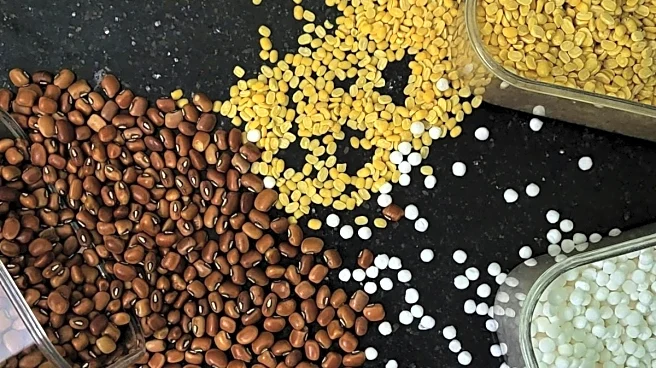

A hot, steaming ladle of dal is an essential part of every traditional Indian lunch.Dals are one of the most common ingredients in Indian households and have a special place in Indian kitchens. Every Indian kitchen prepares
dals in a variety of ways, such as plain dal, with vegetables and lush green vegetables, or simply with aromatic tempering and ghee. Everyone’s comfort food is dal but there are a few that can prove specifically beneficial to people.
In her Instagram post, nutritionist Deepsikha Jain highlighted the transformational power of dals. She explained that although dals are great plant-based protein sources, the secret to maximising their benefits is to soak them before cooking to lower anti-nutrients. She wrote in her caption, “Dal have great power to improve your health. Legumes overall are great plant based foods which can improve your heart health, gut and immunity. But don’t forget to soak it prior.”
View this post on Instagram
Choose The Right Dal
Deepsikha also explained about particular dals that address common health issues, such as insulin sensitivity and digestive comfort, in the accompanying video. She specifically suggested using split dals for people who frequently experience bloating or have poor gut health. The nutritionist claims that when the outer peel is removed (or the grain is split), the concentration of complex carbohydrates and anti-nutrients that frequently cause digestive pain is lower, making these versions far kinder to the stomach.
Nutritionist Shares Easy Tips
In the video she shared, Deepsikha continued “Eat chickpeas if you have poor heart health because this is rich in potassium, fibre and magnesium that can actually improve your heart health and weight functions.”
Moving on she added, “If you have polycystic ovary syndrome (PCOS), then whole moong dal is the best because it is so much lighter; it can actually help reduce your inflammation and also not whack your hormones.” Lastly, she suggested, masoor dal is a great option if you have diabetes since it has a lot more fibre, which can improve your body’s sensitivity to insulin.
/images/ppid_59c68470-image-177087511517964359.webp)

/images/ppid_59c68470-image-177087506780469811.webp)
/images/ppid_59c68470-image-177087509425024425.webp)
/images/ppid_59c68470-image-17708750252627929.webp)
/images/ppid_59c68470-image-177087512498797308.webp)
/images/ppid_59c68470-image-177087503117363518.webp)
/images/ppid_59c68470-image-177087502814279655.webp)