

/images/ppid_59c68470-image-177856752682674381.webp)
/images/ppid_59c68470-image-177865006961523549.webp)
/images/ppid_59c68470-image-177855755602476597.webp)
The concerns have grown in the jewellery industry after PM Narendra Modi appealed to Indians not to buy gold for a year to save the country’s forex reserve, which is under pressure following the Iran-US war fallout. While the measure is seen as an important step to stop importing gold from outside, given that India imports 90% of its yellow metal, Jewellers fear that it may lead to a large-scale disruption with substantial losses and income.
The livelihood of hundreds of thousands of people depends on the industry, jewelers warn. If people stop purchasing jewellery, then there will be no income for them.
Given the apocalyptic scenario over the appeal, alternative routes are being suggested by jewelers across India.
One of the proposals that has
gained attention is the establishment of the bullion bank.
What Is A Bullion Bank?
According to the proposal, a dedicated bullion institute should be set up within the GIFT-IFSC or India International Bullion Exchange framework to deal in precious metals for mobilizing, standardizing and lending and settling.
A bullion bank will work as a trading desk, vault/storage, lender, logistic operator, derivative dealer and settlement system for precious metal. It makes money through fees, spreads, interest and arbitrage. And it not only deals with gold, but silver, platinum and palladium too.
This will help jewelers, governments and ETFs to trade gold.
How Bullion Banking Actually Works?
Bullion banks derive their revenue from an array of business lines in precious metals. These include trading (both proprietary and client-driven), custody and storage of physical bullion, metal leasing and financing, market making and liquidity provision, derivatives and hedging services, clearing and settlement operations, structured products for investors, and even refining and logistics.
According to a white paper of IFSCA (International Financial Services Centres Authority) named “Revenue drivers of global banks in bullion business”, 90% profit of bullion banks comes from trading-related activities, while ancillary services like vaulting, financing, and product structuring provide important but comparatively smaller revenue streams.
Major banks like JP Morgan and HSBC engage in everything from holding physical gold in vaults to trading futures and structuring derivatives, it added.
Why Does It Important?
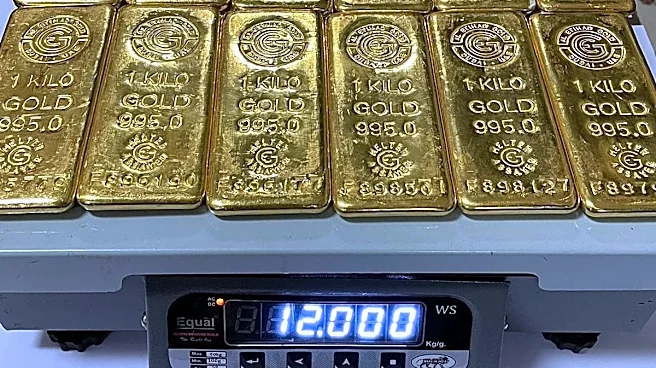
India imports nearly 700–800 tonnes of gold annually, resulting in significant foreign exchange outflows and pressure on the current account deficit. At the same time, Indian households and institutions are estimated to hold nearly 25,000–35,000 tonnes of gold in the form of jewellery, coins and bars, much of which remains economically idle.
Even a 1-2% utilization of the household gold could bring a major relief in the gold import, resulting a dampening in the outflow.
Jewellers have requested the government to bring strategic measures for the Gold Monetisation Scheme, aimed at increasing public participation in GMS, mobilising idle gold into the formal economy, and encouraging greater recycling, reuse, and circulation of existing gold within India.
/images/ppid_a911dc6a-image-177881869827450930.webp)

/images/ppid_59c68470-image-177873516754756331.webp)

/images/ppid_59c68470-image-177882502920381447.webp)



/images/ppid_59c68470-image-177864510559139391.webp)
/images/ppid_a911dc6a-image-177881342976732847.webp)