
/images/ppid_59c68470-image-17707325627935104.webp)
/images/ppid_a911dc6a-image-177073053642295951.webp)
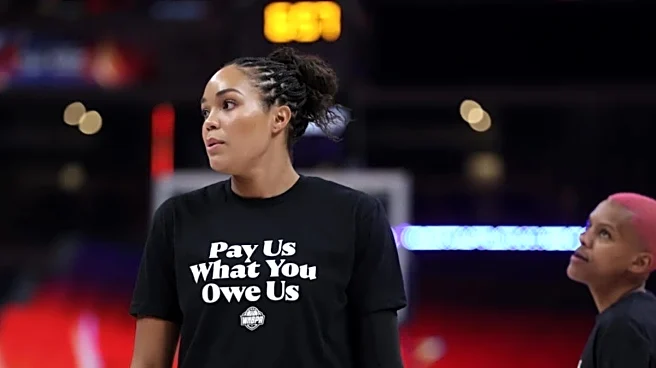
The WNBA offseason has slammed into pause mode.
The league and the Women’s National Basketball Players Association (WNBPA) have agreed to a moratorium on league business, including free agency, after failing to strike a deal on a new collective bargaining agreement by last week’s deadline.
Negotiations had already been extended twice since the end of the 2025 season, but with the CBA officially expiring at midnight ET on Friday, talks have stalled.
While both sides have entered a temporary “status quo” period –maintaining the previous working conditions — the new moratorium means teams cannot issue qualifying offers, apply core designations, or sign free agents.
At the heart of the deadlock is money.
Players are holding out for a transformational
CBA that reflects the league’s rapid growth. The WNBPA has pushed for a true revenue-sharing model, proposing that players receive 30% of gross revenue and a salary cap of around $10.5 million. The league reportedly rejected that structure, calling it financially unsustainable.
The WNBA’s counterproposal would give players 50–70% of net revenue, but the union wants guarantees tied to gross revenue instead. Under the league’s framework, average salaries would skyrocket from roughly $120,000 to $530,000, while max salaries could jump from $249,244 to $1.3 million immediately, potentially nearing $2 million by the end of the deal. The salary cap would start at $5 million and scale upward with revenue.
But definitions of “revenue,” transparency around expenses, and growing distrust remain major sticking points.
The timing couldn’t be worse. Expansion drafts for Portland and Toronto, free agency, and the college draft are all squeezed into an increasingly compressed offseason.
The WNBA has never lost games to a labor dispute in its 30-year history. But with the clock ticking, the pressure is only intensifying.
(with Reuters inputs)



![[WATCH] Yuzvendra Chahal’s hilarious imitation of Abhishek Sharma, video goes viral](https://glance-mob.glance-cdn.com/public/cardpress/binge-magazine-card-generation/spaces/IN/en/crictracker-spaces/images/ppid_49c02804-image-177073273611428163.webp)