

/images/ppid_a911dc6a-image-178360352543463915.webp)



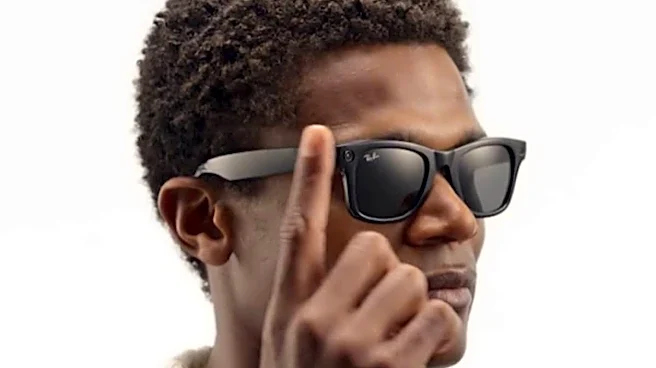
Meta wants its smart glasses to remember your entire day for you. The problem is, they might end up remembering everyone else’s day too, without those people ever knowing.
According to a report by the Financial Times, Meta is testing a new, controversial prototype called “super sensing” AI glasses. These are designed to continuously record audio and take photos every few seconds throughout the day. Privacy experts are already warning that this could end up violating data privacy and biometric tracking laws, and honestly, once you understand how it works, it’s easy to see why.
What these glasses are actually built to do
The idea behind this new hardware line is fairly ambitious. Meta wants to turn these glasses into what’s essentially an all-seeing,
all-hearing digital companion. By constantly capturing raw audio and visual data throughout your day, the glasses would let you use Meta’s AI to perfectly recall things later. Ask it what you saw earlier, or retrieve a conversation you had a few hours ago, and the AI would be able to answer.
On paper, that sounds genuinely useful for a lot of people. In practice, it raises a pretty big question. What about everyone around the person wearing these glasses?
The missing warning light is the real problem
Here’s where things get concerning. Meta’s current smart glasses already have a small safeguard built in. A bright LED light automatically switches on near the corner of the frame whenever the wearer takes a photo or starts recording a video. It’s a simple but important way for people nearby to know they’re being recorded.
According to the report, Meta executives are currently planning not to activate this LED light while the new super sensing continuous recording feature is running. This decision could still change before any public release, but as things stand, it means bystanders would have no reliable way of knowing whether someone wearing these glasses is quietly recording them at any given moment.
It gets more concerning still. Insiders quoted in the report say Meta could roll out these super sensing features to smart glasses that are already sitting in people’s homes right now, simply through a software update. So this isn’t necessarily limited to some future product. It could reach existing devices with minimal warning.
This whole push seems to align closely with CEO Mark Zuckerberg’s broader vision for smart glasses. He’s spoken about this before, including during a recent earnings call, where he described wanting the glasses to become a “personal agent that’s with you all day long, helping you remember things.” Clearly, continuous recording is a core part of making that vision work.
How Meta plans to get around privacy laws
Knowing that regulators would likely push back hard against this kind of always-on recording, Meta’s engineers have reportedly come up with a technical workaround.
Under this proposed system, the actual raw video footage and audio recordings would never be permanently stored, not by Meta, and not even accessible to the person wearing the glasses. Instead, the glasses would instantly process the footage on-device and extract just the “metadata”, meaning the core informational descriptions of what was seen or heard. Only that text-like summary data would then be uploaded to Meta’s servers.
The thinking here seems to be that stripping away the raw footage and keeping only summarised data would carry fewer legal and privacy risks compared to storing actual recordings. Whether regulators will actually see it that way is a different question entirely, especially in regions with strict biometric and data protection laws.
For its part, Meta declined to discuss the specific internal prototype directly when approached for the report. The company did maintain that its overall approach to consumer hardware is always built around privacy from the ground up, though that statement is a bit hard to square with a product reportedly designed to record without a visible indicator.
Why this matters beyond just Meta users
The bigger concern here isn’t really about people who choose to wear these glasses. It’s about everyone else who doesn’t get a say in the matter. Right now, the LED light on Meta’s existing glasses is one of the few things giving bystanders any real awareness that they might be recorded. Removing that safeguard, even for a genuinely useful feature, shifts a lot of risk onto people who never opted into any of this.
As AI-powered wearables become more common, this story is likely a preview of a much bigger debate coming down the road. How much should companies be allowed to capture from our daily lives in the name of convenience, and who actually gets asked for permission along the way.
/images/ppid_a911dc6a-image-178368760818686408.webp)

/images/ppid_a911dc6a-image-178374702085273627.webp)
/images/ppid_a911dc6a-image-178366653356881542.webp)
/images/ppid_a911dc6a-image-178374003308670872.webp)

/images/ppid_a911dc6a-image-178358609103085239.webp)

/images/ppid_a911dc6a-image-178351252157243083.webp)