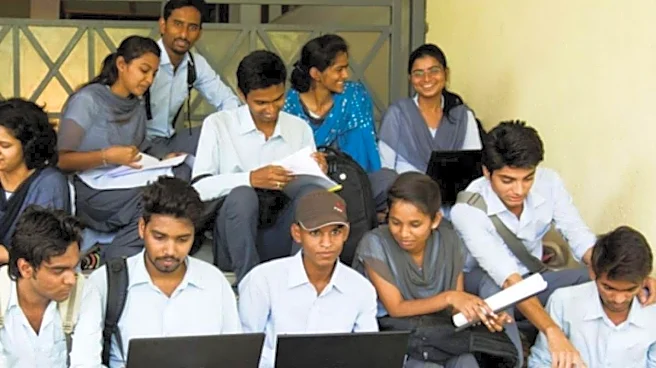

The declaration of the class 12 results 2026 by the Central Board of Secondary Education (CBSE) has sparked widespread debate across the country, with thousands of students and parents voicing concerns over the newly introduced On-Screen Marking (OSM) system. While the CBSE has presented this digital evaluation process as a move towards greater transparency and accuracy, many students feel it has led to unusually low marks and stricter assessment.
ALSO READ | ‘Why Rob Us Of Our Marks’: CBSE Class 12 Students Blame Digital Evaluation For Low Scores
Soon after the results were announced, social media platforms were flooded with complaints, as students compared their board scores with pre-board performance, school assessments, and JEE Main results.
Several students who secured high percentiles in JEE Main claim they received unexpectedly low marks in the board examinations, raising doubts about the effectiveness of digital checking.
Main Concerns Raised By Students Regarding On-Screen Marking System
Many students claim their marks were significantly lower than expected despite consistent academic performance throughout the year. They claimed despite scoring well in entrance exams such as JEE Main they have received lower board percentages, raising questions about evaluation consistency.
All cbse officials are stupid.. They introduced OSM as trial on lakhs of students even if it ruins their hardwork career, may deprive them from JEE… They should be charged for compensation to students through court if the marks increase after RECHECK.@CBSE on historic low.SHAME
— Sanjay Shrivastava (@SANMEEJAY) May 14, 2026
Concerns have emerged that diagrams, graphs, rough work, or answers written near margins may not have been captured properly in scanned copies. While some believe poor scan quality may have made handwritten answers difficult for evaluators to read. Long calculations, faint handwriting, and dense answers may appear less clear on a computer screen compared to physical copies.
Thousands of CBSE Class 12 students are feeling devastated after unexpected low marks. If on-screen copy checking is missing steps, diagrams, or lengthy answers because of speed-based evaluation, then this is not just a “technical process” it directly impacts student #OSMfailed
— Shreya Bishnoi (@BishnoiShr90176) May 13, 2026
Students also allege that examiners were required to complete evaluations quickly, increasing the possibility of overlooked answers or reduced step marking. Some fear software errors or system-related issues may have affected the final marking process.
While many students feel CBSE did not adequately explain how the new digital evaluation process would function before implementation.
CBSE pass %this yr was only 85% against ISC 99%.OSM was done & that too poorly.why should students suffer for botched up OSM?students who performed well have ended up getting low marks. Serious transparency concerns. @Shehzad_Ind sir please look into this ..yr voice will matter..
— Sanjay Upadhyay (@sanup_16) May 13, 2026
What CBSE Said?
CBSE has defended the On-Screen Marking system, stating that the process has helped improve transparency and accuracy as well as eliminated totaling mistakes and reduced human error, thereby ensuring a more efficient checking process.
Students Demand Free Re-checking
However, with growing criticism from students and parents, demands for easier access to re-evaluation and manual verification of answer sheets are increasing. Students have also demanded that there should be no rechecking fees in cases where they believe evaluation mistakes have been made by the CBSE.
/images/ppid_59c68470-image-177906502685518790.webp)



/images/ppid_59c68470-image-177906253362011838.webp)
/images/ppid_a911dc6a-image-177906122758384810.webp)