
/images/ppid_a911dc6a-image-177102646607765106.webp)


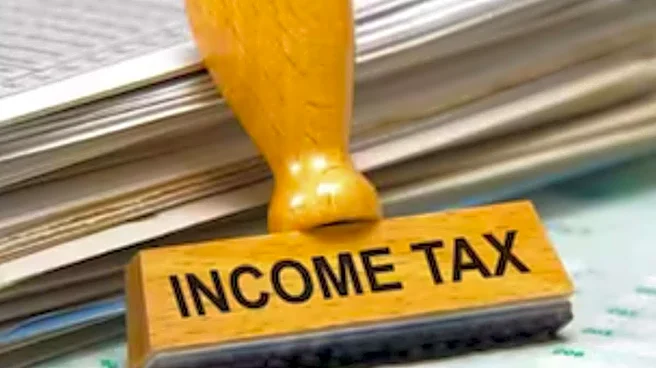
Budget 2026 Expectations: With the Union Budget 2026 approaching, speculation has intensified over whether the government may finally phase out the old income tax regime and make the new tax regime the sole system for individual taxpayers. While there has been no official indication so far, reports suggest that the government might do away with the old income tax regime in a phased manner.
The new tax regime, which is now the default option, has been significantly revamped in recent years to make it more attractive. Under the current framework, individuals with annual income of up to Rs 12 lakh do not pay any income tax due to the combined effect of higher basic exemption limits, standard deduction and rebate provisions. This has sharply reduced
the tax burden for a large section of middle-income earners.
According to a Times of India survey on Budget 2026 expectations, most tax experts said the government may look to eventually do away with the old income tax regime, though the transition is likely to happen in a phased manner.
Is the old tax regime likely to be scrapped?
The Budget 2026 could provide clarity on the long-term future of the old tax regime. One possible approach could be to gradually withdraw the old regime by limiting or freezing exemptions and deductions, rather than removing it abruptly. Another option could be allowing existing taxpayers to continue under the old regime while closing it for new entrants over time.
The government has consistently emphasised the need to simplify the tax system, reduce compliance burden and minimise disputes. In this context, the old regime — with its multiple exemptions, deductions and documentation requirements — is increasingly seen as misaligned with the broader tax reform agenda.
Current Income Tax Slabs: FY 2025-26
To understand what might change, we must look at where we stand today. The New Tax Regime is the default option.
New Tax Regime Slabs (Default)
| Income Slab | Tax Rate |
| Up to ₹4,00,000 | Nil |
| ₹4,00,001 – ₹8,00,000 | 5% |
| ₹8,00,001 – ₹12,00,000 | 10% |
| ₹12,00,001 – ₹16,00,000 | 15% |
| ₹16,00,001 – ₹20,00,000 | 20% |
| ₹20,00,001 – ₹24,00,000 | 25% |
| Above ₹24,00,000 | 30% |
Note: Under the New Regime, individuals with a total income up to ₹12 Lakh pay zero tax due to the Section 87A rebate.15 For salaried employees, this “zero-tax” limit effectively touches Rs 12.75 Lakh (including the Rs 75,000 Standard Deduction).
Old Tax Regime Slabs (Optional)
| Income Slab | Tax Rate |
| Up to ₹2,50,000 | Nil |
| ₹2,50,001 – ₹5,00,000 | 5% |
| ₹5,00,001 – ₹10,00,00016 | 20%17 |
| Above ₹10,00,000 | 30% |
The Old Regime allows for popular deductions like 80C (up to Rs 1.5L), 80D (Health Insurance), and Home Loan Interest (up to Rs 2L).
What Should Taxpayers Do Now?
While we wait for the February 1 announcement, tax experts say taxpayers should not stop their tax-saving investments for the current year.
If you are in the Old Regime: Ensure your 80C and 80D investments are completed by March 31, 2026.
If you are in the New Regime: Focus on maximising your “Take Home” pay and look for a possible hike in the Standard Deduction to plan your big-ticket purchases for mid-2026.
/images/ppid_a911dc6a-image-177103853218557950.webp)




/images/ppid_a911dc6a-image-17710364781122582.webp)
/images/ppid_a911dc6a-image-177103642565816962.webp)
/images/ppid_a911dc6a-image-177103504309993710.webp)
/images/ppid_a911dc6a-image-177103508492594205.webp)