


Do you think it’s just your paneer and ghee could be adulterated or counterfeit? Turns out, this is just the tip of the iceberg. The entire racket of counterfeit products and adulteration and now blown to a point, where even things as basic as your toothpaste, cooking oil and atta could be fake, and the worst bit is that you wouldn’t even know.
Not just that, over the past few weeks, several raids by the FSSAI have uncovered fake health supplements and even counterfeit antacid powders, raising questions over the checks in place with these products being openly sold in the market.
How The Network Of Counterfeit Products Was Unearthed
In December 2025, the Food Safety and Standards Authority of India (FSSAI) directed all states and Union Territories to launch a special nationwide enforcement drive
against adulterated milk and milk products, including paneer and khoya. The step was taken amid mounting concerns over consumer health and food safety.
This was followed by raids by police and food safety departments across several states over the past four months. These raids blew the lid off a massive network involved in the manufacture and sale of adulterated and counterfeit food items and household essentials.
An FSSAI official, on condition of anonimity, was quoted as saying by The Print, “What started with adulteration of basic products like ghee and milk, has now shifted to duplication of essential items like toothpastes.” “There are two things to look at here: fake products and manufacturers operating without a licence. In most raids that we have conducted, we have found both violations,” the official added.
Crackdown: From Health Supplements To Cooking Oil
Over the past one month itself, raids by the FSSAI and local police units have recovered huge quantities of adulterated and counterfeit consumables.
Prohibited Substances In Health Supplements
On April 24, a joint task force led by Central Food Safety Officers (CFSOs), the FSSAI Northern Regional Office, and local police uncovered an unauthorised distribution hub dealing in prohibited performance-enhancing substances and expired health supplements in Najafgarh, Delhi. During the raid, authorities seized a large quantity of prohibited substances. Approximately 2,800 capsules and tablets, along with 11 injectable units, were confiscated. These included anabolic steroids such as Methenolone Enanthate, Trenbolone, and Stanozolol.
Delhi | A joint task force led by Central Food Safety Officers (CFSOs), FSSAI – Nothern Regional Office, and local police has dismantled an unauthorized distribution hub for prohibited performance-enhancing substances and expired health supplements in Najafgarh, Delhi.
The… pic.twitter.com/4MPz0C6i61
— ANI (@ANI) April 24, 2026
Artificially Ripened Fruits
Earlier this month, the FSSAI also carried out raids in Ayodhya’s fruit markets and found harmful chemicals being used to artificially ripen fruits like mangoes, bananas and papayas. Following the raid, the FSSAI ordered strict enforcement across states to intensify action against illegal fruit ripening agents, reiterating that the use of calcium carbide was strictly prohibited.
FSSAI has ordered strict enforcement across states to intensify action against illegal fruit ripening agents, reiterating that the use of calcium carbide for artificial ripening of fruits such as mangoes, bananas & papayas is strictly prohibited. pic.twitter.com/OJ6JBqRn7u
— FSSAI (@fssaiindia) April 16, 2026
Contaminated Tea
A recent crackdown also uncovered a large-scale tea adulteration operation, with authorities seizing about 3,000 kg of contaminated tea powder along with 1,500 kg of expired stock, taking the total to roughly 4.5 tonnes in Hyderabad. During the raids, officials also found around 100 kg of jaggery and various synthetic colouring agents that were allegedly being used to enhance the appearance of substandard or stale tea and pass it off as fresh. The operation, carried out by surveillance teams in Hyderabad across multiple storage locations, points to an organised effort to recycle and chemically treat tea before pushing it back into the market.
Fake Toothpaste
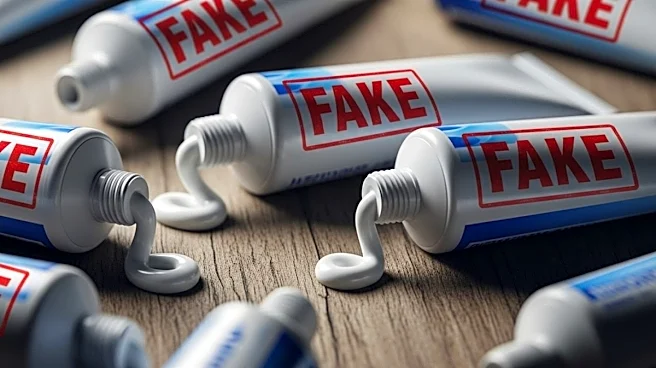
In a major crackdown earlier this month, Delhi Police uncovered two linked rackets involving counterfeit and unsafe consumer goods – one in Khanjawala where a unit was manufacturing fake toothpaste by filling branded tubes with locally made paste under unhygienic conditions, and another in Dwarka where expired food and beverage products were being repackaged and sold as fresh after tampering with labels and expiry dates. The raids led to the seizure of large quantities of fake toothpaste, including about 1,800 filled tubes, over 10,000 empty tubes, and 1,200 packaged units, along with machinery used for sealing and packaging, while the Dwarka operation yielded thousands of altered products such as 3,096 soft drink cans and repackaged biscuits. In total, four people were arrested, and investigators found the racket sourced near-expiry goods, erased original labels using chemicals, and reprinted fake dates before redistributing them in the market, raising serious public health concerns.
Adulterated Oil And Atta
A major anti-adulteration drive in Cyberabad earlier this month exposed widespread food safety violations, with police seizing over 10,000 kg of adulterated essentials, including roughly 5,000 litres of edible oil and more than 5,000 kg of wheat flour (atta) from illegal units. The crackdown, carried out over several months, led to 22 cases being registered and 28 arrests, as authorities uncovered operations using expired raw materials, synthetic colours, and hazardous chemicals in unhygienic, unlicensed facilities. The raids also revealed fake branding and unsafe manufacturing practices across a range of everyday food products, with total seizures – including goods, machinery, and vehicles, valued at around Rs 64 lakh, underscoring the scale of the racket and the potential public health risks.
The Cyberabad Enforcement Wing has successfully concluded a series of intensive operations conducted between January 1, 2026, and April 21, 2026, aimed at curbing food adulteration and illegal manufacturing across the @cyberabadpolice limits.
Protecting public health remains our… pic.twitter.com/uoyGS6ZgkA
— Cyberabad Police (@cyberabadpolice) April 22, 2026
These back-to-back crackdowns reveal a large ecosystem of adulteration and counterfeiting that has quietly spread across India’s everyday consumption basket. From kitchen staples to personal care products and even health supplements, the problem is no longer confined to low-value goods. It now cuts across categories that consumers typically trust without question. As regulators intensify action, the bigger challenge will be sustaining vigilance, tightening compliance, and ensuring that what reaches households is not just affordable, but safe, authentic and accountable.





/images/ppid_a911dc6a-image-17772274286776852.webp)