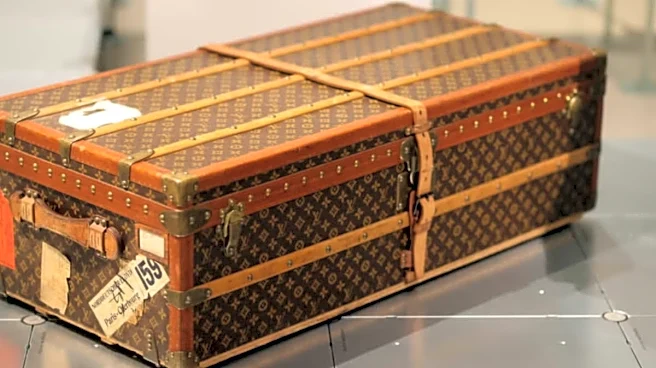


Owning a piece from Louis Vuitton remains a marker of luxury today but for Indian royalty in the late 19th and early 20th centuries, it was also a statement of discernment, global exposure, and modernity. At a time when the West often misunderstood Indian culture, Maharajas were quietly building remarkable collections of European craftsmanship. Among their most prized possessions were Louis Vuitton trunks functional, beautifully engineered objects that would later become museum-worthy heirlooms.
As the maison prepares to celebrate 130 years of its iconic Monogram on January 11, 2026, it has unveiled a special anniversary collection that also revives interest in its deep, often overlooked connections with India’s royal past.
Indian Royals and Their
Louis Vuitton Trunks
In the 1850s, Louis Vuitton revolutionised travel with the invention of the flat-topped trunk. Until then, trunks were curved, making them impossible to stack. Vuitton’s flat design changed how people packed and travelled, efficient, elegant, and secure. The innovation was so practical that it was widely copied, cementing Vuitton’s reputation as a pioneer of modern luggage.
For Indian royals, trunks were not just luggage but portable wardrobes and lifestyle statements. Crafted from wood and metal, fitted with hidden compartments and robust locks, these trunks were designed for long journeys and near-impenetrable security far removed from today’s lightweight, wheeled suitcases.
View this post on Instagram
Maharaja Jagatjit Singh, the last ruling monarch of Kapurthala, was among Louis Vuitton’s most devoted patrons. A Francophile known for his opulent lifestyle, he reportedly owned over 60 customised LV trunks by the early 1900s. Each piece was designed to store specific garments, accessories, and personal effects, an early example of bespoke luxury.
Another loyal client was Sayajirao Gaekwad III of Baroda. In the 1920s, he commissioned multiple custom trunks, including a Torino suitcase with ivory and vermeil compartments for toiletries, a dedicated shoe trunk, and even a tea trunk, proof that no matter how far he travelled, Indian chai remained essential.
The royal family of Jammu and Kashmir also maintained a long association with the brand. Records suggest purchases dating back to 1919. When Hari Singh ascended the throne in 1925, he ordered a bespoke trunk designed specifically for his sporting wardrobe. The trunk even featured compartments for polo equipment and mallets, blending aristocratic leisure with meticulous design.
130 Years of the Louis Vuitton Monogram
On January 11, Louis Vuitton marks 130 years of its legendary Monogram, one of the most recognisable design languages in fashion history. According to the brand’s official archive, the Monogram was conceived during Paris’s artistic renaissance and created by Georges Vuitton as a tribute to his father. Its motifs drew inspiration from the tiled floors of the family’s Asnières home and elements of Neo-Gothic art.
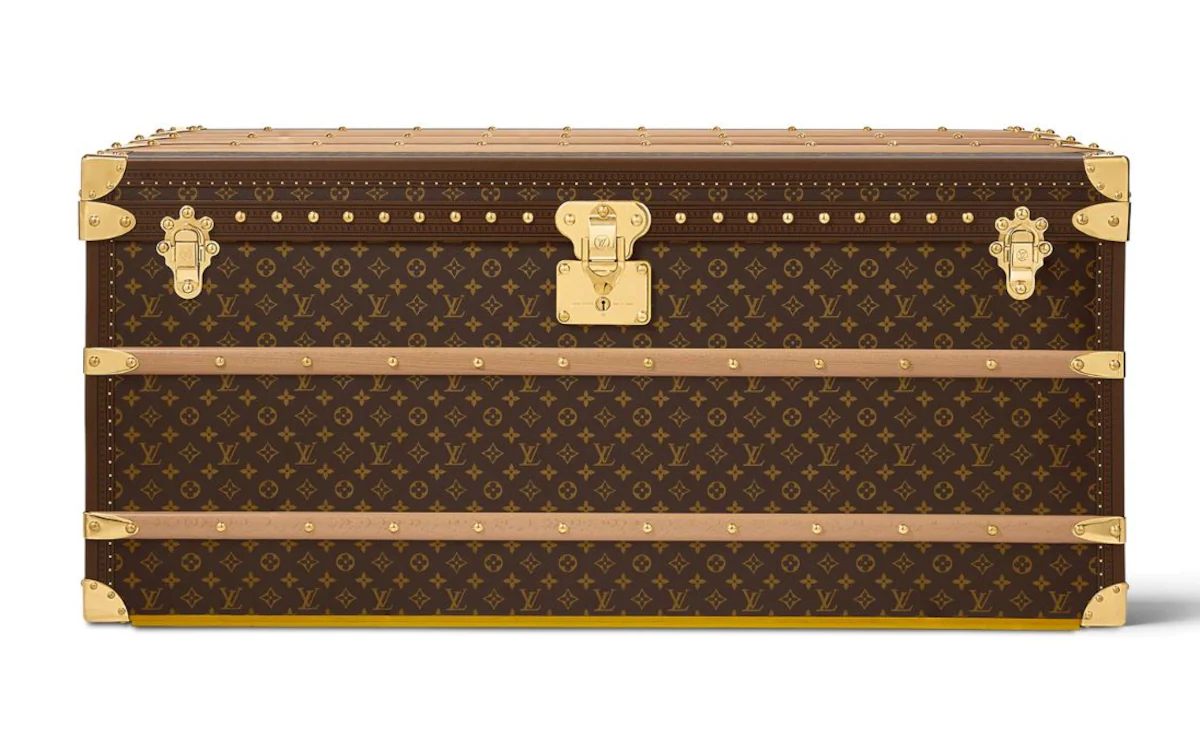
The interlocking LV initials, the four-petalled flower, the diamond-enclosed bloom, and the star are more than decorative symbols, they form the visual DNA of Louis Vuitton.
To commemorate this milestone, the brand has launched the Monogram Anniversary Collection, celebrating heritage while reinforcing its global legacy. From Parisian ateliers to Indian palaces, Louis Vuitton’s journey reflects not just luxury, but an enduring culture of travel, one that has always encouraged carrying a little extra, both literally and symbolically.

/images/ppid_a911dc6a-image-177105956122469810.webp)

/images/ppid_a911dc6a-image-177105952513238219.webp)
/images/ppid_a911dc6a-image-177105952399574919.webp)

/images/ppid_a911dc6a-image-177105903625699976.webp)


/images/ppid_a911dc6a-image-177105882330714950.webp)