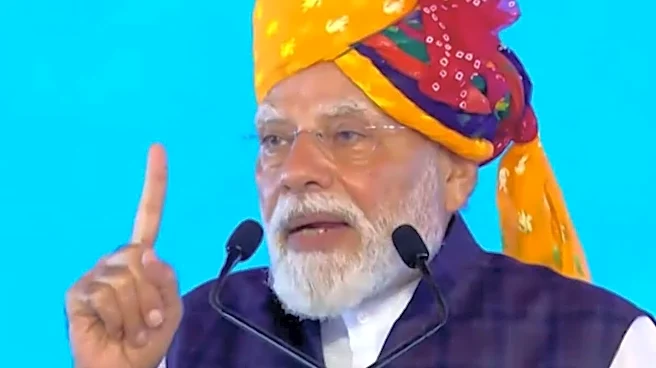




Viksit Bharat @2047 or Viksit Bharat 2047 is the Government of India’s long-term roadmap to transform the country into a fully developed nation by 2047, marking the centenary of its independence.
Initiated under Prime Minister Narendra Modi, the vision aims to break out of the “middle-income trap” and drastically elevate the economic, social, and technological standing of the country. Below is an overview of its core targets, structural pillars, and target groups.
Key Targets & Objectives
Economic Scale: Expanding India’s economy to a USD 30 trillion to USD 40 trillion gross domestic product (GDP).
Standard of Living: Multiplying per-capita income to reach high-income country thresholds. Social Benchmarks: Achieving zero poverty, 100% literacy, and universal access to high-quality,
affordable healthcare. Labor Force Shift: Equilling 100% of the workforce with vocational or modern skills and increasing female labor force participation to 70%.
The Four Pillars of Focus
The developmental roadmap centers its inclusive growth policy around four demographic segments, referred to as the four castes of modern India:
Yuva (Youth): Tapping into India’s massive demographic dividend(with roughly 65% of the population under 35 years old) to lead in tech, entrepreneurship, and sports.
Gareeb (The Poor): Eradicating multi-dimensional poverty via institutional social safety nets, housing, and financial inclusion.
Mahilayen (Women): Moving toward women-led development by expanding corporate, industrial, and political participation.
Annadata (Farmers): Modernizing agriculture through smart technology to transform India into a global food basket.
Structural Themes For Transformation
Economic Growth: Driving local manufacturing via Make in India initiatives, boosting service sectors, and supporting a global startup ecosystem.
Infrastructure: Constructing smart villages, futuristic digital transport connections, clean urban centers, and advanced logistics.
Technology & Science: Positioning India as a frontrunner in artificial intelligence (AI), space exploration, quantum computing, and digital public goods.
Sustainability: Incorporating carbon-neutral milestones, rapid solar energy adoption, and climate-resilient infrastructure.
Governance Streamlining public administration into a data-driven, transparent, and corruption-free citizen-centric bureaucracy.
Implementation and Citizen Participation
The mission functions as a collaborative national blueprint, combining strict top-down regulatory reforms with bottom-up public participation (termed Jan Bhagidari). Think tanks like NITI Aayog are actively coordinating sectoral plans with state governments, industry leaders, and academic institutions to track annual progress indicators leading up to the 2047 target.



/images/ppid_59c68470-image-178670002596897550.webp)



/images/ppid_59c68470-image-178647253156317112.webp)