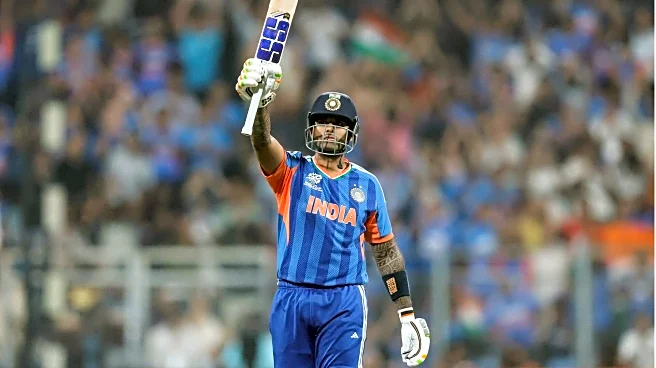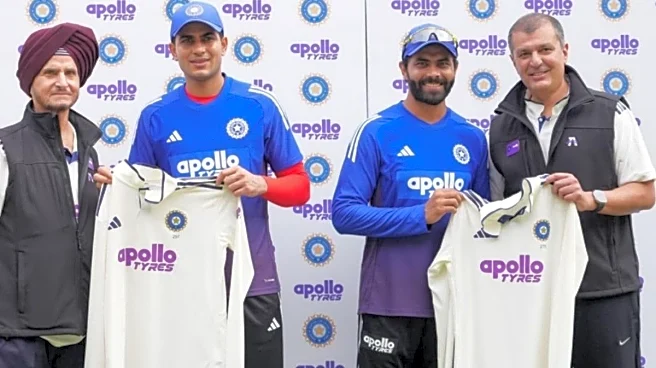

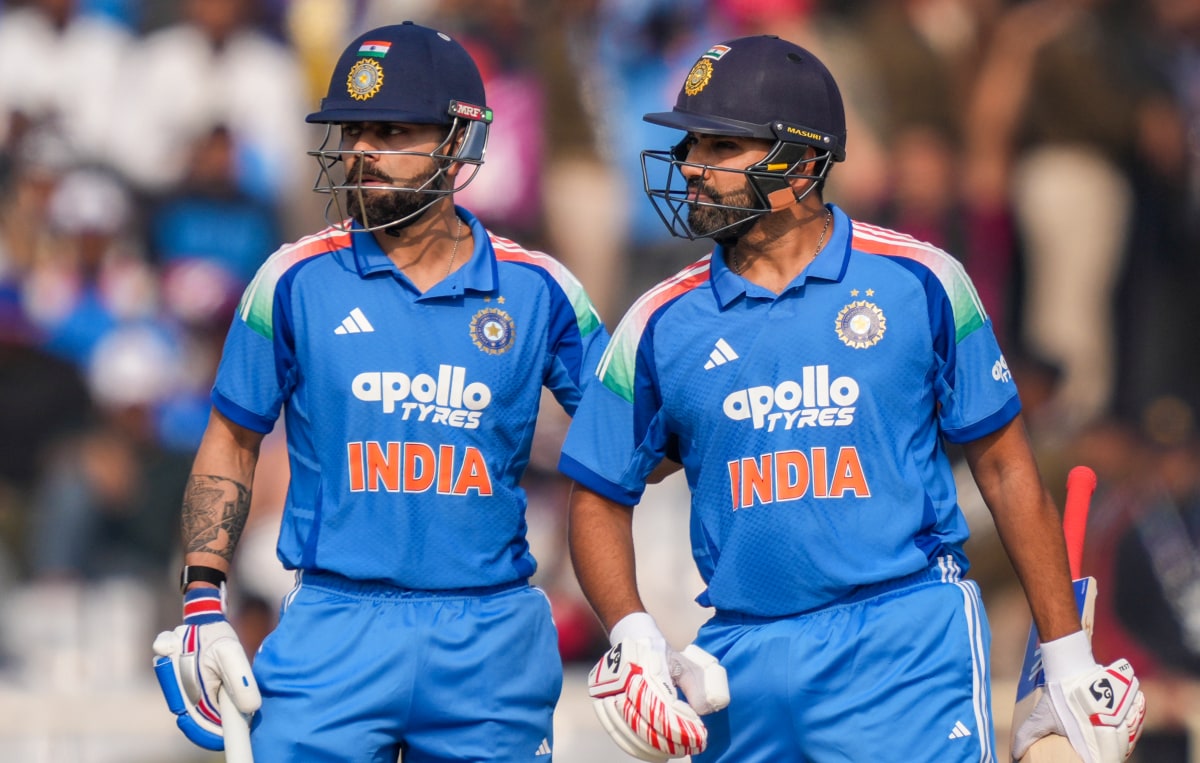
Apollo Tyres has had a long, sometimes quiet, association with sports. From investing in the legendary Mahesh Bhupathi’s academy in 2008 with an aim to unearth the next generation of Indian tennis stars to roping in Sachin Tendulkar as brand ambassador a decade later, the endeavour to penetrate deeper into the Indian market through a strong association with sports continues. Recently, Apollo Tyres took a significant, perhaps their most ambitious, step in this journey by becoming the lead sponsor of the Indian cricket teams. Cricket offers an unmatched reach and cultural resonance in India, making it the country’s most powerful unifier. The passion runs deep and commercially, the sport offers a rare blend of visibility, cultural significance
and mass connection.
For Vice Chairman and Managing Director Neeraj Kanwar, the decision isn’t just about improving brand awareness, as they also hope to leverage this partnership to strengthen their presence in the rural markets of the country. For Kanwar, himself a sports enthusiast, the association is both strategic and personal. It signals confidence in India’s strong sporting future, reinforces Apollo’s commitment to grassroots development, and strengthens its push into deeper markets where cricket’s influence remains unmatched.
Kanwar is quite confident the power of cricket can do much more than build brand recall – it can reinforce market leadership, shape youth culture, and cement the company’s next chapter of growth. Cricket, though, is part of a bigger long-term vision. In an exclusive interaction with News18 CricketNext, Kanwar reflects on the motivations, expectations and long-term vision behind this association.
What has been the driving force behind this association with the Indian cricket team and what makes this an opportune moment for such a major commitment?
I think the Indian team has done great in the past several years, and we’ve been looking at entering cricket ever since we brought Sachin on board 8-9 years ago. Sachin being the God of Cricket obviously motivated us. I myself am a sportsman, I love watching and playing sports. So this was really an opportunity that landed in our lap, and we grabbed it.
We are a global brand. We have two brands – Apollo and Vredestein. Apollo is for the masses, Vredestein is for the premium segment. Cricket is our national pride; it unites India – cultures, religions, rural and urban audiences. We are known for quality and leadership, and that’s exactly what the Indian national cricket team represents. The team has taken India onto the global map.
The association gives us coverage across India that no other media platform can provide. Cricket is watched everywhere – including by the Indian diaspora. So we get a very reachable audience for our brand, and that really excited us about sponsoring the team’s jersey.
In terms of long-term strategic objectives – beyond visibility – how do you expect this partnership to translate into business value?
We are coming out with a lot of activation programmes. It’s still a work in progress – how we can take this association to the next level. We’re working with the BCCI and agencies to see what on-ground activations can be done. But we’ve already seen an an increase in brand awareness. We’re seeing our dealer network expand – that’s the main benefit. Apollo has a wide distribution – very strong in urban, weaker in rural – and that’s where our focus lies.
This association strengthens rural distribution, especially in the car and two-wheeler segments. Increased distribution means increased revenue, which will expand our profit pool. Ultimately, the aim is to increase our market share. That’s what we’re targeting with this association.
Sachin Tendulkar was roped in as a celebrity ambassador in 2018. From that perspective, how do you see this new innings with cricket in terms of brand growth?
Sachin, like I said, is the God of Cricket. But more than that, he’s taken India into the global world of sports. He has always been committed, loyal, and devoted throughout his cricket life. Even today, everyone looks up to him as a guru. That really motivated me to pursue this association.
As far as the brand is concerned, we hope this takes us into a longer-term relationship. Sports is nothing new for us – we’ve been sponsors of Manchester United since 2012. We went into football in a big way because United has a huge global fan following. That helped us not only in India but in Europe, the Middle East, parts of Africa.
We’ve been with them since 2012, and we still have three more years. I always look at associations long-term. I don’t drop an association once we go into it. To build a brand, you need longevity and you need to derive the best out of the partnership.
From the brand evolution perspective – there’s a rising trend of corporate ownership in Indian sports. Is Apollo considering something similar? For instance, IPL champions RCB are on the market. Is there a thinking along those lines?
I’m not thinking about that right now. My focus is on the Indian cricket team. I’m happy with the brand association, and with Manchester United on the football side. I’m not looking at owning a team at all. We’re going to focus on this.
And congratulations to the Indian women’s cricket team for winning the World Cup – that was the first time Apollo was on the T-shirt, and it gives us great satisfaction that the women won the World Cup. I’m very happy about that.
How do you measure success from these efforts – brand recall, CSR impact, or the sporting success of teams and individuals?
Success for us is if we can grow faster than the market. Then the association is working. We’re already seeing double-digit growth in Indian sales – first because of GST, and now because of this brand association. Europe is tough right now, but in India, with this association, we are set for a good run for the next 2-3 years. After that, we will evaluate how to continue.
One notable initiative from Apollo is building football pitches using recycled tyres. Could you explain how this works and how sustainability weaves into your sports-led strategy? Are you scaling this model?
These pitches started 10 years ago. The idea came from the issue of scrapping tyres – it’s a global problem. We wanted to use our sustainability platform to see how scrap tyres could be reused to make small football pitches. It has been very successful. It’s part of our entire sustainability campaign. We also have a “Go The Distance” pitch at Old Trafford, right outside the stadium, which is highly used by the community. It’s meant for the community in those areas. In India too, we barely have football pitches. Once we started creating them, we saw a lot of kids coming and playing. That itself is promoting football as a sport in India.
India is becoming a major sporting host – T20 World Cup, ICC events, Commonwealth Games, maybe even the Olympics by 2036. Are there plans to leverage these marquee events to intensify your sports integration?
For now, we’re focusing all our brand awareness and advertising spends on cricket in India. As we go along, we’ll see what other associations we want to pursue. Right now, we’ve taken on a big challenge. We need to prove to ourselves that we can get the best out of this association – in revenue, profit, market share. It’s too early to say more, but yes, we always keep an eye on sports to see where our brand can fit in.
For a tyre company, motorsports seem to be an obvious extension, but Apollo has focused on niche racing like truck racing and off-road events rather than mainstream events like F1 or MotoGP. Why hasn’t the brand entered that space? Are there future possibilities?
For us, doing niche motorsports is more fun and more adventurous. We don’t have such large pockets for Formula One, and I don’t see a major brand benefit purely from F1. There’s a huge investment needed – technology, dedicated teams. I prefer to stay away from top-tier motorsport and focus on niche motorsport in the countries where we operate.
Indian corporations are increasingly investing in sports infrastructure. Now that Apollo is associated with the Indian national cricket team, is that a direction you might explore – similar to what JSW or Tata are doing?
Not right now. As I mentioned, our pitches are already there and we’ll keep expanding them. But I don’t see us entering basic infrastructure development in a big way.
Apollo seems to have played sports a key pillar – especially through grassroots initiatives like United We Play and Go The Distance Heroes. How do these programmes align with your vision for community outreach and youth development?
We’re looking strongly at youth development. We’ve done two or three camps with Manchester United in the past, with top players coming in. My desire is to help young talent in India, which is a huge population, and help like-minded sports players emerge at the international level.
In cricket, we’ve made a big impact. In tennis and golf, we’ve made some headway. We still have a long way to go in football. Then there are the Commonwealth Games, Asian Games – India is improving, winning more medals. Our endeavour is to be part of that journey – helping Indian youth reach the global stage. It’s something I find very interesting. The new generation has done well in tech; now we need that success in sports too. Companies like ours must work with governments and associations to help train youth and prepare them for global competition.
When you look back five or ten years from now, what legacy do you want Apollo Tyres to have built through its association with sports, in India and globally?
If I look 10 years ahead, I’d love to see that Apollo helped and supported Indian sports at the youth level, and that we contributed to producing big winners in the global sporting arena – not just in cricket, but across sports. That’s my vision: to play a small but meaningful role in that journey.


/images/ppid_a911dc6a-image-177106804197029945.webp)