


US Secretary of State Marco Rubio on Tuesday said the World Health Organization (WHO) was “a little late” in identifying the deadly Ebola outbreak in Central Africa, as global concern over the spread of the virus continues to rise.
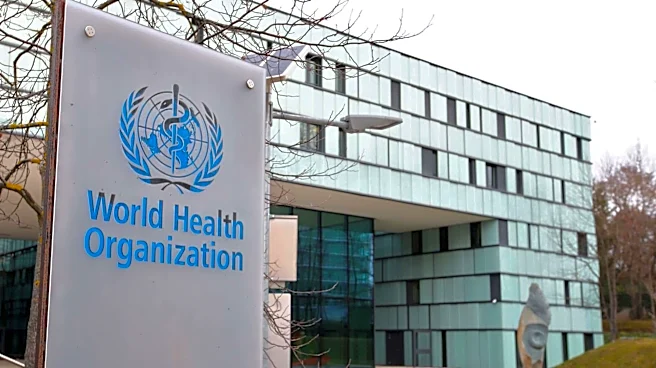
Speaking to reporters, Rubio said the US response would be led by the Centers for Disease Control and Prevention (CDC) along with the WHO, but criticised the UN agency’s timing in detecting the outbreak.
“The lead is obviously going to be CDC (the Centers for Disease Control) and the World Health Organization, which was a little late to identify this thing unfortunately,” he said.
Rubio added that the US had committed around $13 million in assistance and was planning to help establish about 50 treatment clinics in the Democratic
Republic of Congo (DRC), where the outbreak has hit hardest.
“It’s a little tough to get to because it’s in a rural area… and a hard-to-get-to place in a war-torn country,” he said, adding that Washington would “lean into that pretty heavy”.
The WHO has expressed concern over the “scale and speed” of the outbreak, which has so far killed an estimated 131 people in the DRC.
The comments come as the US State Department issued its highest-level travel warning for the DRC, South Sudan and Uganda, advising Americans not to travel due to the Ebola risk. It also urged reconsideration of travel to neighbouring Rwanda.
US health authorities have already introduced enhanced airport screening for travellers from affected regions and temporarily paused some visa processing. Officials said the risk to the United States remained low, but confirmed that an American doctor infected in the DRC is being evacuated for treatment, along with several others for monitoring.
Non-US citizens who have recently travelled to affected countries will also face entry restrictions under new rules announced by the CDC.
No approved vaccine or treatment exists for the strain involved in the current outbreak, raising concerns among health officials as they attempt to contain its spread.
(With inputs from AFP)
/images/ppid_a911dc6a-image-177907525576828384.webp)

/images/ppid_59c68470-image-177906763992862930.webp)





/images/ppid_59c68470-image-177918503046593109.webp)


/images/ppid_a911dc6a-image-177899685308182622.webp)
