

/images/ppid_a911dc6a-image-176987312843796402.webp)
/images/ppid_a911dc6a-image-176987305790383240.webp)
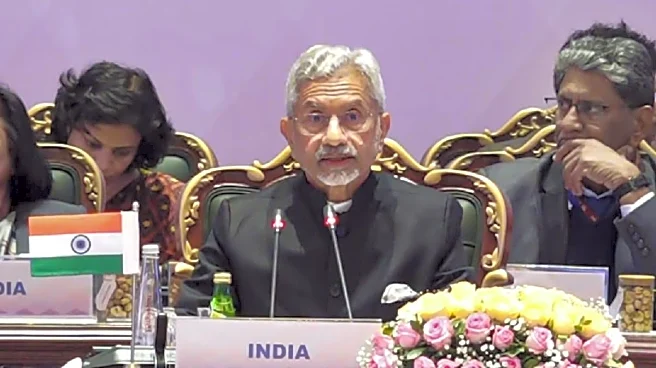
External Affairs Minister S Jaishankar on Saturday called for zero tolerance towards terrorism, stressing that cross-border terrorism was unacceptable and that societies targeted by terror had the right to defend themselves.
Addressing the second India–Arab Foreign Ministers’ Meeting in New Delhi, Jaishankar said, “Where Libya is concerned, all of us have an interest in advancing the national dialogue process. The direction of events in Syria is also critical for the well-being of the region. Contemplating this multitude of challenges, our shared interests warrant strengthening forces of stability, peace and prosperity”.
“A common threat to these objectives in both our regions is terrorism in all its forms and manifestations. Cross-border terrorism is particularly
unacceptable as it violates the basic principles of international relations and diplomacy. Societies targeted by terrorism have the right to defend themselves and will understandably exercise it. It is essential that we strengthen international cooperation to combat this global scourge. Zero tolerance for terrorism must be an uncompromising universal norm,” the External Affairs Minister said.
Jaishankar’s remarks on Libya were a reference to internationally backed efforts to revive a stalled political reconciliation process in the conflict-hit country, which remains divided between rival administrations and armed factions.
VIDEO | Delhi: Addressing the 2nd India–Arab Foreign Ministers’ Meeting, External Affairs Minister Dr S Jaishankar (@DrSJaishankar) says, “Where Libya is concerned, all of us have an interest in advancing the national dialogue process. The direction of events in Syria is also… pic.twitter.com/bWvEDZi307
— Press Trust of India (@PTI_News) January 31, 2026
On Syria, Jaishankar’s comments come amid significant developments following years of civil war and territorial fragmentation. Syria’s central government has recently reached a framework understanding with Kurdish forces to gradually integrate their military and civilian institutions into the state structure, marking a shift towards restoring unified control.
The agreement provides for a ceasefire, phased integration of Kurdish-led forces into the national army, and the return of state authority over administrative institutions and border crossings in the north-east. Kurdish forces had controlled large swathes of territory for years after leading the fight against the Islamic State with backing from a US-led coalition.
The United States has played a key role in facilitating talks between Damascus and Kurdish leaders, signalling that its alliance with Kurdish forces in the anti-IS campaign has largely run its course and that a political settlement is now necessary to prevent renewed instability.
/images/ppid_a911dc6a-image-176988003366695743.webp)

/images/ppid_a911dc6a-image-176988003232956627.webp)
/images/ppid_a911dc6a-image-176987722904636028.webp)


/images/ppid_a911dc6a-image-176987656482689076.webp)
/images/ppid_a911dc6a-image-176987659573153683.webp)
/images/ppid_a911dc6a-image-176987653118981163.webp)