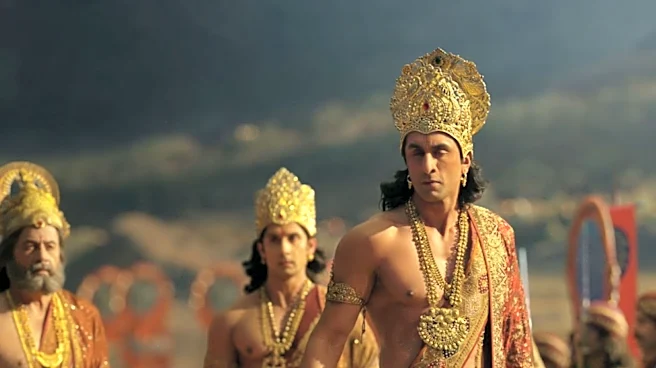




The Bombay High Court has stepped in to protect Ramayana from piracy just days before its theatrical release. The court has granted an interim injunction restraining unidentified persons and digital platforms from illegally recording, uploading or streaming the film without authorisation.
Justice Madhav Jamdar passed the order after Godpower Media Private Limited moved the court claiming copyright and exploitation rights over the film across India and other territories. The company sought protection ahead of Ramayana’s worldwide release on November 5.
Ramayana Makers Move Court Over Piracy Concerns
Godpower asked the court to protect all copyrighted material connected with the film, including its script, characters, footage, lyrics and sound recordings.
The company told the court that despite strict confidentiality agreements governing exclusive preview screenings, footage from both trailers had allegedly been recorded secretly and circulated online.
It argued that the same could happen once the film reaches theatres, with portions of Ramayana potentially being recorded and uploaded across websites and social media platforms without permission.
Taking note of those concerns, Justice Jamdar observed that the plaintiff had a “real and well-founded apprehension” that the film, or parts of it, could be illegally recorded and made available to the public.
Court Grants Dynamic Injunction Against Unidentified Offenders
The High Court consequently granted a dynamic ad-interim injunction against unidentified persons, commonly referred to in such cases as “John Doe” defendants.
The order restrains them from infringing the film’s copyright through unauthorised uploads, streaming or distribution.
Internet service providers and social media platforms have also been directed to block or remove infringing links, websites and mirror sites once they receive written notice from Godpower.
The company has been asked to identify and share URLs carrying unauthorised copies or clips from the film. Once those links are flagged, the concerned platforms and service providers must take immediate steps to disable access to them or remove the content.
Lawyers appearing for Google LLC and other global digital intermediaries told the court that they had no objection to the directions. They also assured the court that action would be taken promptly once specific infringing links were brought to their notice.
Ramayana’s Budget Put At Around Rs 4,000 Crore
The hearing also placed the film’s scale under the spotlight.
The court was informed that the first instalment of Ramayana had been produced at an estimated cost of around Rs 2,000 crore. The combined budget for both parts was stated to be approximately Rs 4,000 crore.
That figure makes the project one of the most expensive film productions mounted in India.
With the first part scheduled to arrive in theatres on November 5, the legal action has been taken before the film’s commercial release in an effort to prevent unauthorised circulation from affecting its theatrical run.
The matter will next be heard on December 16.