
/images/ppid_59c68470-image-17879825287878392.webp)

Geostrategist Brahma Chellaney has accused China of failing to alert Nepal about potentially dangerous changes upstream before devastating flash floods struck the Himalayan nation, arguing that an early warning could have helped authorities evacuate vulnerable communities and potentially saved lives.
“Worse, despite a deepening relationship with Kathmandu, Beijing did not send an emergency notification to Nepal of sudden water-level spikes, debris-dam formation or other upstream anomalies. An immediate notification, by compelling authorities to evacuate vulnerable people, could have potentially reduced the death toll,” he tweeted.
It is now clear that the Nepal disaster was caused by a natural trigger (cryospheric collapse) but amplified by Chinese
hydrological modifications and infrastructure footprint along the Tibetan side of the border. In other words, China’s upstream actions did not cause the glacier…
— Dr. Brahma Chellaney (@Chellaney) August 27, 2026
‘China Contributed To Disaster’s Severity’
Chellaney attributed the glacier-related failure to a “natural trigger,” but signalled that human interventions by China on the Tibetan side may have intensified the flooding and its downstream effects.
“It is now clear that the Nepal disaster was caused by a natural trigger (cryospheric collapse) but amplified by Chinese hydrological modifications and infrastructure footprint along the Tibetan side of the border. In other words, China’s upstream actions did not cause the glacier failure but contributed to the disaster’s severity and cascading impacts downstream,” he added.
“Scientific studies have long warned that human alterations to rivers and mountain landscapes can exacerbate natural disasters,” he further wrote.
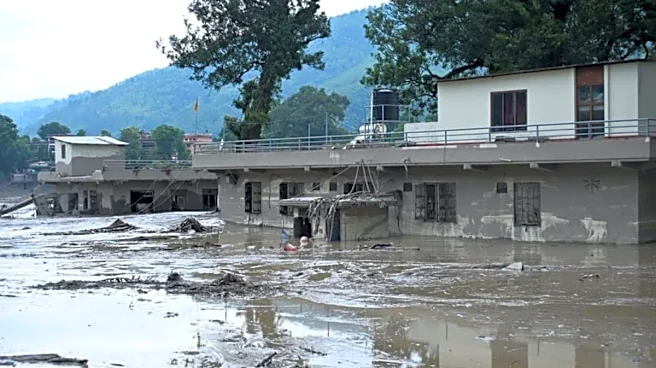
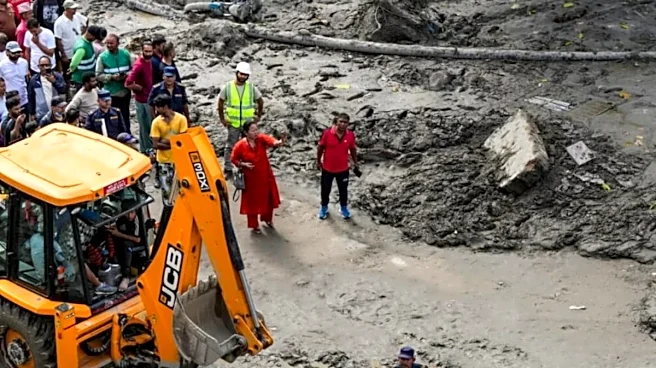
His remarks came as Nepal continued search and rescue operations after flash floods and landslides devastated parts of the country on Wednesday, particularly Rasuwa, Nuwakot and Dhading districts. The disaster has killed at least 360 people, with scores of others, including security personnel and foreign tourists, still missing.
What Triggered Nepal Floods?
According to reports, the flooding began after an avalanche blocked the Lhende tributary of the Bhotekoshi River before the surge reached Timure near the Rasuwagadhi border crossing with China.
Climate experts meanwhile said the scale of destruction has stretched Nepal’s existing response capabilities. Binod Prasad Parajuli of the Climate Risk and Resilience Lab said drone teams were being used to locate survivors, while authorities were coordinating with commercial satellite companies for high-resolution imagery to assess damage.
Initial assessments indicated that nearly 1,976 buildings had been completely damaged and about 38 kilometres of roads destroyed.
Pema Wangmo Lama, an indigenous climate activist, said isolated communities were facing shortages of food, water, fuel and electricity, with damaged roads forcing rescuers to depend heavily on helicopters.




/images/ppid_59c68470-image-178816004222644471.webp)

/images/ppid_59c68470-image-178807002755920538.webp)


/images/ppid_59c68470-image-178801253874929530.webp)