


/images/ppid_a911dc6a-image-177107062796921011.webp)
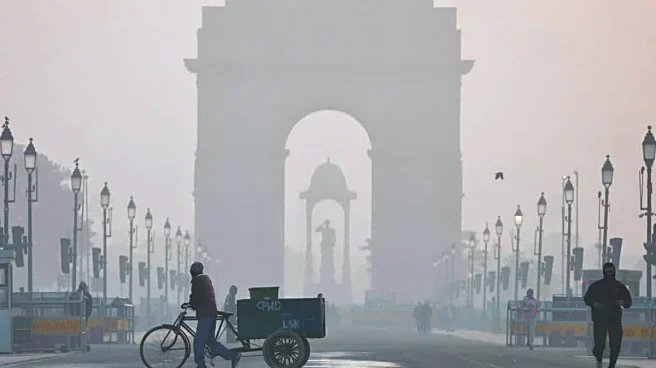
The Centre is all set to establish rigorous sector-wise action plans to combat air pollution in Delhi-NCR region, which will focus on measures to manage public transport, crop residue, industrial emissions, and solid waste.
These targets will also include monthly reviews of the measures taken by the states involved, as part of a framework to address the worsening air quality in Delhi-NCR during the winter months.
Union environment minister Bhupender Yadav on Tuesday chaired a high-level review meeting, directing that a monthly review of action plans devised by states to tackle air pollution will be held at the ministerial level starting this month. He indicated that a proactive approach will be prioritised, with detailed action plans being prepared
eight months in advance of the peak pollution season.
According to officials, central to this strategy is the implementation of “sector-wise targeted action plans” and regular inter-state coordination meetings at the highest level. The meeting, which was the fifth in a series of such reviews, focused on the prescribed parameters and formats previously directed with discussions primarily centred on the management of public transport, solid waste, crop residue, and industrial emissions as the core pillars for improving air quality in the national capital region.
FOCUS ON STATE-WISE MEASURES, INDUSTRIAL COMPLIANCE
For example, for Punjab, Yadav’s focus was directed towards the effective management of crop residue to counter the practice of stubble burning. He stressed that all crop residue management (CRM) machines must be in good working condition and used efficiently. He said he expects the preparation of standard operating procedures (SOP) for the certification of these machines.
The Punjab strategy also includes the installation of compressed bio gas (CBG) plants, which were stressed upon as the “most environment-friendly solution” for crop residue management. He encouraged the state to promote pelletisation plants and the use of residue in thermal power plants and brick kilns along with the “drone-based surveillance” as a modern deterrent to prevent crop residue burning.
To ensure industrial compliance, Yadav directed that closure notices should be issued immediately to any industrial units that have not yet installed online continuous emission monitoring systems (OCEMS).
This enforcement is paired with awareness campaigns intended to focus on sector-specific stakeholder participation, such as educating industrial units on emission control and working with resident welfare associations (RWA) regarding the segregation and processing of municipal solid waste. Additionally, greening activities are to be undertaken in “mission mode”, specifically using local species of bushes to improve the region’s environmental health.
The high-level meeting was attended by senior officials including the secretaries of environment and agriculture, the chairman of Commission for Air Quality Management (CAQM), and representatives from the central and state pollution control boards.







/images/ppid_a911dc6a-image-177107322672112787.webp)

/images/ppid_a911dc6a-image-177107283185623053.webp)