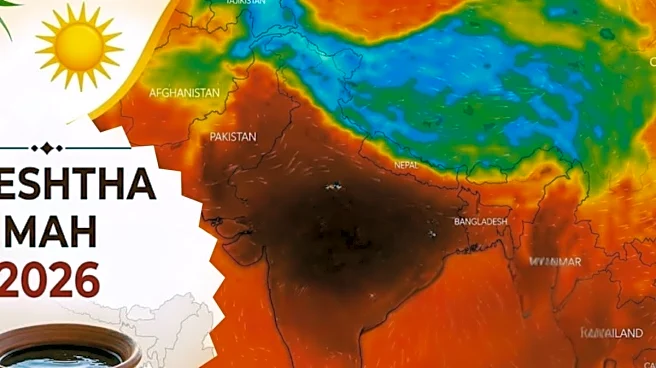




Long before weather apps began tracking heatwaves and rising temperatures, the Hindu calendar already recognised a period known for intense heat, dry winds and physical exhaustion. That period was Jyeshtha month.
In the ancient rhythms of the Hindu lunar calendar, few months carry the intensity of Jyeshtha. Known as the “eldest” month, Jyeshtha has long been synonymous with the fierce peak of summer, a time when the sun blazes mercilessly across the Indian subcontinent, testing both body and spirit.
Spiritual Significance of the Month
The very name Jyeshtha derives from the Jyeshtha Nakshatra, identified with the bright red supergiant star Antares in the Scorpio constellation. Just as this “eldest” star burns with powerful intensity, the month it governs brings the harshest heat
of the year, known as Grishma Ritu. Ancient sages observed that this was when the sun reached its zenith, evaporating moisture from the earth and preparing the land for the life-giving monsoon rains ahead.
The extreme heat was never seen merely as discomfort but as a sacred tapas — a purifying fire that strengthens resilience and clears the way for renewal.
Spiritually, Jyeshtha holds deep significance. It is dedicated to the worship of Surya Dev (the Sun God) and Lord Hanuman, both symbols of strength, vitality, and protection. The month encourages acts of charity, especially the donation of water, which holds immense merit during the scorching days. Devotees are advised to offer prayers, consume light foods, care for animals and birds, and avoid water wastage.
The spiritual philosophy behind these practices was closely connected to simplicity, compassion and helping others cope with the difficult weather conditions experienced during peak summer.
How Does Jyeshtha Symbolically Reflect Indian Summers?
As temperatures rise and days grow longer, Jyeshtha continues to embody both physical challenge and spiritual elevation, teaching balance, endurance and gratitude. The double Jyeshtha of 2026 invites devotees to embrace the heat not as an obstacle but as a teacher. It reflects the eternal cycle of intense tapas followed by renewal and abundance, meanwhile offering extended time for spiritual practices during nature’s powerful summer purification phase.

What makes this especially significant in 2026 is how closely the symbolism of Jyeshtha aligns with current climate realities across India. Weather agencies have already predicted another season of intense summer heat, prolonged heatwave spells and above-normal temperatures across several northern, central and western regions of the country. With the additional Adhik Jyeshtha month extending the spiritually significant summer period across nearly two months, many devotees are expected to experience prolonged exposure to harsh weather conditions traditionally associated with this phase of the Hindu calendar.
Historically, Jyeshtha has represented survival through extreme climatic conditions while encouraging emotional restraint, spiritual focus, simplicity and compassion. Ancient practices associated with the month, including water donations, fasting and offering cooling items to those in need, reflected a deep understanding of how seasonal extremes affected everyday life.
And in 2026, with an additional Jyeshtha month extending this spiritually intense phase during a predicted hotter-than-usual Indian summer, many believers see it as an even deeper opportunity for reflection, discipline and devotion amid one of the year’s most physically demanding seasons.
Why Is Hindu Jyeshtha Month In 2026 Considered Unusual?
Meanwhile, 2026 is making Jyeshtha spiritually and astrologically unusual because the Hindu lunar calendar will witness an additional Jyeshtha month, also known as Adhik Jyeshtha Maas or Purushottam Maas.
This rare occurrence happens roughly once every two-and-a-half to three years in the Hindu lunisolar calendar system. Unlike the Gregorian calendar, which follows the solar cycle, the Hindu lunar calendar is based on moon phases. Since a lunar year is shorter than a solar year by around 11 days, an extra month is periodically added to maintain seasonal alignment.
In 2026, this adjustment creates a “double Jyeshtha” period. According to Hindu calendar calculations, Adhik Jyeshtha Maas in 2026 will run from May 17 to June 15, followed by the regular or Nija Jyeshtha Maas from June 16 onwards. This effectively stretches the spiritual period associated with Jyeshtha across nearly 60 days.
Spiritually, Adhik Maas is considered highly sacred and is often dedicated to Lord Vishnu. The month is viewed as a time for self-reflection, spiritual discipline, prayer, meditation and charitable acts rather than material celebrations or major life events.



/images/ppid_a911dc6a-image-177925282313022223.webp)

/images/ppid_59c68470-image-177925252148696610.webp)

/images/ppid_59c68470-image-177925254705378210.webp)