

/images/ppid_59c68470-image-177597502708539745.webp)

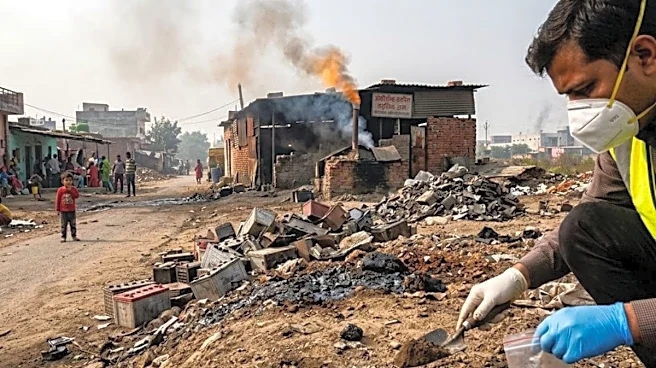
The soil is becoming increasingly toxic. A new report has found high levels of lead contamination in soil surrounding battery recycling units across Delhi-NCR, raising serious alarm over both public health and environmental safety.
The report, released by New Delhi-based Toxics Link, assessed contamination in and around authorised and unauthorised recycling units across the Delhi-National Capital Region (NCR), Haryana, Rajasthan, and Uttar Pradesh. The team analysed 23 soil samples collected near lead-acid battery recycling units in selected cities, including locations close to residential areas, local communities, and primary schools.
All samples showed evidence of widespread lead contamination ranging from 100 ppm to 43,800 ppm. “With reference
to the Environment Protection (Management of Contaminated Sites) Rules, 2025, our findings indicate that 52 per cent (12 out of 23 samples) of the collected soil samples contained lead concentrations exceeding the 5000 ppm benchmark for the category of Hazardous Contaminated Site,” the report stated.
Findings also reveal that 31 per cent of the samples surpassed the permissible limits for industrial areas as prescribed in the rules. At some sites, waste from battery recycling units was openly dumped on bare ground, further aggravating the risk of soil and groundwater contamination, in clear violation of India’s Battery Waste Management Rules, 2022 and the Extended Producer Responsibility framework.
Unexpectedly, higher levels of lead, on average, were detected in samples collected from authorised recycling units compared to those collected from unauthorised units. “The results point to gaps in the management of the environmental leakage of this heavy metal,” said Satish Sinha, Associate Director, Toxics Link.
Lead, a toxicant with no known safe level of exposure, remains one of the most serious environmental health risks globally. It has been classified as a Group II human carcinogen by the International Agency for Research on Cancer (IARC). According to the World Health Organization (WHO), it contributes to an estimated five lakh deaths and a loss of 13.9 million Disability-Adjusted Life Years (DALYs) annually, mostly in low- and middle-income countries (LMICs).
Experts say lead enters the body through inhalation, ingestion of contaminated food or dust, or through skin contact, and once absorbed, it is carried through the blood to different body parts, leading to serious health impacts. Children and pregnant women are most at risk, and even low levels of lead can disrupt brain development, cause cognitive impairment, and lifelong learning difficulties. Severe exposure can result in coma, convulsions, or death, while survivors may suffer from permanent neurological damage.
The report expressed concerns over improper handling and poor practices during battery recycling at most sites, leading to the uncontrolled release of lead into the air, soil, and water. It called for increased monitoring to assess lead contamination in soil, air, water, and household dust near the recycling sites, and the creation of a national database of contaminated sites linked to CPCB-led remediation efforts.









/images/ppid_59c68470-image-177597502873675468.webp)