



Punjab Education Minister Harjot Singh Bains has said the controversy surrounding the pharmacy recruitment examination was not a case of paper leakage, but a well-organised “high-tech cheating” operation allegedly linked to a network operating from Bhiwani, Haryana.
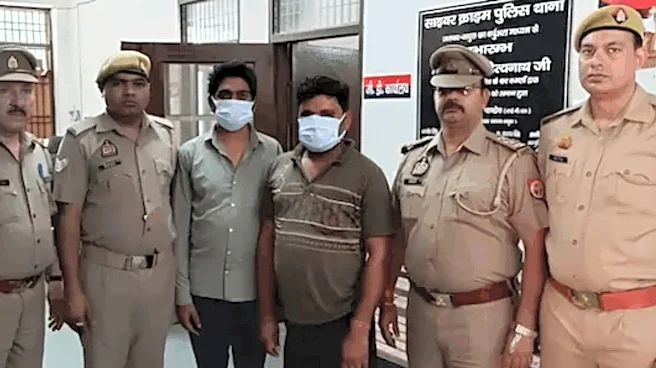
So far, police have arrested 43 people, including 10 main accused, 25 candidates and eight handlers. Of the handlers arrested, five are from Punjab, while three belong to Haryana and Rajasthan. Police said the search is still on for four candidates and one handler.
Rejecting allegations of a leaked question paper, Bains said the accused had planned to use advanced electronic devices and technology to facilitate cheating during the examination. He also said the Punjab government had nothing
to hide and was prepared for any investigation, including a CBI probe, if required.
How The Haryana Network Expanded Into Punjab
According to Bains, the alleged syndicate initially operated in Bhiwani, Haryana, where it helped candidates fill examination forms and arranged methods to facilitate cheating. The network later expanded into Punjab by setting up a local branch.
The minister said the Punjab link emerged after members of the group came in contact with a cafe in Ferozepur associated with the pharmacy recruitment examination. That connection eventually helped investigators trace the network and uncover the alleged racket.
How Police Foiled The Cheating Operation
Deputy Inspector General Neelambari Jagdale said the investigation began after police received confidential information about the network.
During the probe, investigators found that the residence of accused Gurmeet Singh in Faridkot was being used as the operation’s control room. Several handlers were allegedly coordinating the cheating operation from the location, and six of them were arrested during the raid.
Police said one candidate had scanned the question paper and attempted to send it outside the examination centre, while accused Deepak and Manjit were allegedly preparing to circulate the answers. However, officials intervened before the plan could be executed.
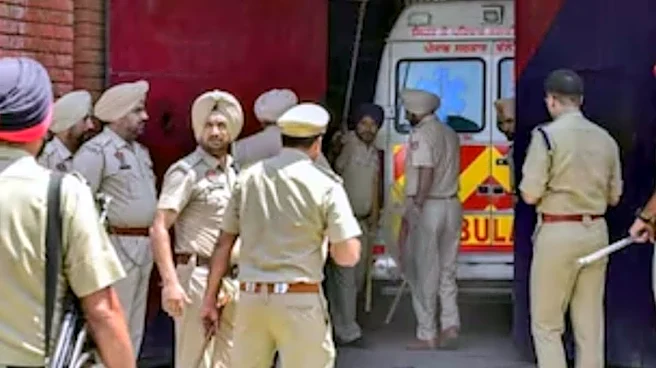
Based on roll number lists, nearly 200 police personnel carried out checks at examination centres across the state. During the searches, officials recovered mobile phones, a headphone, an RF antenna and other electronic devices allegedly used to facilitate cheating.
The investigation also revealed that members of the syndicate had learned several of their high-tech cheating techniques through online platforms, including YouTube, highlighting the increasingly sophisticated methods being used in recruitment exam fraud. The investigation is continuing.