


The United States Trade Representative (USTR) has proposed to initiate trade action against 60 economies, including India, over what it described as the “failure to impose and effectively enforce a prohibition on the importation of goods produced with forced labour”.
In a statement issued on Tuesday, the USTR stated that it had determined under Section 301 of the Trade Act of 1974 that the acts, policies and practices of the 60 economies were “unreasonable and burden or restrict US commerce”.
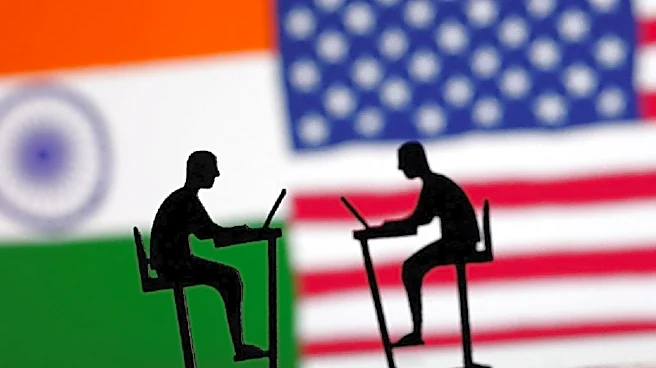
The development comes at a time when New Delhi and Washington remain engaged in crucial talks, with both sides working on finalising the first tranche of a bilateral trade agreement.
In the statement, USTR Ambassador Jamieson Greer said: “The failure of our
most important trading partners to address the importation of goods made with forced labor is unacceptable.”
Greer argued the irregularities create a dynamic where American workers are forced to compete globally on an “unlevel playing field”.
“We will no longer tolerate this disparity. Some trading partners have taken initial steps to prevent the importation of forced labor goods, including through USMCA and commitments in Agreements on Reciprocal Trade. However, each of our trading partners must do more to ensure that trade does not perversely encourage and entrench forced labor globally.”
USTR Proposes Additional Duties
The U.S. Trade Representative has proposed to impose additional duties on all products from the investigated economies.
According to the agency, economies that have already adopted, or committed to adopt, forced labour import prohibitions through an “Agreement on Reciprocal Trade” could face an additional 10 per cent tariff.
“For all other economies, the U.S. Trade Representative proposes 12.5% as the rate of additional duty”, the statement read.
The U.S. Trade Representative initiated 60 investigations in March 2026 in connection with the alleged failure of various economies to impose and effectively enforce a prohibition on the importation of goods produced with forced labour.
Proceeding with the probe, the agency received testimony of nearly 60 witnesses and 500 comments and rebuttal comments, according to the statement.
India, China Among 60 Economies
According to the USTR, economies that failed to “impose and enforce a prohibition on the importation of goods produced for forced labour” are: India, China, Israel, Australia, Japan, Jordan, Kuwait, Malaysia, Qatar, Russia, Saudi Arabia, Singapore, South Africa, South Korea, United Arab Emirates, United Kingdom, Venezuela, Vietnam, Thailand, Taiwan, among others.
Countries that failed to effectively enforce a prohibition on the importation of goods produced with forced labor are: Canada; Ecuador, the European Union; Indonesia; Mexico; and Pakistan, as per the statement.
/images/ppid_59c68470-image-178029502803971466.webp)





/images/ppid_59c68470-image-178040752572010151.webp)
/images/ppid_a911dc6a-image-178036302211793467.webp)