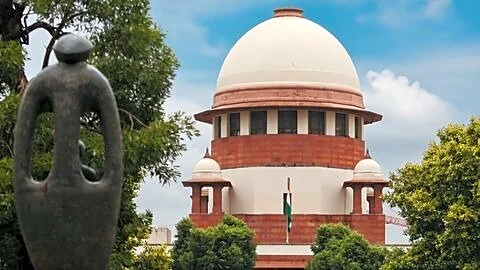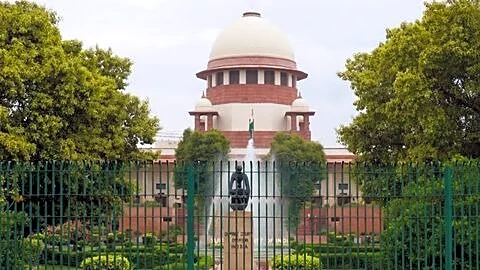




The Supreme Court on Monday refused to take up a plea challenging a sharp rise in airfares, with Justice Vikram Nath making a brief remark to the counsel: “Don’t travel by air. Next case.”
The exchange came after the counsel raised the issue of soaring ticket prices before the court. The lawyer claimed that airfares on some routes had risen by as much as 700 per cent and argued that air travel should be treated as an essential service.
The counsel further submitted that such a steep increase violated Article 14 of the Constitution, which provides for equality before the law.
“The airfares have increased to 700%. It is an essential service. Violation of Article 14,” the counsel said, according to Live Law.
Justice Nath responded, “Don’t travel by
air. Next case.”
The matter was not taken up for hearing at that point. The bench moved on to the next case, and no order was passed on the submission.
New Airfare Rules From January 2027
The development comes as India prepares to introduce a new framework for airfares. Under the Bharatiya Vayuyan Niyam, 2026, the government will largely continue to allow market forces to determine ticket prices.
The rules, which are set to come into effect from January 1, 2027, state that the government will not normally intervene in airfare pricing. However, it can step in during an “extraordinary situation” if it believes such action is necessary in the public interest.
The policy continues the government’s broader approach of allowing airlines to operate in a market-driven pricing system rather than imposing a direct cap on fares.
Government To Keep Check On Sharp Fare Surges
A Times of India report published on October 17 said the government does not plan to regulate or put a fixed cap on airfares under the new policy.
However, it is expected to retain a “strong lever” to act against unusually steep fare increases during exceptional circumstances, particularly when demand for flights on specific routes rises sharply.
The policy therefore aims to keep airfare pricing largely market-driven while retaining the government’s ability to intervene in extraordinary situations in the public interest.