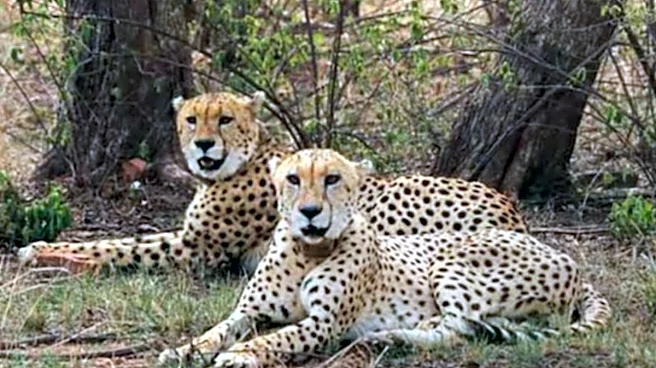



India has been working to resurrect its cheetah population, which is why around nine of the world’s fastest animals were translocated to parts of Madhya Pradesh to increase their numbers. And now, there is some good conservation news.
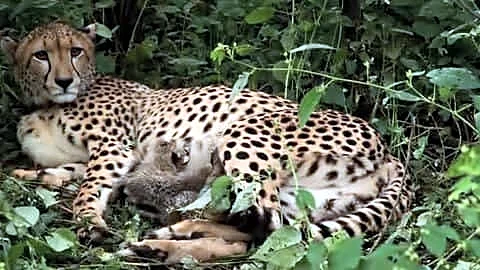
A female cheetah, named KGP12, has given birth to 4 cubs, bringing the number of cheetahs in India to 56.
This new litter comes just months after her previous litter, which was born in April, was killed in a leopard attack in the open forest. KGP12 is the daughter of South African cheetah Gemini.
A female cheetah carries her babies during a gestation period of 90 to 95 days, which is about 3 months.
Bhupender Yadav, Union Minister for Environment, Forest and Climate Change, announced the birth of the cheetah cubs just
a da after India’s Project Cheetah, the reintroduction programme for the big cat species, turned four.
Taking to X, Bhupender Yadav wrote, “A truly historic and joyous moment for Project Cheetah! A day after India’s Cheetah Project completed four years, KGP12, an Indian-born female cheetah, has given birth to four cubs in Kuno.”
“Four years, four new lives—a beautiful symbol of hope, resilience and the growing success of cheetah conservation in India. Heartiest congratulations to the entire Kuno and Project Cheetah family,” he added.
Currently, there are only two places in India where cheetahs exist – Kuno National Park and Gandhi Sagar Wildlife Sanctuary, both located in Madhya Pradesh. According to a report by The Hindus, preparations are underway to get Veerangana Durgavati Tiger Reserve in Sagar district ready as the third home for the cheetahs.
Till then, here are the two locations that house the cheetahs in India:
Kuno National Park, Madhya Pradesh
Kuno National Park in Sheopur district is at the centre of India’s cheetah reintroduction programme. The first eight cheetahs arrived here from Namibia in September 2022, followed by animals from South Africa and, more recently, Botswana. The park has since become the main breeding ground for India’s growing cheetah population.
The latest four cubs were born here, adding another generation to the population. Kuno currently has 53 of India’s 56 cheetahs, according to the latest figures.
For travellers, however, there is an important distinction. Kuno is a wildlife tourism destination, but the cheetahs are not currently open for direct tourist sightings. Madhya Pradesh Tourism says tourists cannot presently witness the big cats, even though safari bookings are available for exploring the park and its wider wildlife.
Gandhi Sagar Wildlife Sanctuary, Madhya Pradesh
Gandhi Sagar Wildlife Sanctuary is the second landscape currently holding cheetahs under Project Cheetah. Three South African cheetahs had been shifted here from Kuno, with the animals placed in separate large soft-release enclosures as part of the programme.
The sanctuary, spread across parts of Mandsaur and Neemuch districts, is also developing as a nature and adventure destination. The surrounding area offers jungle safaris, while the Gandhi Sagar Forest Retreat promotes wildlife experiences alongside activities and attractions around the Chambal landscape.






![[WATCH] Fan girl causes mayhem in hotel lobby to click photo with Abhishek Sharma after AFG vs IND 3rd T20I](https://glance-mob.glance-cdn.com/public/cardpress/binge-magazine-card-generation/spaces/IN/en/crictracker-spaces/images/ppid_49c02804-image-178974502161666014.webp)