
/images/ppid_59c68470-image-177885260780727407.webp)

/images/ppid_a911dc6a-image-177883422555542248.webp)
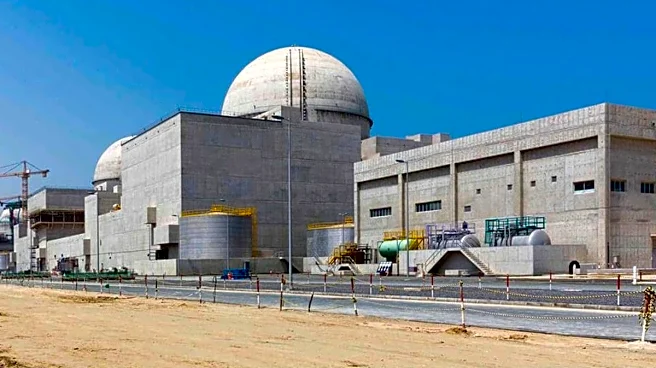
India on Monday strongly condemned the drone attack targeting the Barakah nuclear power plant in the United Arab Emirates (UAE), calling it a “dangerous escalation” and urging all sides to return to dialogue and diplomacy amid rising regional tensions.
In an official statement issued by the Ministry of External Affairs, India said it was “deeply concerned” about the strike on the UAE’s sole nuclear facility.
“India is deeply concerned at the attack targeting the Barakah nuclear facility in the UAE. Such actions are unacceptable and represent a dangerous escalation. We urgently call for restraint and a return to dialogue and diplomacy,” the statement said.
The remarks came after a drone strike triggered a fire near the Barakah nuclear power plant
on Sunday in what UAE authorities described as an “unprovoked terrorist attack”.
No group immediately claimed responsibility for the strike.
DRONE STRIKE SPARKS FIRE AT BARAKAH PLANT
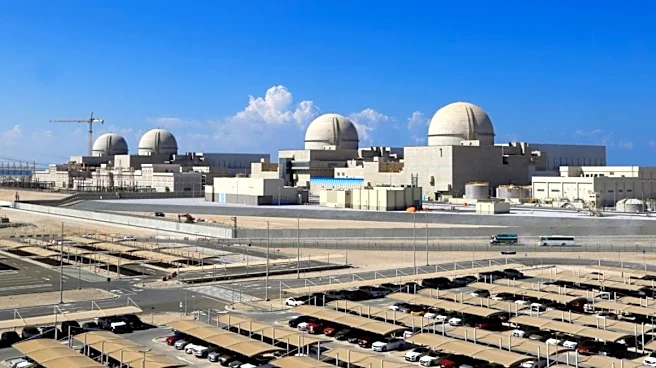
The attack caused a fire on the edge of the Barakah nuclear power facility, located in the western UAE.
Authorities, however, said there were no injuries and no radiological leak from the site.
The UAE’s nuclear regulator stated that the incident did not compromise the safety of the plant and confirmed that “all units are operating as normal.”
The International Atomic Energy Agency (IAEA) also said the strike caused a fire in an electrical generator while one reactor shifted to emergency diesel generators.
The UAE Defence Ministry said three drones crossed into the country over its western border with Saudi Arabia, two of which were intercepted.
An investigation into the source of the drones is currently underway.
The Barakah nuclear plant, built with South Korean assistance and operational since 2020, is the Arab world’s only nuclear power station.
The $20 billion facility supplies nearly a quarter of the UAE’s energy needs.
REGIONAL TENSIONS ESCALATE
The attack comes amid escalating tensions in West Asia, particularly involving Iran, Israel and the United States.
The UAE had recently accused Iran of launching drone and missile strikes, while tensions around the Strait of Hormuz, a critical global energy route, have continued to intensify.
Reacting to the broader regional situation, US President Donald Trump issued a warning to Iran on social media after reportedly speaking with Israeli Prime Minister Benjamin Netanyahu.
“For Iran, the Clock is Ticking, and they better get moving, FAST, or there won’t be anything left of them,” Trump said.
Iranian military adviser Mohsen Rezaei, meanwhile, said on state television that Iran’s armed forces remained prepared while diplomatic channels were still open.
“Our armed forces’ fingers are on the trigger, while diplomacy is also continuing,” he said.
The ceasefire in the region remains fragile, with renewed fears of conflict involving Israel, Iran and Iran-backed groups such as Hezbollah and the Houthis.
UAE, SAUDI ARABIA REACT
Anwar Gargash, diplomatic adviser to the UAE President, described the attack as a serious escalation regardless of whether it was carried out directly or through proxy groups.
“The attack, whether carried out by the principal actor or through one of its proxies, represents a dangerous escalation,” Gargash said on social media.
Saudi Arabia also condemned the strike and later announced that it had intercepted three drones that entered its airspace from Iraq.
The Associated Press highlighted that this was the first known attack targeting the four-reactor Barakah facility since the outbreak of the ongoing regional conflict.
Yemen’s Iran-backed Houthi rebels had earlier claimed to have targeted the plant during its construction phase in 2017, though the UAE had denied those claims at the time.
NUCLEAR SECURITY CONCERNS GROW
The incident has renewed concerns over the vulnerability of nuclear infrastructure during armed conflicts.
Nuclear sites have increasingly become points of concern in modern warfare, citing Russia’s invasion of Ukraine and previous threats involving Iran’s Bushehr nuclear plant.
The UAE’s nuclear programme differs significantly from Iran’s, with Abu Dhabi operating under a strict “123 agreement” with the United States that prohibits domestic uranium enrichment and fuel reprocessing.
/images/ppid_a911dc6a-image-177906562777217641.webp)

/images/ppid_59c68470-image-177907010466091953.webp)


/images/ppid_a911dc6a-image-177892528977214318.webp)


/images/ppid_a911dc6a-image-177881869827450930.webp)