
/images/ppid_a911dc6a-image-177502853410311068.webp)
/images/ppid_a911dc6a-image-177503205853987124.webp)
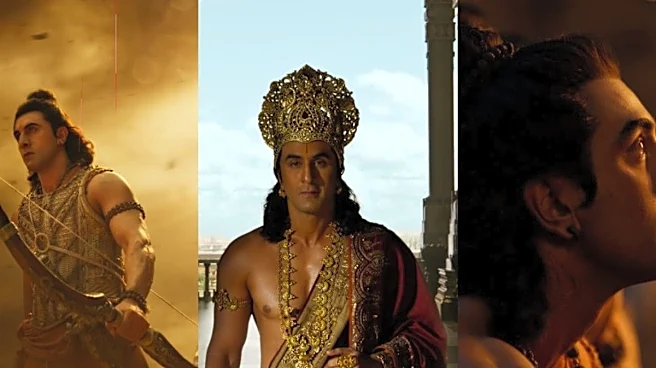
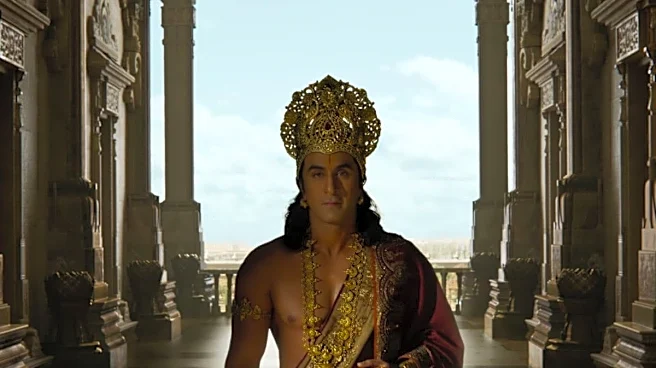
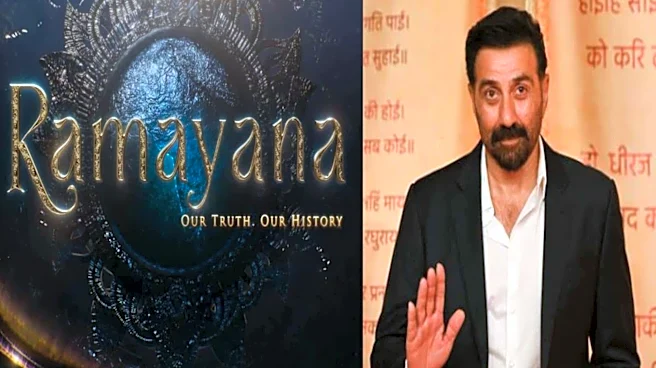
The first glimpse of Nitesh Tiwari’s magnum opus, officially titled “Rama”, was unveiled on April 2 to mark the occasion of Hanuman Jayanti. While the teaser dazzled audiences with its Rs 4,000 crore scale and Ranbir Kapoor’s serene portrayal of the titular deity, it immediately ignited a fierce linguistic debate across social media. Critics in the Hindi heartland have questioned the use of the “a” at the end of the name, with many dismissing it as an “Anglicised” or Westernised version of the traditional Indian “Ram”.
However, far from being a colonial addition, observers say the choice of “Rama” is a deliberate return to the roots of the epic. As the film prepares for a worldwide IMAX release this Diwali 2026, the debate highlights a fascinating
divide between modern Hindi and ancient Sanskrit.
Is the ‘a’ at the end of ‘Rama’ a British colonial addition?
The most common misconception in this debate is that the “a” was added by British scholars to make Indian names easier for English speakers to pronounce. In reality, the “a” is an essential part of the original Sanskrit name. In Sanskrit, the word is written as Rāma, where the final “a” represents a short vowel sound (the schwa). This vowel is integral to the grammatical structure of the language.
The reason most north Indians say “Ram” instead of “Rama” is due to a linguistic phenomenon known as Schwa Deletion. Over centuries, modern Indo-Aryan languages like Hindi, Punjabi, and Gujarati evolved to drop the short “a” sound at the end of words. While the Devanagari script still writes the character, the spoken form “deletes” the final vowel. Therefore, while “Ram” is the correct Hindi pronunciation, “Rama” is the phonetically accurate Sanskrit one.
Why did Nitesh Tiwari choose ‘Rama’ over ‘Ram’ for the title?
By opting for “Rama”, the filmmakers are signalling a “Sanskrit-first” approach that transcends regional boundaries. In southern India—where languages like Telugu, Kannada, Tamil, and Malayalam have largely retained the final vowel sounds of Sanskrit—the name has always been Rama, Ramudu, or Raman. Using “Ram” would have catered primarily to the Hindi-speaking belt, whereas “Rama” serves as a cultural bridge for a truly pan-Indian audience.
Furthermore, with DNEG’s Namit Malhotra aiming for a massive global footprint, “Rama” aligns with international academic standards. For decades, global translations of the Ramayana and the Mahabharata have used the Sanskrit spelling. By titling the film “Rama”, the producers are positioning the project as a global epic on the scale of Avatar or The Lord of the Rings, ensuring the name resonates with both the Indian diaspora and international viewers who are already familiar with the Sanskrit nomenclature.
Can a film title be ‘correct’ in both Hindi and Sanskrit?
The beauty of the Indian linguistic landscape is that both versions are “correct” within their respective contexts. “Ram” is the living, breathing name used in daily prayers and conversation across northern India. “Rama” is the formal, liturgical name found in the original Valmiki verses. The debate has been further complicated by the fact that many fans find the English spelling “Rama” confusing, often mispronouncing it with a long “aa” at the end (like Raamaa), which in Sanskrit would actually denote a feminine name.
Despite the initial friction on social media, the choice reflects a broader trend in Indian cinema to reclaim the original phonetics of ancient texts. Following the visual “fumble” of previous adaptations, Nitesh Tiwari’s “Rama” appears to be prioritising authenticity in both its CGI and its linguistics. Whether this “Sanskrit-centric” branding will win over the Hindi purists remains to be seen, but for now, the “a” is staying firmly in place as the film heads toward its historic Diwali debut.
What is the road ahead for the Ramayana franchise?
The April 2026 teaser is merely the first chapter of a planned two-part saga. With Part 1 focusing on the early life and exile of the Lord and Part 2 (scheduled for Diwali 2027) set to cover the epic war in Lanka, the filmmakers have a long road ahead to manage public expectations.
Producer Namit Malhotra has emphasised that the project is a “deep responsibility”, and the team has reportedly spent months consulting with Sanskrit scholars to ensure the dialogue and titles reflect the “true spirit” of the epic. As the debate continues, one thing is certain: by sparking a conversation about the very roots of the name, the film has already achieved a level of engagement that most marketing campaigns can only dream of.
/images/ppid_a911dc6a-image-177510903137097880.webp)

/images/ppid_a911dc6a-image-177511606909647715.webp)
/images/ppid_a911dc6a-image-177518252953888543.webp)
/images/ppid_a911dc6a-image-177512659763841132.webp)

/images/ppid_a911dc6a-image-177510553442843188.webp)
/images/ppid_a911dc6a-image-177520703319368178.webp)
/images/ppid_a911dc6a-image-177521753552749783.webp)