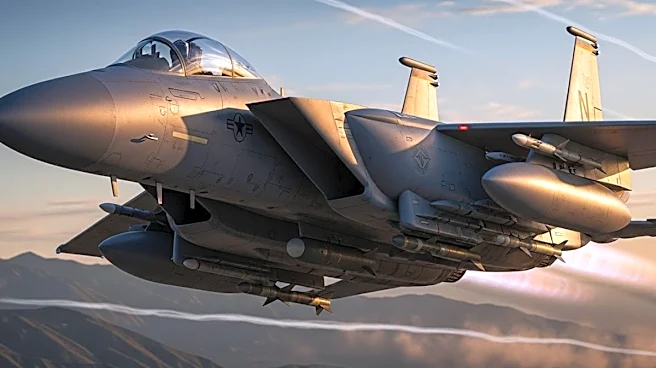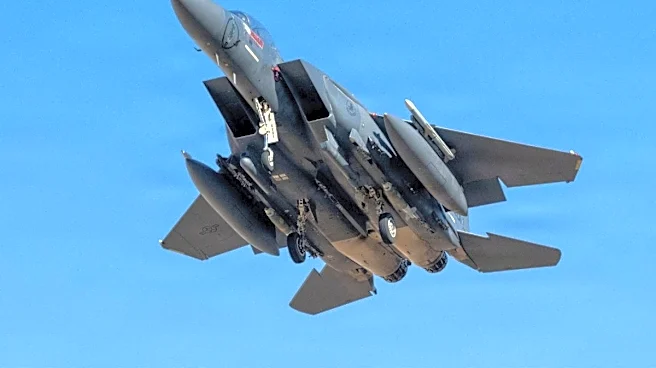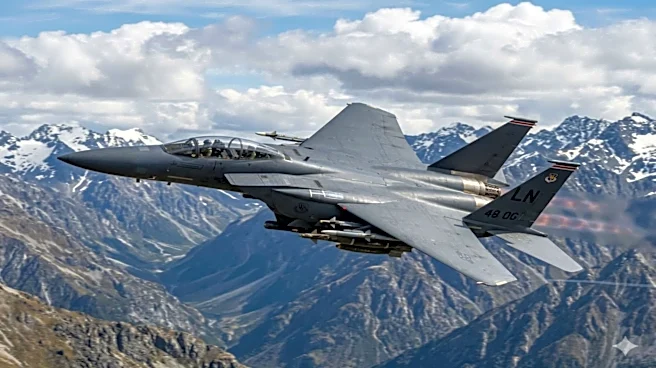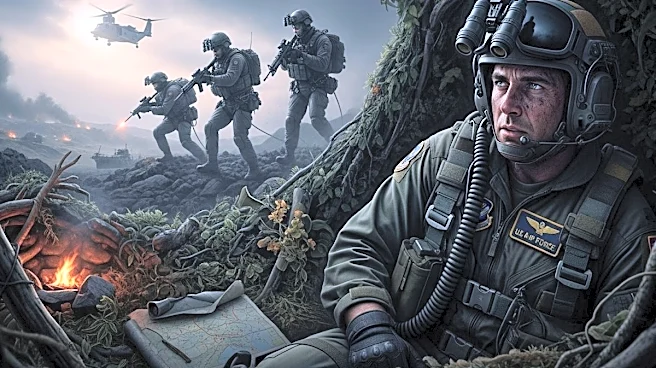



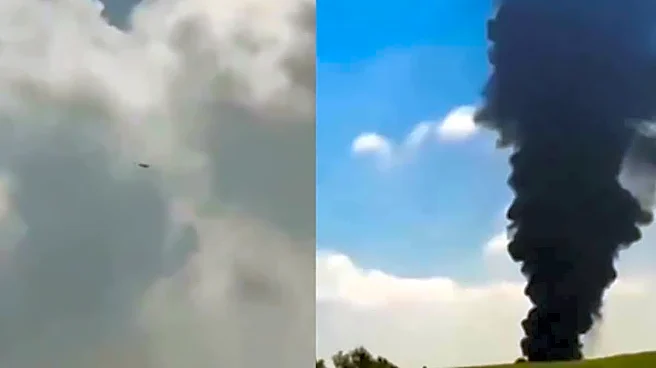
The US has managed to rescue the two crew members from an F-15E Strike Eagle that was shot down over southwestern Iran on April 3.
Amid the 48-hour mission, one question remains — how do pilots survive in an enemy territory till help arrives? What is SERE? Who are the guardian angels? News18 explains.
The CSAR Process
When a fighter pilot is downed, a “rescue package” is immediately mobilised, involving multiple layers of support.Combat Search and Rescue (CSAR) is a high-stakes, multi-layered operation designed to recover downed personnel from hostile territory before they can be captured. The process relies on a combination of specialised technology, elite rescue teams, and the pilot’s own survival training, according to BBC, Al Jazeera and other reports.
Phase
1: Survival to evasion, how does a pilot survive? Before a rescue team arrives, the pilot must survive the initial moments on the ground using Survival, Evasion, Resistance, and Escape (SERE) training. Step 1 | Vanishing Immediately: Pilots are trained to move away from the ejection site as quickly as possible to avoid enemy patrols already converging on the crash. Step 2 | Survival Gear: Beneath the ejection seat is a survival kit containing water purification tablets, rations, first-aid supplies, and signaling equipment like flares and strobe lights.
‘Eyes & Ears’ To Top Cover: The US Aircraft That Powered Daring Iran F15E Rescue Operation Explained
Step 3 | Stealth Communication: Pilots use encrypted survival radios to transmit GPS coordinates and voice messages to overhead aircraft.
Step 4 | Evasion Tactics: This involves moving primarily at night, staying off roads, and using the terrain to break line-of-sight from the enemy.
Phase 2: The entry of CSAR Task Force
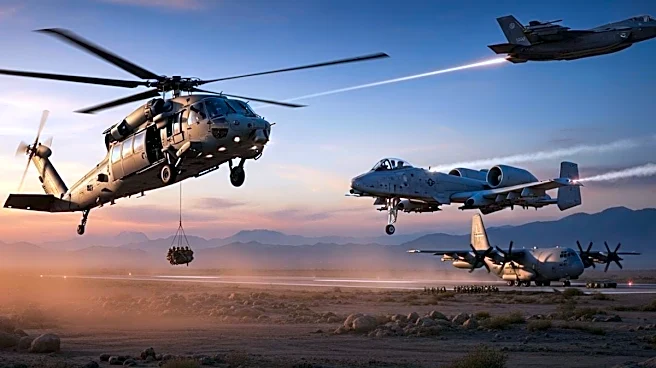
A rescue mission is rarely a single helicopter; it is a coordinated “package” of several aircraft working in tandem.
- The HH-60W Jolly Green II or older HH-60G Pave Hawk helicopters are the primary recovery platforms. They are equipped with armor, defensive weapons, and a hoist to lift pilots from dense terrain.
- A-10 Warthogs (often called “Sandys” in this role) provide close air support, circling the extraction zone to suppress enemy ground fire.
- HC-130 aircraft act as airborne command centers and provide mid-air refueling to the helicopters to extend their range.
- Suppression of Enemy Air Defenses (SEAD): Electronic jamming aircraft may move ahead to blind enemy radar and prevent surface-to-air missiles from targeting the rescue force.
Phase 3: Who are the ‘Guardian Angels’?
The most critical human element is the Pararescuemen (PJs), elite Air Force Special Warfare specialists whose motto is “That Others May Live”.
PJs can fast-rope from helicopters, parachute into remote areas, or even dive into water to reach a downed pilot.
Every PJ is a certified paramedic capable of performing emergency surgery in the field to stabilize a pilot before extraction.
Before picking up a pilot, PJs must “authenticate” them using pre-determined codes to ensure they aren’t walking into an enemy trap.
What happened in Iran?
One crew member was successfully recovered in a “hot” extraction shortly after the crash despite heavy resistance. The second crew member, a Weapon Systems Officer, evaded capture for over 24 hours in the rugged highlands, eventually being recovered after a firefight deep in hostile territory.
KEY FAQs
How do pilots prepare for survival behind enemy lines?
US pilots undergo intensive training like SERE training. This teaches them how to survive in harsh environments, avoid capture, resist interrogation, and escape if captured. They learn skills like finding food/water, camouflage, navigation, and signaling.
What equipment do pilots carry to help them survive?
Pilots carry a survival kit that may include emergency radio or locator beacon, water purification tools, first aid supplies, signal mirror, flares, or smoke, compact food rations. Some also carry a GPS-based device like PRC-112 survival radio to communicate with rescuers without revealing their position easily.
How are they rescued once downed?
The US military uses Combat Search and Rescue (CSAR) missions. Specialized teams coordinate extraction using aircraft like the HH-60 Pave Hawk, often escorted by armed support. Pilots use coded signals and secure communication to confirm identity and location before pickup.
With agency inputs