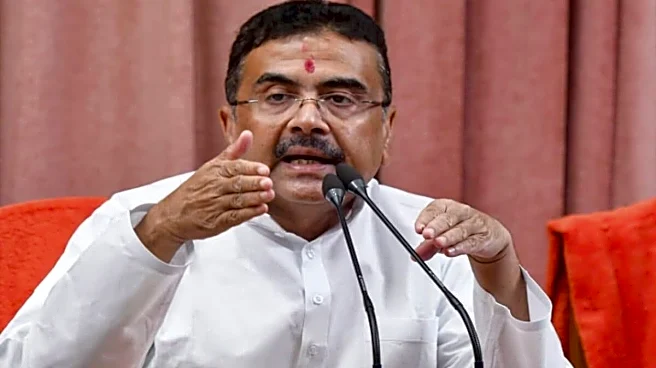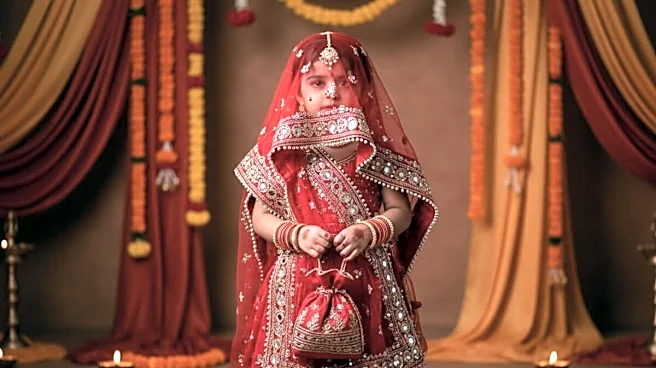




West Bengal has recorded nearly 60,000 institutional deliveries involving underage girls in the first six months of 2026, according to figures cited by Chief Minister Suvendu Adhikari from the state Health Department. The data, covering January 1 to June 30, has brought renewed focus on child marriage and adolescent pregnancy in the state. Suvendu Adhikari CM of Bengal has said, “Whoever is found responsible for such early marriage will not be spared and law will take action.”
Murshidabad accounts for the largest share of the reported cases, with 12,847 deliveries involving underage girls during the six-month period. South 24 Parganas follows with 4,178 cases, while Purba Bardhaman recorded 3,777, according to figures cited by the Chief Minister.
Malda and Paschim Medinipur were also among the districts reporting large numbers.
The concentration of cases in districts such as Murshidabad and South 24 Parganas puts the spotlight on areas where child marriage has also been a longstanding concern. They represent deliveries involving underage girls and can be influenced by population size, institutional reporting and access to health facilities.
Murshidabad Emerges As The Major Hotspot
With 12,847 cases, Murshidabad alone accounts for roughly one-fifth of the nearly 60,000 cases cited for the state during the first half of 2026.
The district’s child-marriage indicators have also remained a concern. A West Bengal government document citing NFHS-5 (2019-20) reported that the prevalence of child marriage among women aged 20-24 in the state was 41.6 per cent, while Murshidabad was among the districts where the prevalence had increased
South 24 Parganas, which recorded the second-highest number of underage institutional deliveries in the latest figures, had 4,178 cases.
Under-15 Pregnancies Raise Child-Protection Concern
The accompanying district-level data also identifies pregnancies involving girls below 15 years of age. Murshidabad records 253 such cases, followed by Rampurhat with 86, Malda with 81, Purba Bardhaman with 77 and Uttar Dinajpur with 75.
Paschim Medinipur recorded 63 cases, South 24 Parganas 59, Birbhum 55, Nadia 51 and Bishnupur 47.
The proportion of reported pregnancies involving girls below 15 is particularly notable in the supplied district table for Bishnupur, Birbhum, Paschim Bardhaman, Hugli and Dakshin Dinajpur. These percentages, however, should be read as proportions within the reported cases in the dataset and not as population-based prevalence rates unless the underlying denominator and methodology are established.
Pregnancy involving a girl below 15 is a particularly serious child-protection indicator and warrants scrutiny of the circumstances surrounding the pregnancy, including possible child marriage or sexual abuse.
Government Announces Crackdown
The figures have prompted the West Bengal government to announce a statewide crackdown on child marriage and underage pregnancies.
Adhikari said the government would conduct house-to-house drives to identify underage marriages and pregnancies. The administration plans to use health records to identify cases requiring further verification.
The Chief Minister said husbands of underage girls would be issued show-cause notices and asked to produce documentary proof of age. He also warned that people involved in arranging or solemnising child marriages could face legal action under the Prohibition of Child Marriage Act, 2006 and the POCSO Act.
Bengal’s Wider Child-Marriage Challenge
The latest figures come against the backdrop of persistently high child-marriage levels in West Bengal.
The latest Health Department figures therefore provide an important administrative signal, particularly in bordering districts such as Murshidabad and South 24 Parganas. The question arising is as to why child marriages and underage deliveries are an issue in the bordering areas of the state.