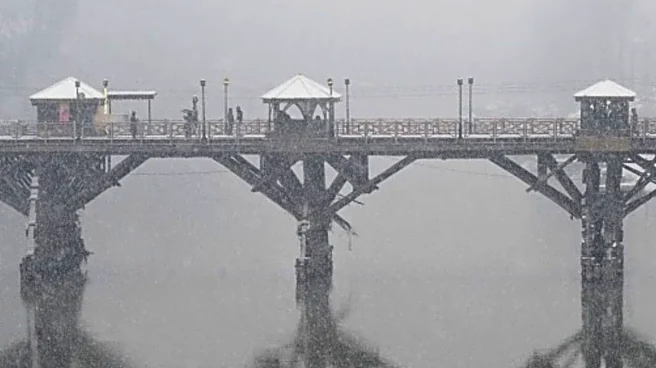




From record-breaking snowstorms in the US and Europe to extreme snowfall in northern India and cold waves across Russia and East Asia, winter weather has become increasingly disruptive in a warming world. This apparent contradiction raises a common question: if the Earth is heating up, why is it still snowing so intensely?
The answer lies in how climate change reshapes weather systems, rather than simply pushing temperatures higher everywhere. A warmer planet does not mean the end of winter. Instead, it makes winter more unstable—amplifying extremes, increasing volatility, and producing sharper, more unpredictable cold events.
What Is Behind Intense Snowstorms Across The World?
According to Aparna Roy, Fellow and Lead, Climate Change and Energy
at the Centre of New Economic Diplomacy, the surge in intense snowstorms across the Northern Hemisphere is closely linked to how climate change is reshaping atmospheric circulation. “The Arctic is warming nearly three to four times faster than the global average, a phenomenon known as Arctic amplification. This rapid warming weakens the temperature difference between the poles and the mid-latitudes, which in turn disrupts the jet stream.”
“A weaker, slower, and more meandering jet stream allows cold Arctic air to plunge southward for longer periods, while warmer oceans and lakes supply excess moisture. When these two conditions coincide: cold air and moisture-rich systems, we see unusually intense and widespread snowstorms across regions as diverse as North America, Eurasia and the Himalayas,” she explains.
Is Global Warming Supposed To Make Winter Less Intense?
Roy says, “There is no real contradiction, only a misunderstanding of how climate change works. Global warming refers to a rise in long-term average temperatures, not the disappearance of cold weather. In fact, a warmer atmosphere can hold about 7% more moisture for every 1°C increase in temperature, which increases the intensity of precipitation events.
“While winters are becoming shorter and milder on average, climate change is increasing variability and extremes. This means fewer cold days overall, but a higher likelihood that when cold conditions do occur, they are accompanied by heavier snowfall and more severe winter storms.”
Thus, in a mountain system like the Himalayas, this dynamic becomes especially important. Moisture-laden weather systems interacting with sudden cold air can produce heavy snowfall in a matter of hours, overwhelming infrastructure and natural systems alike.
The Difference Between Weather And Climate
One of the most persistent misunderstandings around climate change is the failure to distinguish between weather and climate. Weather refers to short-term conditions—today’s snowfall, this week’s cold wave. Climate describes long-term patterns over decades.
Climate change does not eliminate variability; it intensifies it. Cold days still occur, but they now coexist with record heat waves, erratic rainfall, and shifting seasons. Snowstorms and global warming are not opposites. They are part of the same destabilised system.
This distinction matters because extreme winter events are often misused to dismiss climate science. In reality, they reinforce the evidence that climate change is altering how the atmosphere behaves.
What’s The Science Behind A Snowstorm And Heavy Snowfall?
Heavy snowfall occurs when three conditions align: sub-freezing temperatures, abundant atmospheric moisture, and strong upward motion in the atmosphere. Low-pressure systems, jet stream disturbances, or orographic uplift over mountains force moist air to rise, cool and condense, adds Roy.
“In a warming climate, moisture availability has increased significantly due to warmer oceans and inland water bodies. This explains why some of the heaviest snowstorms in recent decades have occurred during winters that were warmer than average overall. Essentially, climate change is loading the atmosphere with more ‘fuel’, intensifying snowfall when temperatures remain cold enough,” Roy points out.
What Is Happening In Northern India?
In India, the effects of this global shift are increasingly visible in the north. Jammu and Kashmir, Himachal Pradesh, and Uttarakhand have experienced heavier snowfall episodes in recent winters, often concentrated into shorter periods. Snow has also been reported at lower altitudes where it was once rare.
“India’s winter snowfall is strongly influenced by Western Disturbances, and climate change is altering their behaviour. Research shows shifts in the subtropical westerly jet stream, which affects the timing, trajectory and moisture content of these systems. Warmer sea surface temperatures in source regions are increasing moisture availability, while rising land temperatures are delaying the onset of snowfall and pushing the snowline upward. As a result, snowfall is becoming more erratic, arriving later in the season and sometimes affecting regions that historically experienced rain rather than snow. This reflects a disruption of seasonal cycles rather than a strengthening of winter conditions,” Roy explains.
For communities, this volatility makes planning difficult. Agriculture, tourism, and transport all depend on predictable winter conditions, which are becoming harder to rely on.
Will This Impact The Drinking Water Supply In The Himalayan Regions?
“Yes, and the implications are serious,” says Roy. “Snowpack in the Himalayas functions as a natural reservoir, releasing melt-water gradually during the dry months. Studies indicate that snow persistence—the number of days snow remains on the ground—has declined across large parts of the Himalayan region. Faster melting due to rising temperatures leads to short-term run-off but reduces groundwater recharge and long-term water availability. Since Himalayan snow and glaciers feed major river systems like the Indus, Ganga and Brahmaputra, this volatility directly threatens drinking water security for millions, particularly during pre-monsoon months,” she adds.
In contrast, slow, steady snowfall allows gradual melting that sustains rivers and springs over time. Climate change is tipping this balance towards extremes—heavy accumulation followed by abrupt melting—making water availability more erratic.
Studies conducted by the Indian Space Research Organization (ISRO) show that around 75% of the Himalayan glaciers are retreating at an alarming rate. This will increase the variability of water flows to downstream areas and endanger the sustainability of water use in the earth’s most crowded basins.
Does Intense Snowfall Guarantee Abundant Water Supply?
“No”, says Roy. “What matters is not how much snow falls in a single event, but how long it stays and how slowly it melts. In a warming climate, more precipitation is falling as rain instead of snow, and snow that does accumulate melts earlier and faster. This leads to higher flood risk in the short term but reduced water availability later in the year. Evidence increasingly shows that regions can experience record snowfall alongside declining long-term water storage, making water systems more unpredictable and less reliable,” she adds.
Rapid snowmelt increases the risk of flash floods in early spring, damaging infrastructure and contaminating water sources. Later in the year, when communities rely on sustained meltwater, supplies may fall short. Springs that depend on gradual recharge may dry up earlier than expected.
For policymakers, the challenge will be to move beyond viewing snowfall as either a blessing or an anomaly. It must be understood as a variable resource—one that can either support or undermine water security depending on how it is managed.




/images/ppid_59c68470-image-177098502865611979.webp)

/images/ppid_59c68470-image-177098505979420979.webp)
/images/ppid_59c68470-image-177098502740495798.webp)
/images/ppid_59c68470-image-177098503681822035.webp)
/images/ppid_59c68470-image-177098503599348558.webp)