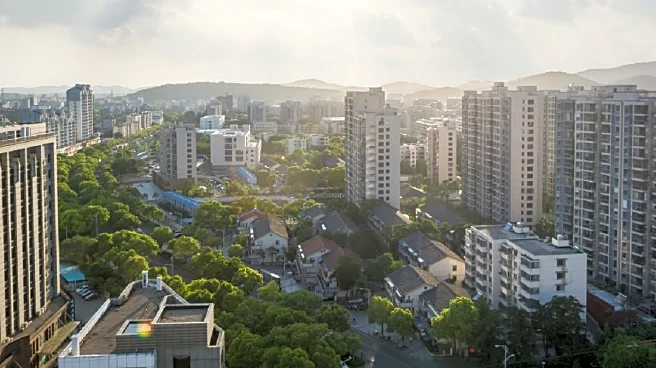




India’s urban growth story is no longer confined to the familiar skylines of Delhi, Mumbai or Bengaluru. A quieter but more decisive shift is underway, as Tier-2 cities step into the spotlight, driven less by chance and more by deliberate infrastructure planning. New expressways, upgraded airports and expanding logistics hubs are not only improving physical connectivity but also reshaping economic confidence. Shorter travel times, smoother supply chains and better regional access are translating into rising homebuyer interest and renewed investor appetite. As infrastructure networks deepen, these cities are emerging as viable alternatives to metros, signalling a broader recalibration of India’s urban and real estate landscape.
For long, Tier-2
markets were viewed largely through the lens of affordability, seen as secondary options rather than destinations of choice. That perception is steadily giving way to a more nuanced reality. Today’s Tier-2 cities are balancing competitive pricing with rising aspirations, offering organised housing, improving social infrastructure and a pace of life that metros increasingly struggle to provide.
According to ANAROCK, land transactions in H1 2025 have already exceeded full-year 2024 volumes, underscoring developers’ strong confidence in the country’s expanding real estate horizon. The data showed that land deals across Tier-II and Tier-III cities in H1 2025 surpassed those in Tier-I cities. During H1 2025, land deals in Tier-II and Tier-III cities covered around 1,907 acres, compared to 991 acres in Tier-I cities. This shift is also reflected in migration patterns, with professionals and entrepreneurs choosing these cities not out of compulsion but preference. As work ecosystems decentralise and quality of life takes centre stage, Tier-2 real estate is evolving from a value play into a lifestyle-driven proposition.
Connectivity has emerged as the single most decisive catalyst in this transformation. The rollout of new highways and expressways, alongside metro and regional transit expansions, is compressing distances that once defined Tier-2 cities as peripheral. Improved airport capacity and faster intercity rail links are further integrating these markets into national economic networks. What was earlier a multi-hour journey is now a routine commute, enabling smoother movement of people, goods and capital. As travel time shrinks, economic activity expands—unlocking new residential catchments, supporting commercial development and reinforcing the case for sustained real estate demand in these emerging urban centres.
B K Malagi, vice-chairman of Experion Developers, said, “When we talk about real estate transformation in Tier-2 cities, it’s tempting to focus on numbers, but the real change is far more human. In cities like Amritsar, we’ve witnessed how it has begun to reimagine itself once connectivity improves. With expressways and regional links strengthening, the city’s relationship with distance has changed steadily. Families are choosing more space and calmer living, professionals are staying back or returning, and businesses are planning with greater certainty.”
He added that investor confidence is also becoming more measured and long-term. Connectivity here has not just improved access; it has reshaped expectations of what a Tier-2 city can realistically offer.
Preksha Singh, CEO of Agrasheel Infratech, says, “In cities like Lucknow, the real estate story isn’t just about a new ring road or airport expansion; it’s about how infrastructure gave confidence back to end-users. A few years ago, buyers were hesitant; today, they’re upgrading homes, starting ventures and choosing Lucknow as a base. Infrastructure brought them here, but community and opportunity are keeping them. For property markets, connectivity shortened distances, but for people, it expanded horizons—more time with family, safer commutes, and greater choice in education and work. Investors see this not as a temporary upswing, but as a structural shift in how value is created here.”
Moreover, the momentum in Tier-2 cities is being reinforced by a clear policy push and growing alignment between public investment and private capital. Government-led initiatives are laying the groundwork for more efficient, business-friendly urban ecosystems. Improvements in ease of doing business and a sharper focus on transport and logistics corridors are further strengthening this foundation. In response, capital is shifting from a cautious, wait-and-watch stance to a more opportunity-driven approach. Institutional investors and developers are increasingly viewing Tier-2 markets as yield-accretive, while PPP models and private players are stepping in with longer-term confidence.
Ankit Kansal, Founder and MD, Axon Developers, says, “As developers, the question we ask before entering a market is not how fast prices can move, but whether the fundamentals are in place to support long-term habitation. Sindhudurg answers that convincingly. Improved access through Chipi airport, proximity to Goa’s MOPA airport, and the progression of key highway corridors have changed how the region connects with Mumbai, Pune and other metros. This is why we are seeing buyers plan longer stays, not just weekend visits. For developers, this shift matters. It allows us to design projects around managed living, rental viability and year-round use. In cities like Sindhudurg, infrastructure is shaping behaviour first, and real estate demand is following organically.”


/images/ppid_a911dc6a-image-177060802130265096.webp)

/images/ppid_59c68470-image-177064254055570109.webp)

/images/ppid_a911dc6a-image-177073402422810189.webp)