
/images/ppid_a911dc6a-image-177660359412369834.webp)
/images/ppid_a911dc6a-image-177660352541345363.webp)

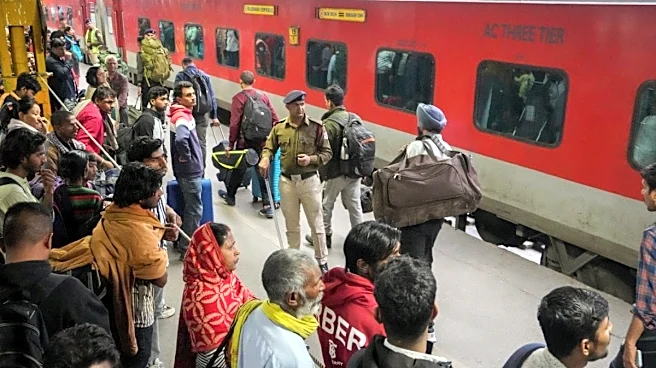
On Thursday, Prime Minister Narendra Modi shared an insightful article by Union Minister Ashwini Vaishnaw, highlighting the radical transformation of the Indian Railway ecosystem. The Prime Minister noted that the sector has moved beyond incremental changes, undergoing a fundamental shift that is setting new global benchmarks through a combination of sustained policy reforms and cutting-edge technology.
A Decadal Shift in Safety Benchmarks
The core of the minister’s article focuses on the “Safety First” mission, which has seen the railway accident rate plummet by nearly 89 per cent over the last decade. Statistics shared in the piece reveal a staggering improvement: consequential train accidents dropped from 135 in 2014-15 to just 16 in the 2025-26 period. This progress is further
reflected in the Consequential Accident Index—a measure of accidents per unit of train running distance—which has fallen from 0.11 to a record low of 0.01.
This transformation is underpinned by an unprecedented injection of funds. Annual safety expenditure has nearly tripled, rising from approximately Rs 39,200 crore in 2013-14 to nearly Rs 1.2 lakh crore in the 2026-27 budgetary allocation. These resources have been utilised to eliminate nearly 9,000 unmanned level crossings and construct over 14,000 road overbridges and underpasses, creating a far more secure environment for the two crore passengers who use the network daily.
Technological Sovereignty and Kavach 4.0
The article places significant emphasis on the indigenous technological milestones that have redefined rail operations. A standout achievement is the rollout of Kavach 4.0, India’s homegrown Automatic Train Protection (ATP) system. As of April 2026, Kavach has been commissioned across more than 1,450 route kilometres, specifically targeting high-density corridors like Delhi-Mumbai and Delhi-Howrah.
Supporting this digital backbone is a massive expansion in trackside infrastructure. The network now features nearly 4,000 digital railway stations and roughly 30,000 GPS-based fog safety devices, ensuring that trains remain operational and safe even under adverse weather conditions. Furthermore, the large-scale induction of LHB coaches has modernised the rolling stock, providing superior ride comfort and enhanced structural safety during collisions.
Modernising for the Middle Class
Beyond safety, the minister highlighted how the railway’s “fundamental shift” benefits the common passenger. The recent launch of the Vande Bharat Sleeper trains in early 2026 has brought high-speed, overnight travel to the masses, reducing journey times on key routes like Howrah-Guwahati by nearly three hours.
The government’s strategy remains focused on inclusivity, with 70 per cent of new coach production dedicated to General and Sleeper classes. By combining affordable transit with world-class technology like the Amrit Bharat and Namo Bharat services, Indian Railways is proving that safety and modernisation can go hand-in-hand. As the minister concluded, “Trains that do not crash do not make news,” suggesting that the greatest success of these reforms is the quiet, efficient safety now taken for granted by millions.


/images/ppid_a911dc6a-image-17766061003318688.webp)

/images/ppid_a911dc6a-image-177660613402195773.webp)





/images/ppid_a911dc6a-image-177660562339320634.webp)