
/images/ppid_59c68470-image-177071003473193707.webp)


Scientists have reported a major breakthrough in cancer research after successfully curing pancreatic cancer in mice without causing significant side effects. The study found that the new experimental treatment was able to eliminate tumors while leaving healthy cells largely unaffected.
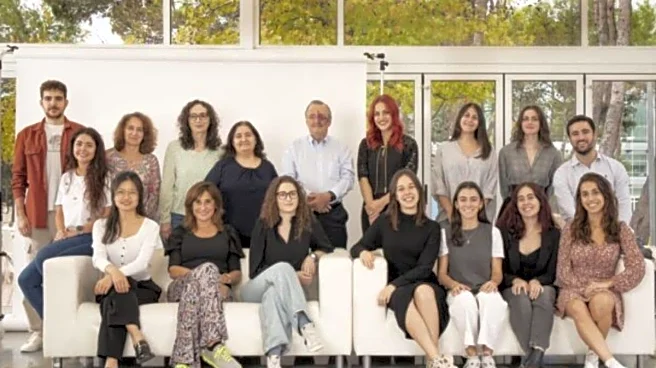
The study, published in the journal PNAS (Proceedings of the National Academy of Sciences), and led by Mariano Barbacid at Spain’s National Cancer Research Centre, found that a newly developed triple-drug therapy eliminated pancreatic tumours, with no relapse observed after treatment. After six years of research, scientists reported minimal side effects in the animals and no tumour recurrence, marking one of the most promising advances in pancreatic cancer research to
date.
At present, most pancreatic cancer drugs lose effectiveness within months as tumours develop resistance.
“These studies open a path to designing new combination therapies that can improve survival for patients with pancreatic ductal adenocarcinoma [the most common pancreatic cancer]. These results point the way for developing new clinical trials,” the study authors stated.
Also Read UK Travellers Get Visa-Free Access To China For 30 Days
In a post on X, the Embassy of Spain in the UK highlighted the achievements of the scientists, adding that the breakthrough could make a difference in the fight against the disease.
“A team of scientists from the Spanish Cancer Research Centre, led by the renowned Dr Mariano Barbacid, has achieved the complete and permanent disappearance of pancreatic cancer in experimental models. This discovery could make a difference in the fight against this disease.”
A team of scientists from the Spanish Cancer Research Centre, led by the renowned Dr Mariano Barbacid, has achieved the complete and permanent disappearance of pancreatic cancer in experimental models.
This discovery could make a difference in the fight against this disease. 👏 pic.twitter.com/gcnn1hPKBk
— Embassy of Spain UK (@EmbSpainUK) January 28, 2026
Pancreatic cancer, especially pancreatic ductal adenocarcinoma, is one of the deadliest forms of cancer due to its resistance to treatment, dense tumour microenvironment, and late diagnosis. Standard therapies often fail as tumours quickly adapt and bypass single-target drugs.
The CNIO therapy takes a different approach. Instead of targeting a single pathway, it combines three drugs to block multiple tumour survival mechanisms at the same time. Researchers said this strategy prevents cancer cells from rewiring themselves, a common cause of treatment failure.
Also Read US Assistant Principal Arrested For Stealing Items Worth Rs 90,000 Using Walmart Self-Checkout Scheme
Barbacid has previously argued that pancreatic cancer cannot be defeated with a single-drug strategy.
He has said in earlier research discussions that this tumour is extraordinarily adaptable, and only coordinated inhibition of multiple pathways can lead to lasting responses.
Barbacid is one of Europe’s most influential cancer researchers. In the early 1980s, he helped identify the first human oncogene, a breakthrough that transformed modern cancer biology and established the genetic basis of cancer.
/images/ppid_59c68470-image-177092003360093891.webp)

/images/ppid_a911dc6a-image-177089152458421393.webp)





/images/ppid_59c68470-image-177074753723033180.webp)
/images/ppid_59c68470-image-177066254567845048.webp)


/images/ppid_59c68470-image-177077754454222790.webp)