


/images/ppid_59c68470-image-17891325778566723.webp)
/images/ppid_59c68470-image-178914008929147046.webp)
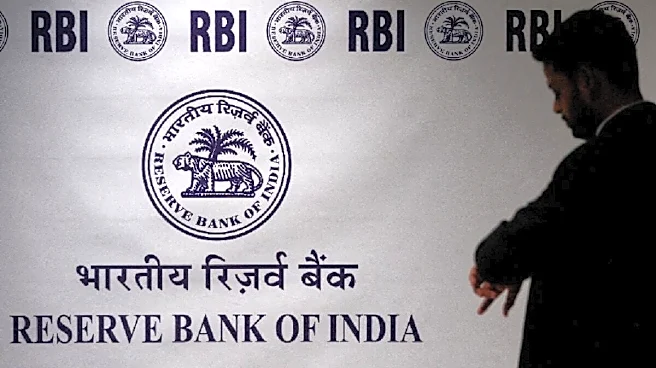
Tata Sons IPO: Tata Sons, the holding company of the Tata Group, is now set to face the possibility of a stock-market listing after the Reserve Bank of India (RBI) rejected its application to surrender its core investment company registration.
The RBI’s decision means Tata Sons will continue to be classified as an Upper Layer non-banking financial company (NBFC), a category that carries a mandatory listing requirement. However, the RBI rejection is not an IPO announcement, and Tata Sons has not yet disclosed an IPO opening date, price band, issue size or listing timeline.
The RBI conveyed the rejection in a letter received by Tata Sons’ company secretary and chief financial officer on Saturday, according to sources cited by news agency PTI. Tata Sons had
filed the application in March 2024 seeking to deregister as an NBFC.
Tata Sons IPO 2026: Key Dates
There is currently no official Tata Sons IPO opening date. The RBI first classified Tata Sons as an Upper Layer NBFC in September 2022. Under the regulatory framework, such entities are required to list within three years. Tata Sons’ original deadline was September 30, 2025.
The company had sought to avoid the listing requirement by surrendering its Core Investment Company registration. With the RBI rejecting that application, attention will now turn to Tata Sons’ compliance with the listing requirement.
The timeline for filing IPO documents, receiving regulatory approvals, opening the issue and listing the shares has not been announced.
Tata Sons IPO: Price Band
The Tata Sons IPO price band has not been announced. Any estimates of the eventual share price at this stage would be speculative because the company has not disclosed the structure or size of a potential public offering.
The eventual pricing will depend on factors including the valuation of Tata Sons, the percentage of shares offered, the nature of the issue and prevailing market conditions.
Tata Sons IPO: Issue Size
The Tata Sons IPO size is also yet to be determined. The company is the apex holding entity of the Tata Group and owns significant stakes in businesses spanning information technology, automobiles, steel, consumer products, aviation, hospitality and financial services.
A potential listing could therefore become one of India’s most closely watched public-market events. However, there is currently no confirmed figure for the number or value of shares that could be offered to public investors.
Importantly, it is also too early to determine whether any eventual offering would involve a fresh issue, an offer for sale (OFS), or a combination of both.
Tata Sons IPO: GMP
The Tata Sons IPO grey market premium (GMP) is not available yet. GMP typically emerges only after an IPO is formally announced and the issue gains attention among investors and grey-market participants. Since Tata Sons has not announced an IPO price band or issue dates, there is no meaningful IPO-related GMP to track at this stage.
GMP is an unofficial indicator of investor sentiment and should not be treated as a guaranteed listing gain.
Tata Sons IPO: Why RBI Rejected Its Deregistration Application
The RBI’s rejection closes a regulatory route Tata Sons had been pursuing to remain privately held. Tata Sons repaid more than Rs 21,000 crore of debt in 2024 and became debt-free. It subsequently applied to surrender its Core Investment Company registration, seeking to exit the NBFC regulatory framework.
The RBI kept the application pending while continuing to include Tata Sons in its Upper Layer NBFC lists.
The regulatory framework has since become more difficult for Tata Sons to navigate. Revised RBI norms that took effect in June 2026 replaced the earlier scoring-based approach with a threshold based on asset size. Under the revised framework, an NBFC with assets of Rs 1 lakh crore or more qualifies for the Upper Layer.
Tata Sons’ standalone assets were reported at more than Rs 2 lakh crore as of March 2026, putting it well above the threshold.
When the RBI reclassified Tata Sons under the new framework in August, it was reportedly the only unlisted entity on the 17-member Upper Layer list that was not a government-owned NBFC exempt from the listing requirement.
The rejection of its deregistration application therefore removes the principal route Tata Sons had pursued to avoid becoming a listed entity.
Tata Sons IPO: What Does the Listing Mean?
A public listing would mark a significant change for Tata Sons, which sits at the top of the Tata Group’s corporate structure. Tata Sons holds stakes across some of India’s biggest businesses, including Tata Consultancy Services, Tata Motors, Tata Steel, Tata Consumer Products, Tata Electronics, Air India and Tata Capital, among other group companies.
Listing Tata Sons would give public-market investors direct exposure to the group’s holding company rather than only to its individual listed subsidiaries. It would also bring greater disclosure and scrutiny of Tata Sons’ finances, investments, capital allocation and returns.
For investors, one of the key questions would be how the market values Tata Sons’ diverse portfolio of listed and unlisted investments and whether the holding-company structure results in a discount or premium to the underlying value of its holdings.
Tata Sons IPO: Tata Trusts vs Shapoorji Pallonji
The listing issue has also been closely linked to differences among Tata Sons’ major shareholders. Tata Trusts, chaired by Noel Tata, holds more than 65 per cent of Tata Sons and has opposed a listing, according to people familiar with the matter. Noel Tata is understood to have communicated concerns to the RBI in June over the potential impact of a public listing on Tata Sons’ long-term structure and philanthropic mission.
The Shapoorji Pallonji Group, which owns roughly 18 per cent of Tata Sons, has taken the opposite position and has argued that a listing would allow shareholders to realise value from their holdings.
The disagreement between the two shareholder groups has previously spilled into legal disputes and could become an important consideration in determining the eventual structure of any listing.
Tata Sons IPO: Leadership Transition
The RBI’s decision comes as the Tata Group also approaches a leadership transition. Tata Sons Chairman N Chandrasekaran has said he will not seek another term when his tenure ends in February 2027, after nearly a decade at the helm of the group.
The listing question has been reported as part of the broader backdrop to succession discussions. Chandrasekaran is understood to have maintained that the regulatory process should not be pre-negotiated to favour either shareholder group.
The RBI’s decision now puts the listing issue on a different footing, with compliance becoming a regulatory requirement rather than simply a matter of shareholder preference.
/images/ppid_59c68470-image-178921753623110898.webp)

/images/ppid_59c68470-image-178921503679041303.webp)
/images/ppid_59c68470-image-178922002177199902.webp)


/images/ppid_59c68470-image-178929502525078723.webp)
/images/ppid_59c68470-image-178913505656939408.webp)
/images/ppid_59c68470-image-178914508485737252.webp)