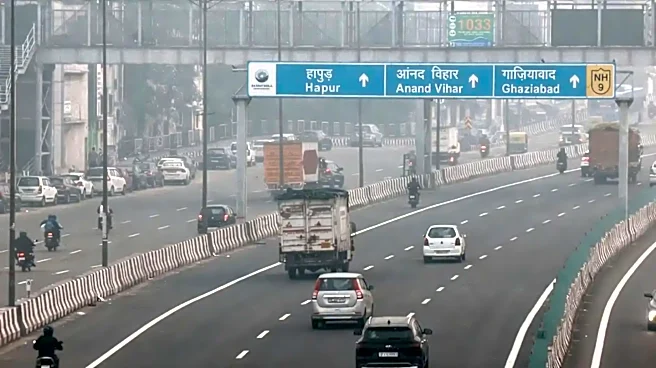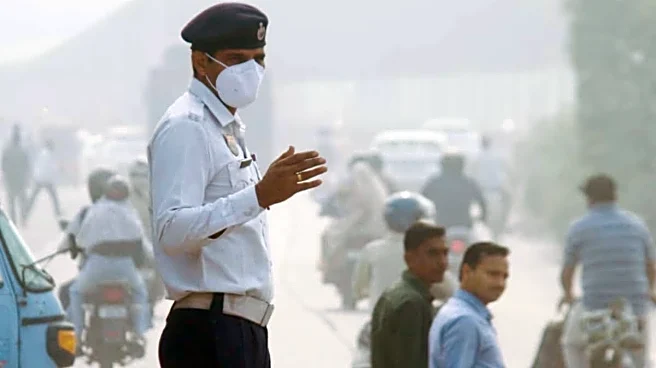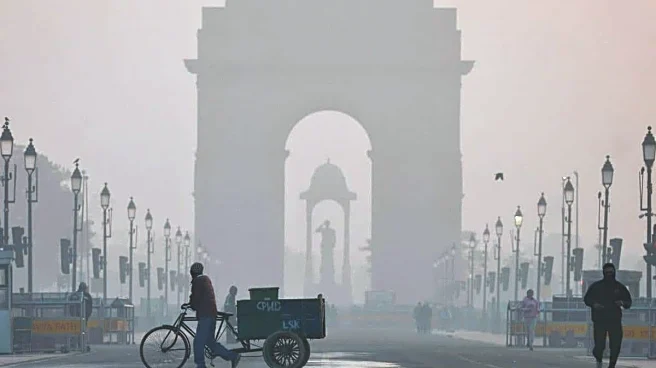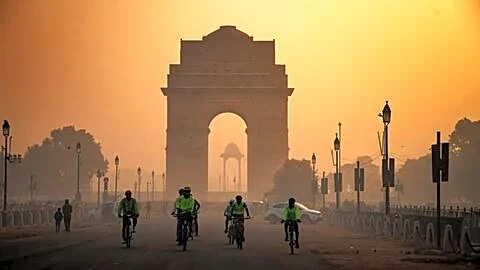


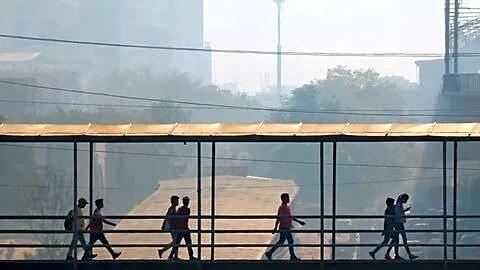
Delhi’s air quality deteriorated further on Monday, with the Air Quality Index (AQI) in the ITO area climbing to 349, placing it in the ‘very poor’ category, according to the Central Pollution Control Board (CPCB).
The latest reading comes a day after the national capital recorded a 24-hour average AQI of 261 on Sunday, also in the ‘poor’ category. The reading marked a sharp deterioration from Saturday’s AQI of 117, which fell in the ‘moderate’ category.
The worsening air quality erased the brief relief brought by rainfall and strong winds last week, with pollution levels rising just days ahead of Diwali.
How Bad Is Delhi’s Air Quality Now?
The AQI at ITO stood at 349 on Monday morning, placing the area in the ‘very poor’ category. Under CPCB’s
classification, an AQI between 301 and 400 is considered very poor, while readings between 201 and 300 fall in the poor category.
On Sunday, Delhi’s 24-hour average AQI stood at 261, according to the CPCB’s 4 pm bulletin. The reading continued to climb through the evening, reaching 272 at 6 pm, 287 by 10 pm and 290 by 11 pm.
Sunday’s average was the highest since April 17, when Delhi recorded an AQI of 263. It also marked a sharp reversal from Friday, when rainfall and strong winds had brought the AQI down to 60, in the ‘satisfactory’ category.
Which Areas Recorded The Worst AQI On Sunday?
Data from 57 of Delhi’s 59 monitoring stations showed that 22 stations recorded ‘very poor’ air quality on Sunday afternoon.
Jahangirpuri recorded the highest AQI at 378, followed by Rohini at 352, Punjabi Bagh at 351, Mundka at 337, RK Puram at 335 and Chandni Chowk at 328.
PM2.5 was the main pollutant at 50 of the 57 reporting stations, while PM10 was the dominant pollutant at the remaining seven stations.
Is Delhi’s Air Quality Expected To Worsen Further?
The Centre’s Air Quality Early Warning System (AQEWS) forecast that Delhi’s air quality would remain in the ‘poor’ category on Monday and Tuesday, with a possible deterioration to ‘very poor’ by Wednesday.
The outlook for the following six days also indicated that air quality was likely to remain between the ‘poor’ and ‘very poor’ categories.
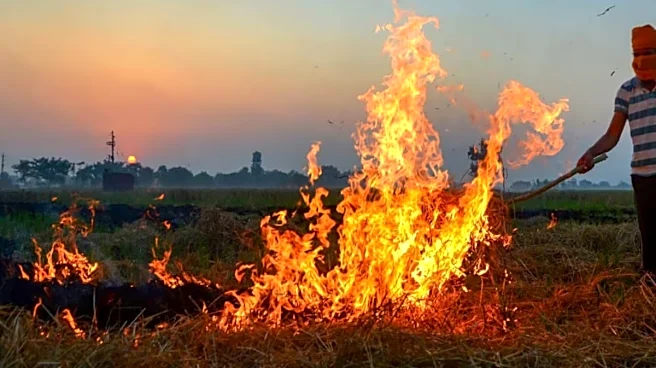
The contribution of stubble burning to Delhi’s pollution also rose to 18.57 per cent on Sunday, compared with 5.33 per cent on Saturday, according to the Decision Support System for air quality management in Delhi.
What Is Behind Rise In Pollution?
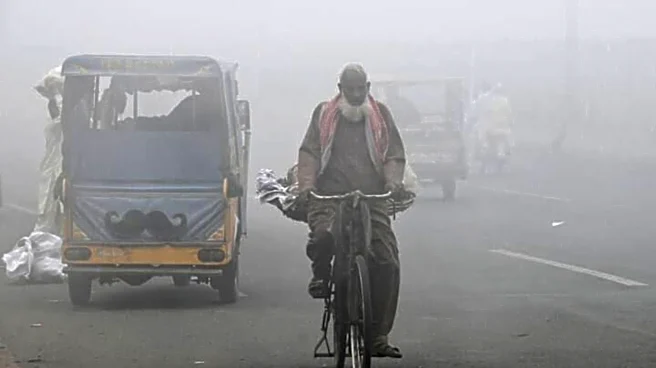
Weather conditions have also become less favourable for the dispersion of pollutants. Lower temperatures, reduced wind speeds and fog can trap pollutants closer to the ground, worsening air quality.
Delhi recorded a minimum temperature of 18 degrees Celsius on Sunday, 1.9 degrees below the seasonal average, according to the India Meteorological Department (IMD).
Meteorologist Navdeep Dahiya warned that calm winds and northwesterly air movement were allowing emissions to remain trapped in the atmosphere for longer.
What Pollution Restrictions Are In Force In Delhi?
Delhi’s winter pollution action plan came into effect on November 1. Under the measures, non-Delhi vehicles below BS-VI emission standards are barred from entering the capital, while dust-generating demolition and outdoor construction activities have been prohibited.
Government and private offices have also been directed to operate with 50 per cent physical attendance, with the remaining staff working from home, subject to exemptions for essential services. The restrictions are aimed at curbing pollution as the capital enters the peak winter pollution season.