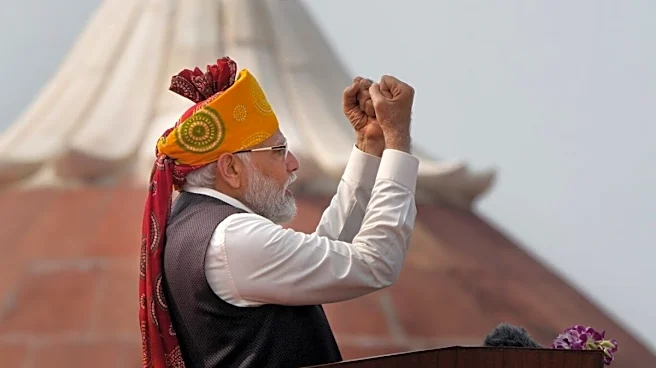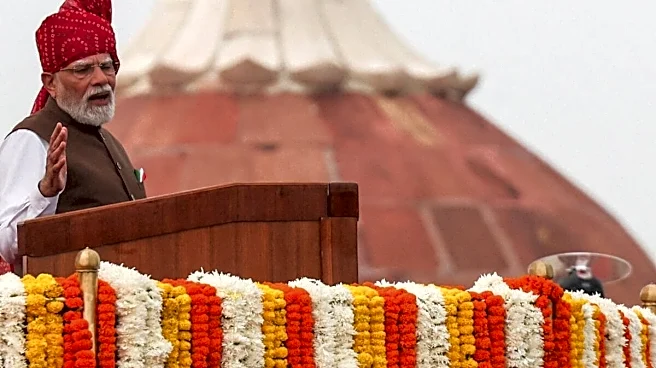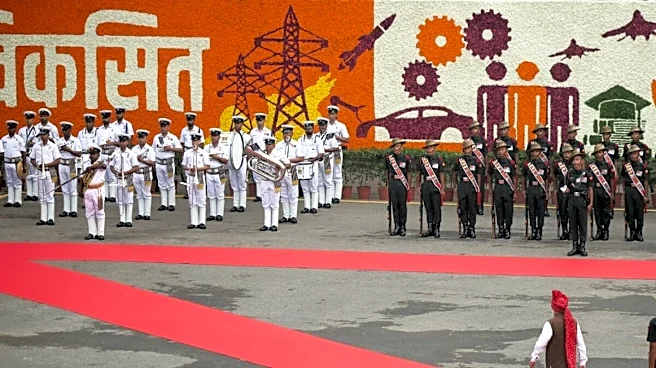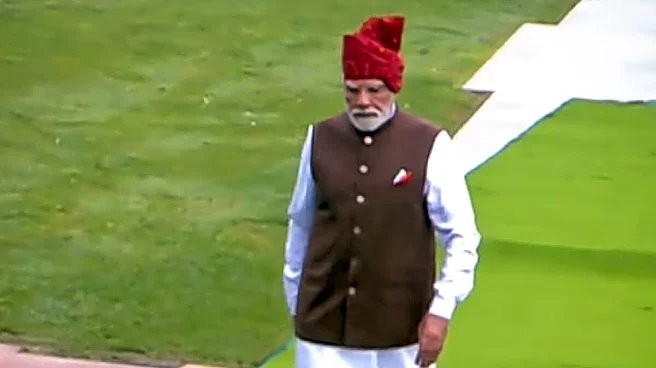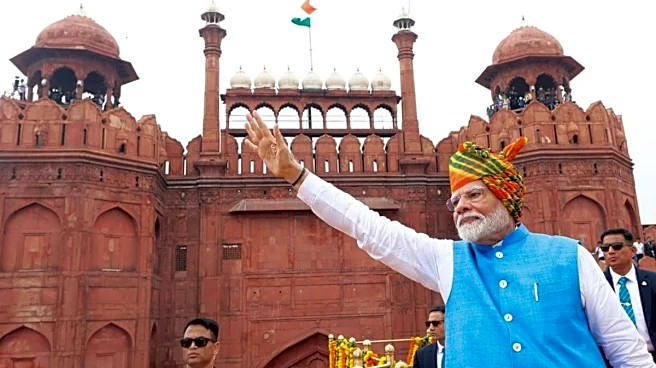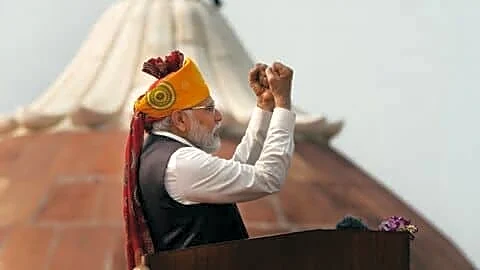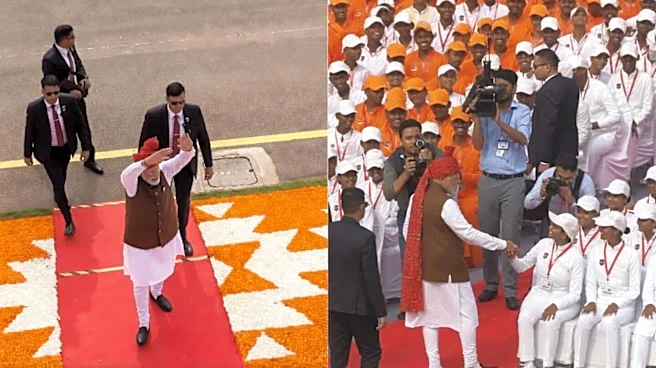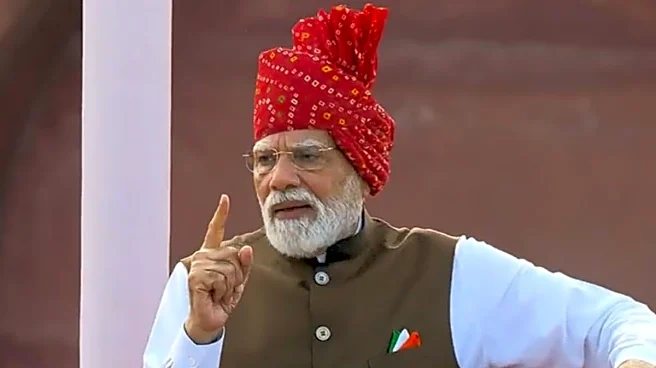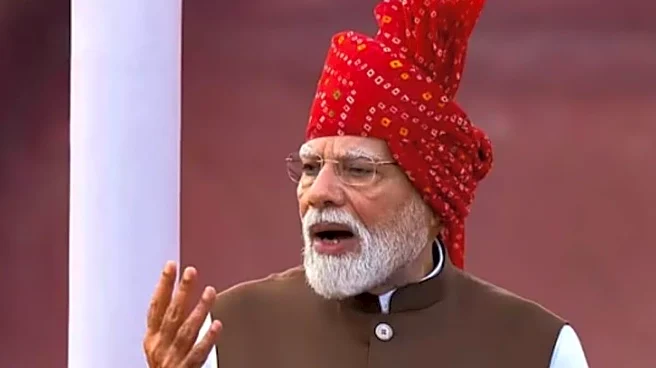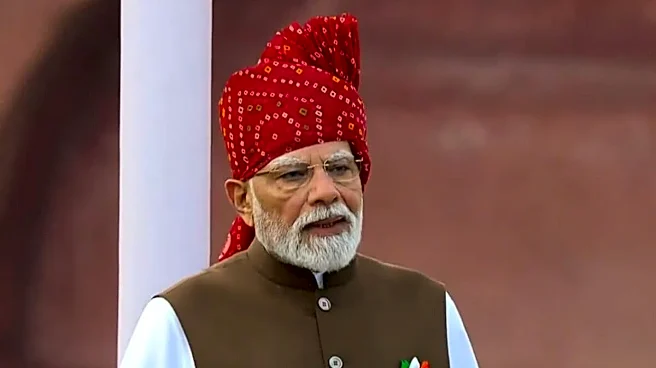

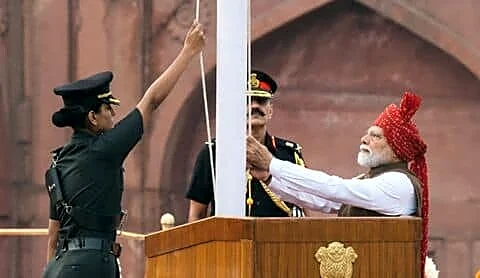
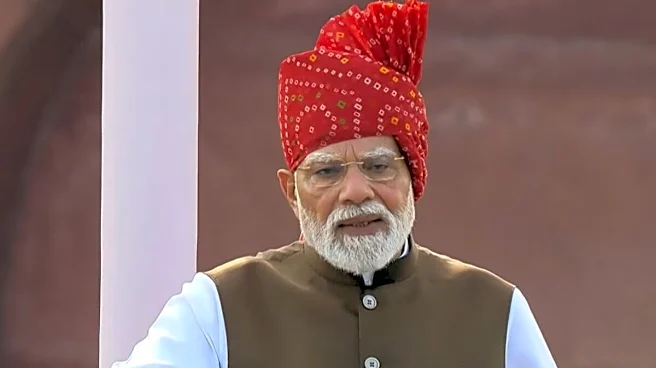
Prime Minister Narendra Modi addressed the nation from the ramparts of the Red Fort on India’s 80th Independence Day. Clocking a historic 103 minutes, it stands as the longest Independence Day speech delivered by any Indian Prime Minister.
Beyond the immediate policy announcements and celebratory markers, such as commemorating 150 years of Vande Mataram, the address carried a series of strategic undercurrents.
Here is a look behind the curtain at five messages hidden in plain sight from PM Modi’s 2026 national address:
1. The Death of the “Chalta Hai” Mindset
PM Modi heavily contrasted the current trajectory of India with its early post-independence decades. He targeted a legacy culture of complacency, explicitly taking aim at the traditional Indian passivity defined by the attitudes
of “hoti hai,” “chalti hai,” and “ho jaega” (it happens, it’s fine, it will get done). By stating that the nation can no longer afford to move forward with “small dreams,” his subtext was a clear warning to both the bureaucracy and corporate India: structural stagnation will no longer be tolerated, and institutional accountability will be forced.
Independence Day 2026 LIVE Updates HERE
2. Upgrading Economic Status from “Resilient” to “Aggressive”
A major rhetorical pillar of the speech was India’s journey from being globally labeled one of the “Fragile Five” economies to becoming the world’s fastest-growing major economy. [
The hidden message: India is shifting its economic posture from a purely defensive stance to an aggressive, global value chain mindset.
The expectation: By demanding that Indian manufacturing achieve global standards not just in design and production, but specifically in international packaging, Modi signaled a push to decouple from supply chains that view India merely as a low-cost backup.
3. “Go-Ahead” Geopolitics: Ending Resource Poverty
In a sharp critique of historical environmental and maritime policy, Modi highlighted how a “flawed mindset” previously locked up 99% of India’s coastal waters under “no-go” zones. He detailed how the government has aggressively unlocked these areas under the ₹85,000-crore Samudra Manthan initiative. The unstated message here is strategic autonomy. Amid shifting global alliances, India is signaling to the world that it is fast-tracking domestic hydrocarbon and critical mineral exploration to protect its energy security from external leverage or international blockade.
4. Direct Accountability to Gen-Z
While the official theme centered heavily around Yuva Shakti (Youth Power), the structure of the address leaned into a calculated engagement with Gen-Z and India’s youngest voters. Following weeks of public outreach on social media, the heavy focus on competitive exams, startups, and private-sector job creation (backed by the Pradhan Mantri Viksit Bharat Rozgar Yojana) served as a crucial pressure valve. By treating youth aspirations as a direct pillar of national security, the government aims to channel domestic anxieties around employment into nationalistic alignment ahead of upcoming state elections.
5. Weaponisation of Resources and Absolute Self-Reliance
Against the backdrop of high global trade tensions and foreign tariff walls, Modi placed extreme emphasis on hyper-local self-reliance (Aatmanirbharta). This extended to national security, with the explicit showcasing of an indigenous 105mm Light Field Gun for the ceremonial 21-gun salute. The broader theme on the “weaponisation of resources” was a soft-power warning: India is building its infrastructure—ranging from an indigenous missile-defense shield (Mission Sudarshan Chakra) to domestic semiconductor chips—to survive a hyper-fragmented and hostile global trade environment.