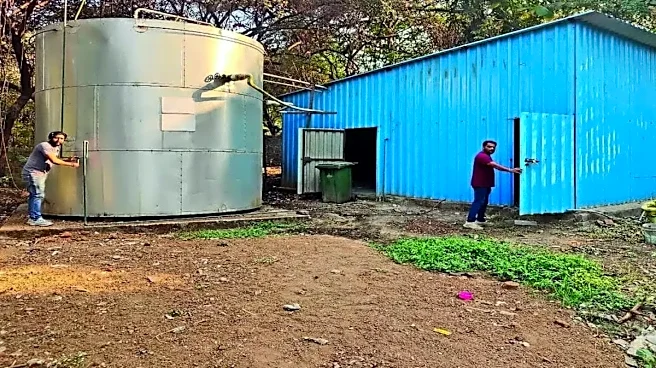

The Centre is stepping up efforts to boost the production and adoption of compressed biogas (CBG) in response to tightening global liquefied natural gas (LNG) supplies.
The government plans to scale up existing biogas initiatives and streamline multiple schemes aimed at promoting CBG, a cleaner alternative to natural gas that could help reduce India’s dependence on LNG imports. Speaking at a conference titled Energy Security: Driving India’s Next Wave of Gas Demand, organised by the Petroleum and Natural Gas Regulatory Board (PNGRB) and Indraprastha Gas Ltd (IGL) in New Delhi, petroleum secretary Neeraj Mittal said efforts are underway to unify the fragmented policy framework.
“The prime minister has directed us to significantly scale up the compressed
biogas programme. Currently, it is spread across five departments covering different parts of the supply chain and subsidies. We are working actively to consolidate this into a single, cohesive programme,” he said.
Mittal added that the government is looking to replicate the success of ethanol—where procurement, production and blending have been streamlined—by creating a similar roadmap for compressed biogas. This would enable blending of CBG with natural gas in the city gas distribution (CGD) network.
Policy push on biogas
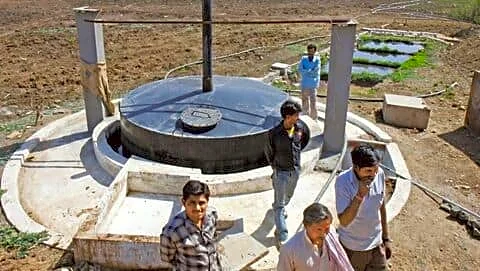
The petroleum ministry had launched the SATAT (Sustainable Alternative Towards Affordable Transportation) scheme in 2018 to build an ecosystem for producing compressed biogas from waste and biomass and to promote its use alongside natural gas.
In 2021, the renewable energy ministry rolled out the National Biogas Programme to set up plants for clean cooking fuel, lighting, and small-scale power and thermal needs.
LNG disruptions add urgency
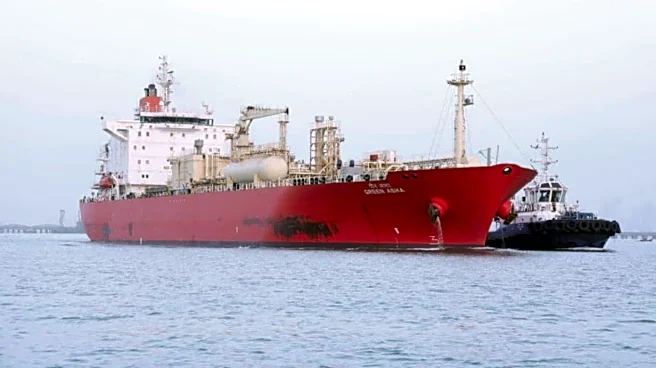
The renewed focus on CBG comes amid disruptions in LNG supplies, with nearly 45 percent of India’s imports from Qatar affected following attacks on Ras Laffan Industrial City during the US-Israel-Iran conflict.
India imported about 27 million tonnes of LNG in FY25, worth $14.9 billion. Around 40–45 percent of these imports come from Qatar and other West Asian suppliers such as the UAE and Oman, while the US and Australia are additional sources.
Although India meets about 55 percent of its natural gas demand through domestic production, most of it is allocated to city gas distribution—covering piped natural gas (PNG) for households and compressed natural gas (CNG) for transport. This leaves key sectors such as fertilisers, steel, and power heavily reliant on imported gas.
Meanwhile, Union petroleum and natural gas minister Hardeep Singh Puri is on a two-day visit to Qatar. The Indian embassy said he was received in Doha by India’s ambassador to Qatar, Vipul, along with officials from QatarEnergy.
/images/ppid_a911dc6a-image-177571422757025693.webp)

/images/ppid_a911dc6a-image-177563623418111594.webp)
/images/ppid_a911dc6a-image-177571943153228355.webp)


/images/ppid_a911dc6a-image-177564151496553738.webp)